If you have any questions, please feel free to contact us.| Email Us: info@dcheatpress.com


Views: 222 Author: Amanda Publish Time: 2026-01-15 Origin: Site


Content Menu
● Fundamentals of Sublimation Printing
● Fundamentals of White Toner DTF Printing
● Direct Comparison of White Toner DTF and Sublimation
>> Technology and Materials Overview
>> Print Feel, Durability, and Appearance
>> Costs, Maintenance, and Production Speed
● Practical Workflow and Quality Optimization
>> Sublimation Workflow Essentials
>> White Toner DTF Workflow Essentials
● Business Use Cases and 2026 Strategy
>> Where Sublimation Delivers the Most Value
>> Where White Toner DTF Delivers the Most Value
● Combining Both Technologies in One Production Environment
● Action‑Oriented Checklist for Technology Selection
● Focused Call to Action for Professional Heat Press Buyers
● FAQs – White Toner DTF vs Sublimation
>> FAQ 1 – Can one heat press handle both processes?
>> FAQ 2 – Which method is more suitable for dark cotton T‑shirts?
>> FAQ 3 – How do wash results compare over time?
>> FAQ 4 – Is white toner DTF suitable for small studios without special ventilation?
>> FAQ 5 – Should a new business start with sublimation, white toner DTF, or both?
In 2026, white toner DTF and sublimation remain two of the most important technologies for modern garment decoration and promotional printing, but they solve very different problems in a print business. Understanding how they differ in materials, durability, print feel, costs, and workflow is essential before choosing equipment or upgrading production.[1][2][3]
Sublimation uses special dye‑sublimation inks that turn into gas under heat and pressure and bond with polyester fibers or polymer coatings on hard goods. Because the color infuses into the surface, the finished print has an extremely soft or almost zero hand feel on textiles.[4][3][1]
Sublimation printing typically uses CMYK inks and cannot print white, so white areas in a design rely on the blank substrate itself. This makes light or white backgrounds ideal, while dark or black fabrics are not suitable for direct sublimation.[5][3][1]

White toner DTF printing relies on a CMYW laser printer that lays down toner onto a specialized transfer sheet, including an opaque white layer to support strong color on dark surfaces. The printed design is then bonded to an adhesive sheet and finally heat pressed onto the target garment or product.[6][7][8]
Unlike sublimation, the white toner transfer sits on top of the substrate, creating a thin film that feels similar to screen print or heat transfer vinyl, especially in large solid areas. This structure enables decoration on dark cotton, blends, and many hard surfaces that cannot be sublimated directly.[8][9][10][6]
A structured view of both technologies makes it easier to match them to specific applications and business models.[11][2]
Aspect | Sublimation Printing | White Toner DTF Printing |
Core mechanism | Dye-sublimation ink turns into gas and bonds with polyester fibers or polymer coatings. | CMYW laser toner prints on transfer film, then bonds via adhesive under a heat press. |
Supported fabrics | Best on white or light polyester and poly-rich blends. | Works on cotton, cotton-poly blends, polyester, canvas, denim, leather, and more. |
Hard-goods compatibility | Requires polymer-coated blanks such as coated mugs and metal panels. | Can decorate many uncoated surfaces when matched with suitable transfer papers. |
White ink capability | No white ink; relies on substrate color. | Uses white toner as an underbase for opacity on dark substrates. |
Aspect | Sublimation Printing | White Toner DTF Printing |
Hand feel | Infused into fibers, resulting in a very soft or no-feel print on textiles. | Thin film on top of fabric, with a more noticeable feel on large solid designs. |
Breathability | Excellent because no extra layer is added to the surface. | Good for smaller graphics; large coverage can reduce breathability. |
Wash durability | High wash resistance on polyester, as the print is part of the material surface. | Good durability, but cracking can occur if artwork or process is not optimized. |
Color look | Vibrant, photographic quality on light backgrounds. | Strong opacity and contrast on dark fabrics and mixed materials. |
Aspect | Sublimation Printing | White Toner DTF Printing |
Startup cost | Entry-level systems typically cost less than mid-range white toner setups. | Hardware, RIP, and transfer media push investment higher, but add versatility. |
Maintenance profile | Ink-based systems benefit from regular use to avoid head issues. | Toner does not dry out, leading to lower day-to-day maintenance needs. |
Production complexity | Print to paper, then press; ideal for standardized workflows. | Two-step “print and marry” process plus final press, requiring more operator skill. |
Best job profile | All-over polyester prints, sportswear, and coated promotional items. | Short-run, full-color graphics on dark garments and diverse hard surfaces. |
Clear workflows help teams evaluate whether each process fits existing staff skills and production environments.[6][1]
A typical sublimation workflow includes design preparation, printing, and heat pressing. Key practices include using appropriate color profiles, pre‑pressing garments to remove moisture and wrinkles, and following substrate‑specific temperature and dwell guidelines. These steps support consistent color, minimal ghosting, and reliable wash performance on polyester.[4][1]
For hard goods such as coated mugs or panels, secure taping of the transfer and uniform pressure across the surface are especially important for even color density. Controlled cooling after pressing also helps stabilize the image and reduce the risk of surface damage.[1][4]
White toner DTF workflows typically begin with artwork setup in RIP software, where white layers, rasterization, and coverage density are fine‑tuned. After printing, the transfer sheet is married to an adhesive sheet, then separated to leave adhesive only where toner is present.[13][8][6]
When applying the finished transfer to fabric or hard goods, accurate temperature, pressure, and time are crucial for both adhesion and flexibility. Post‑pressing with a finishing sheet can improve softness, reduce gloss, and enhance wash durability, especially on garments exposed to frequent laundering.[9][10][6]
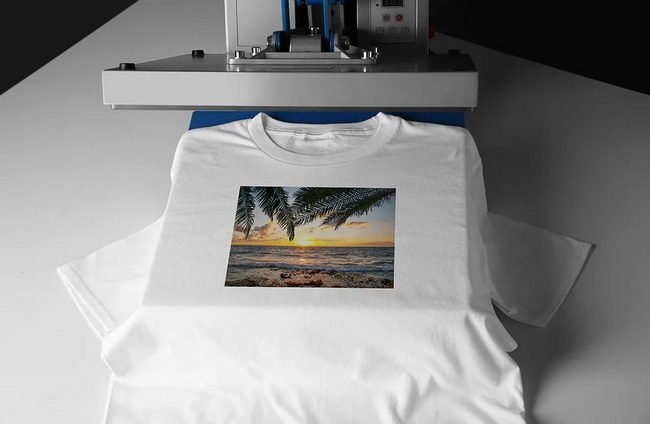
Different printing methods perform best in different business scenarios, and many operators now combine technologies to maximize catalog coverage.[14][15][2]
Sublimation stands out in markets where lightweight polyester and coated goods dominate the product mix. These markets include performance sportswear, all‑over fashion pieces, and photo‑based gifts requiring high detail and long‑term wash resistance.[14][5][4]
Because sublimation prints have almost no hand feel and excellent breathability, the method fits well with demanding athletic and outdoor applications where comfort and durability are core selling points. In addition, standardized blanks and transfer parameters simplify scaling to higher volumes.[4][14]
White toner DTF adds the most value in scenarios where material variety and dark garments are central. Typical examples include cotton or blended fashion shirts, corporate uniforms on dark bases, and mixed hard‑goods assortments that are not all polymer coated.[8][9][6]
The ability to pause production for longer periods without intensive maintenance makes white toner especially attractive for studios and on‑demand shops with irregular order patterns. At the same time, multi‑surface compatibility helps consolidates equipment needs for smaller operations that cannot invest in separate systems for every product category.[10][6][8]
Many print businesses now operate both sublimation and white toner systems to align each job with the most suitable technology. This hybrid approach offers broad product coverage while also optimizing cost per print and production speed.[15][2][14]
In such environments, polyester sportswear and coated promotional goods are typically routed to sublimation lines, while dark textiles, cotton fashion items, and uncoated hard goods go to white toner workflows. This division allows teams to build specialized profiles and press recipes for each method, reducing defects and improving consistency over time.[2][14]
High‑quality heat presses with stable temperature distribution and precise pressure control are central to the success of both technologies in a shared production space. Accurate, repeatable pressing parameters help minimize rework, especially when switching between films, papers, thicknesses, and substrate types.[6][1]
A concise checklist supports decision‑makers who are evaluating equipment investments or process expansions.[11][5][14]
Key questions for technology selection include the typical fabric mix, desired balance between soft feel and material versatility, expected production volume stability, and available capital for equipment. Matching these factors to each method's strengths reduces risk and helps ensure that new configurations support long‑term growth instead of short‑term experimentation.[5][11][14]
For many modern operations, the most resilient strategy is to start with the method that best matches the current product core and then add the second method once demand justifies broader coverage. This staged approach leverages early revenue for reinvestment and keeps the learning curve manageable for production teams.[15][14]
Scaling sublimation and white toner DTF workflows requires more than print engines and consumables; reliable, precise heat transfer equipment is equally critical to consistent results. For organizations planning to serve global customers with diverse printing needs, partnering with a manufacturer that specializes in the development, production, sales, and service of high‑quality heat transfer equipment, welding machines, and embossing machines provides a strong technical foundation.[16][1][6]
Businesses that select robust, accurately controlled heat presses can standardize parameters across both sublimation and white toner processes, reduce application errors, and support continuous production with fewer interruptions. The next step is to evaluate professional equipment platforms and consult with technical experts to configure a pressing solution that matches current products and future expansion plans, then implement it as the backbone of the printing operation.[1][6]
Yes. A well‑built flat heat press with adjustable temperature, pressure, and time is capable of handling both sublimation transfers and white toner DTF transfers. Using appropriate accessories such as interchangeable platens and protective sheets helps tailor the press to different product shapes and materials without compromising quality.[6][1]
For dark cotton T‑shirts and similar garments, white toner DTF is more suitable because it uses an opaque white underbase to make colors stand out on dark fabrics. Sublimation requires light polyester surfaces and cannot directly produce strong results on dark cotton garments.[5][1][6]
On polyester fabrics, sublimation generally delivers very high wash durability because the design is fused into the fibers rather than sitting on top of them. White toner DTF can offer good wash performance, but cracking or reduced flexibility is more likely if artwork, transfer media, and pressing parameters are not optimized.[9][10][4][1]
White toner DTF systems are often suitable for office or studio environments because laser‑based printers use dry toner rather than liquid ink and do not require powder curing steps used in some other film technologies. When operated according to manufacturer guidance, they generally do not need additional ventilation or extraction beyond normal workplace standards.[7][6]
A new business focused on light polyester garments and coated promotional goods may find sublimation to be the most cost‑effective starting point. Operations centered on dark cotton fashion, mixed fabrics, and varied hard goods can benefit more from beginning with white toner DTF, and mature businesses often adopt both technologies once volume and product diversity justify the investment.[14][15][4][5]
[1](https://www.youtube.com/watch?v=8_v7UL0jBX0)
[2](https://www.heatpressnation.com/blogs/academy/choosing-the-right-print-method-for-your-business-sublimation-white-toner-and-direct-to-film-printing)
[3](https://www.shopify.com/uk/blog/sublimation-vs-dtf)
[4](https://jotoimagingsupplies.com/blogs/blogs/dtf-vs-sublimation-which-printing-method-is-best-for-each-fabric-type)
[5](https://www.winnerjet.com/what-is-the-difference-between-dtf-printing-and-sublimation-printing/)
[6](https://www.heatpressnation.com/blogs/blog/how-is-white-toner-dtf-different-from-sublimation-a-comprehensive-comparison)
[7](https://www.htvront.com/blogs/basics/white-toner-printer-vs-dtf-printer)
[8](https://www.heattransferwarehouse.com/blog/dtf-vs-white-toner-printing)
[9](https://www.silhouetteschoolblog.com/2022/01/sublimation-vs-white-toner-transfers.html)
[10](https://colmanandcompany.com/blog/2022/11/inkjet-vs-white-toner-vs-sublimation-paper/)
[11](https://printify.com/blog/dtf-vs-sublimation/)
[12](https://blog.ricoma.com/2021/06/04/printing-method-comparison/)
[13](https://www.subli-star.com/differences-among-dtf-dtg-and-white-toner-printing/)
[14](https://www.hanzeltd.com/dtf-vs-sublimation-printing-the-ultimate-comparison-guide.html)
[15](https://merchize.com/dtf-vs-sublimation/)
[16](https://www.heatpressnation.com/blogs/blog/how-is-white-toner-DTF-different-from-sublimation-a-comprehensive-comparison)
[17](https://www.xtool.com/blogs/xtool-academy/white-toner-printer-vs-dtf-printer-which-is-better)
[18](https://www.dtf.technology/dtf-vs-sublimation-dtg-screen-printing-white-laser-toner-and-vinyl/)


