If you have any questions, please feel free to contact us.| Email Us: info@dcheatpress.com


Views: 222 Author: Amanda Publish Time: 2026-01-14 Origin: Site


Content Menu
● Understanding Heat Press ROI
● Cost Per Shirt: The Real Numbers
● Profit Per Shirt And Margin Targets
● Basic Break-Even Formula For Heat Presses
● How Many Shirts To Pay Off Different Heat Press Types
● Beyond Shirts: Volume And Time To Pay Off
● Step-By-Step Heat Press ROI Calculation
● Pricing Strategy To Protect ROI
● Why Quality And Reliability Matter For ROI
● Plan Your Heat Press Payoff Today
>> 1. Is a heat press still a profitable investment?
>> 2. How many shirts do most small shops need to sell to pay off a press?
>> 3. Does it make sense to use the same ROI approach for hoodies and other garments?
>> 4. What is a common mistake people make when estimating ROI?
>> 5. How often should ROI numbers be updated?
A heat press can pay for itself far faster than most new apparel entrepreneurs expect, especially when you know your real cost per shirt, profit margins, and realistic monthly volume. By treating your press like a revenue-generating asset and tracking a few key numbers, you can reach break-even quickly and build a sustainable printing business.[1][2][3][4]

Heat press ROI (return on investment) describes how efficiently a press turns its purchase cost into profit over time. After break-even, the same machine continues generating revenue with only operating costs to consider.[2][5][3][1]
Key elements that drive ROI include:
- Equipment cost, such as a 300–3000 USD investment in a press.[6][1]
- Net profit per shirt, typically a few to double‑digit dollars depending on pricing and costs.[7][2]
- Sales volume, measured in shirts per month or per year.[3][4]
When these factors are planned together, even modest volumes can deliver a strong ROI within months rather than years.[8][3]
Knowing the true cost per shirt is essential for any realistic ROI calculation. Many beginners underestimate expenses, which leads to underpricing and slow progress toward break-even.[9][10][11][7]
Typical cost components per printed t‑shirt:
- Blank garment: Often 2–5 USD depending on fabric, brand, and order quantity.[11][1]
- Transfer or print cost: Commonly 1.6–6 USD for screen-printed transfers, DTF, or similar methods.[2][11]
- Consumables and packaging: Labels, bags, boxes, and tape usually add 0.3–1.0 USD per piece.[4][11]
- Overhead and fees: Electricity, workspace, platform fees, and transaction charges often add 0.5–3 USD per item when averaged out.[7][11]
In practice, fully loaded cost per shirt often falls around 8–15 USD for serious sellers, depending on model, fulfillment method, and scale.[11][7]
Profit per shirt is the amount left after all costs are deducted from the selling price. This number directly determines how many shirts are needed to pay off the press.[9][7]
Common profit and margin ranges:
- Many apparel sellers operate with 30–50% profit margins, earning about 3–8 USD per shirt in net profit.[4][7]
- Premium or niche brands sometimes reach margins above 50% when design and branding justify higher prices.[12][7]
Example margin scenarios:
- A shirt that costs 10 USD to produce and sells for 16–20 USD yields roughly 6–10 USD profit and a margin near or above 40%.[13][11]
- A higher-end item sold for 25–35 USD with a similar cost base can generate double‑digit profit per unit, accelerating ROI significantly.[4][7]
The more carefully profit per shirt is controlled, the less total volume is required for the press to pay for itself.[3][2]
Break-even indicates how many shirts are required before the heat press has effectively paid for itself. Once that number is reached, the investment cost is recovered and ongoing production mainly covers operating expenses.[5][1]
A simple structure for break-even in units:
- Break-even shirts = equipment cost ÷ net profit per shirt.[1][2]
Illustrative example:
- If a press costs 800 USD and profit per shirt is 8 USD, about 100 shirts are needed for break-even.[1][2]
- If profit per shirt rises to 14 USD on a similarly priced press, break-even drops to around 60 shirts.[2][3]
This straightforward approach can be adapted to any machine and product mix by updating the inputs with real numbers from your own operation.[10][5]
Different machine categories have distinct price levels and production capacities, but the break-even math remains consistent. The table below shows approximate shirt counts using an example profit of 15 USD per shirt.[6][1]
Heat press type | Typical price range | Example profit per shirt | Approximate shirts to break even |
Entry-level craft | 300–400 USD | 15 USD | 20–27 shirts |
Mid-range small shop | 600–800 USD | 15 USD | 40–54 shirts |
Professional single | 1200–1800 USD | 15 USD | 80–120 shirts |
Pneumatic / dual-station | 2500–4000 USD | 15 USD | 167–267 shirts |
Even higher-priced presses can be paid off within a few dozen medium or large orders when pricing and profit per shirt are managed carefully.[3][2]
Shirt counts do not tell the whole story without connecting them to time and order volume. Converting unit break-even to months or weeks helps align expectations with sales goals.[3][4]
Key considerations:
- Monthly sales of 50 shirts at a 15 USD profit per unit yield 750 USD in monthly gross profit.[8][3]
- At that pace, a 1500 USD press would reach break-even in roughly two months under consistent demand.[6][3]
Batch orders usually accelerate payoff:
- Team and corporate orders of 50–100 units per job reduce handling time per shirt and simplify logistics.[10][2]
- A handful of such orders can recover the full equipment cost much faster than sporadic one-off sales.[8][3]
Linking break-even units to a realistic volume plan turns ROI from theory into a clear timeline.
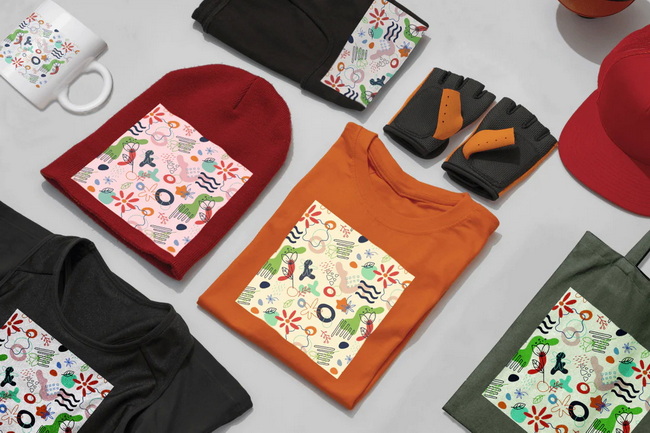
A structured calculation process reduces guesswork and helps support confident decision-making for equipment purchases.[5][10]
1. Determine equipment investment
- Include the press price, shipping, installation, and any required accessories needed for production.[5][6]
2. Estimate full cost per shirt
- Add garment cost, transfers or inks, packaging, overhead, and platform fees for a realistic total.[10][11]
3. Set a target selling price
- Research your niche and competitors to identify a sustainable price that supports healthy margins.[13][7]
4. Calculate net profit per shirt
- Subtract the total cost per shirt from the selling price to find net profit per unit.[7][11]
5. Compute break-even shirts
- Divide the total investment by the profit per shirt to see the required quantity to pay off the press.[1][2]
6. Translate into time and volume
- Compare the break-even units with projected monthly sales to estimate how many weeks or months are needed to reach payoff.[8][3]
Repeating this process whenever material costs or pricing change keeps ROI expectations accurate over time.[5][10]
Effective pricing protects margins and safeguards the path to break-even. Setting prices too low delays or prevents payoff, even if order volume looks impressive.[10][7]
Useful strategic points:
- A simple structure where retail price equals production cost plus margin plus additional expenses helps maintain clarity.[13][10]
- Many retailers and brands target margins from 40% up to 60%, with 20% often seen as a bare minimum in some segments.[9][13]
Practical adjustments that support ROI:
- Charging more for complex designs, larger prints, and specialty garments such as heavy fleece or workwear.[11][4]
- Encouraging bulk or repeat orders from groups and organizations to improve average profit per hour of production.[3][8]
When pricing is planned around real costs and desired profit, reaching heat press payoff becomes an achievable, measurable goal.
The technical quality and reliability of a heat press contribute directly to real-world ROI through reduced waste and downtime. Consistent temperature and pressure help minimize misprints and maintain customer satisfaction.[14][15]
Important quality characteristics:
- Even heating and stable pressure across the platen to ensure consistent transfers on different materials.[15][14]
- Strong structural design that copes with repeated cycles, heavy textiles, and higher-pressure applications.[16][14]
- Accessible digital controls and timers that help operators reproduce settings quickly between jobs.[17][15]
Reliable equipment reduces material waste, shortens production time per job, and supports higher-value orders, all of which enhance the effective ROI of the machine over its working life.[14][3]
Readers who already own or plan to purchase a press can translate the concepts above directly into an action plan.
- Gather real numbers for equipment cost, full cost per shirt, and average selling price.
- Calculate net profit per shirt, then determine the exact number of shirts needed to pay off the press using the basic formula.
- Map that shirt count to a realistic sales timeline, then adjust pricing, product mix, or target customers to reach break-even faster.
Treating this calculation as a regular business practice rather than a one-time exercise helps maintain healthy margins, support smart equipment upgrades, and keep the press working as a dependable profit center over the long term.[4][3]

In many markets, custom apparel continues to grow, and businesses with solid pricing strategies often achieve margins between roughly 30% and 60% on t‑shirts and similar products. With those margins and reasonable sales volume, a press can often be paid off within months rather than years.[12][7][4][3]
For mid-range presses, the quantity often falls between about 100 and 250 shirts when profit per shirt is in the mid to high single digits or low double digits. The exact number depends on equipment cost, cost control, and final selling prices.[2][10][3][1]
The same basic structure applies to hoodies, sweatshirts, and other apparel: calculate full cost per item, set a selling price, then find profit and break-even units. Because higher-priced garments can support greater profit per piece, they sometimes reach payoff with fewer units.[12][7][4][3]
One frequent issue is ignoring indirect costs such as packaging, platform fees, and a reasonable value for labor time. This can make profits appear larger than they really are and delay the true break-even point.[9][7][11][10]
Revisiting cost and revenue assumptions whenever material prices, shipping rates, or pricing strategies change helps keep ROI expectations accurate. Regular reviews also reveal when an upgraded press or different fulfillment method could provide better long-term returns.[6][5][8][10]
[1](https://www.heatpressnation.com/blogs/blog/heat-press-roi-how-many-shirts-to-pay-it-off)
[2](https://www.transferexpress.com/videos/how-long-does-it-take-to-pay-off-a-heat-press)
[3](https://coldesi.com/digitalheat-fx/heat-transfer-printing-roi/)
[4](https://www.shopify.com/il/blog/start-online-tshirt-business)
[5](https://www.customizedfab.com/blog/how-to-calculate-the-return-on-investment-for-a-metal-press-498252.html)
[6](https://dtf.uk/blogs/dtf-transfers/how-to-start-t-shirt-business-2025-essential-guide)
[7](https://www.printful.com/blog/how-much-money-can-custom-t-shirts-make)
[8](https://www.stahls.co.uk/blog/start-a-print-business-in-2025.html)
[9](https://www.manufacturingclothes.com/what-is-the-actual-profit-rate-of-clothing-brands-in-2025/)
[10](https://www.heatpressnation.com/blogs/academy/basic-pricing-strategy-for-startup-heat-press-businesses%3Fsrsltid=AfmBOooc3vb0bciIEcZT5sydGCIiEHoqzdpVxwMjxWH3-J9NfkX8hV4v)
[11](https://printify.com/blog/how-much-money-can-custom-t-shirts-make/)
[12](https://merchize.com/is-selling-t-shirts-online-profitable/)
[13](https://sellfy.com/blog/how-to-price-t-shirts/)
[14](https://www.dcsbheatpress.com)
[15](https://www.dcsbheatpress.com/top-10-heat-press-machine-manufacturers-in-china.html)
[16](https://www.dcsbheatpress.com/top-10-pneumatic-heat-press-machine-manufacturers-in-china.html)
[17](https://www.dcsbheatpress.com/Hydraulic-dual-station-heat-press-machine-60-120cm-horizontal-transfer-printing-machine-for-jeans-pd564378938.html)
[18](https://www.youtube.com/watch?v=5UfRR17QTXs)
[19](https://www.youtube.com/watch?v=D1SQaZsTa2I)
[20](https://www.htvront.com/blogs/basics/heat-transfers-business-startup-beginner-guide)
[21](https://www.heatpressnation.com/blogs/blog)


