If you have any questions, please feel free to contact us.| Email Us: info@dcheatpress.com


Views: 222 Author: Amanda Publish Time: 2026-01-06 Origin: Site


Content Menu
● Why 2026 Is the Best Time To Start A Heat Press Business
● Custom Transfers: The Smartest Low‑Risk Entry In 2026
● Types Of Custom Transfers You Can Offer
>> Direct‑To‑Film (DTF) Transfers
>> Screen Print And Puff Transfers
● Profit Potential: How Custom Transfers Maximize ROI
● Case Scenario: From Side Hustle To Stable Monthly Revenue
● Why A Versatile Heat Press Is The Core Of Your Business
● What To Look For In A Growth‑Ready Heat Press
● The Role Of Smart Features And Automation In 2026
● Step‑By‑Step: Launching A Low‑Risk Heat Press Business
>> 1. Clarify Your Business Model
>> 2. Choose A Professional Heat Press
>> 3. Start Small With Custom Transfers
>> 4. Build A Simple, Repeatable Workflow
>> 5. Expand To High‑Margin Niches
● Advanced Strategies: Niche Positioning And E‑Commerce
● How To Price For Healthy Margins
● Optimizing User Experience And Production Workflow
● Launch And Scale Your 2026 Heat Press Business
● FAQ
>> 1. Do I need my own DTF printer to start a profitable apparel business in 2026?
>> 2. What size heat press is best if I want to scale?
>> 3. How long does it usually take to recover my heat press investment?
>> 4. Are custom transfers durable enough for long‑term customers?
>> 5. What is the biggest mistake new heat press owners make?
Launching or scaling a custom apparel business in 2026 is easier and less risky than most entrepreneurs think, especially when combining custom transfers with a versatile, commercial‑grade heat press and a clear growth roadmap. This combination lets both side hustlers and established shops control costs, protect cash flow, and respond quickly to changing customer demand.

The global heat press and personalized apparel market continues to expand as consumers demand unique products and short production runs rather than mass‑produced designs. Online selling platforms and social media make it possible for small brands to reach international buyers without a large retail footprint.
Key 2026 growth drivers include:
- Rising demand for personalized products across fashion, gifts, and corporate merchandise.
- The rapid adoption of print‑on‑demand models that allow production only after orders are paid.
- The availability of user‑friendly, feature‑rich heat presses that lower the technical barrier for new operators.
Custom transfers are professionally printed designs that are applied to garments or products using a heat press. This model allows new businesses to offer retail‑quality prints while avoiding the cost, learning curve, and maintenance requirements of in‑house printing systems.
By outsourcing transfer production, businesses can:
- Keep startup investment low and scale capacity gradually.
- Order only the transfers they need, reducing waste and unsold inventory.
- Deliver consistent quality from day one, even without print production experience.
Offering multiple transfer technologies helps serve different fabrics, finishes, and customer preferences. The four most common categories cover most apparel and promotional applications.
DTF transfers are printed onto a film and then heat‑applied to garments, working well on cotton, polyester, and many blends. They support vibrant color, fine detail, and no‑weed production, which makes them ideal for complex, full‑color artwork.
When pressed at the correct temperature, time, and pressure, DTF transfers provide strong wash resistance and a flexible hand feel suitable for everyday wear. They also allow efficient use of gang sheets, improving cost per design and overall margin.
Sublimation transfers are designed for polyester fabrics and specially coated hard goods such as mugs, panels, and tumblers. Under heat and pressure, the ink converts to gas and bonds with the substrate, creating a lightweight, permanent image.
Because the design becomes part of the material surface, sublimation offers excellent durability and a soft, breathable feel, especially on performance apparel. The main limitation is that it works best on light‑colored, polyester‑rich materials.
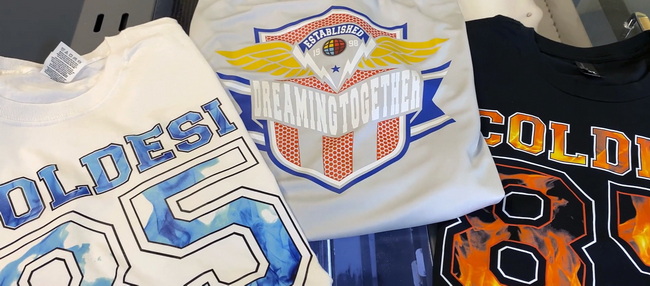
Screen print transfers use traditional screen printing techniques to produce designs that are later heat‑applied, giving a classic retail look with good stretch and durability. Puff variations add a raised, textured effect that stands out on streetwear and fashion pieces.
These transfers are especially efficient for larger runs of simple logos or text, delivering a soft hand feel and excellent opacity. They are well suited for teams, schools, and branded merchandise that demands consistent quality across big orders.
Vinyl and specialty films are typically cut and weeded before being pressed onto the garment, making them ideal for names, numbers, and short‑run personalization. Specialty options such as metallic, glitter, reflective, and flock create premium looks and higher perceived value.
While they usually involve more manual labor per piece, vinyl and specialty films are powerful tools for upselling personalization and special effects on standard apparel. They also help fill small orders that are not economical with other transfer methods.
A transfer‑based model creates a cost structure that is easy to predict and scale. By separating printing from pressing, operators can adjust transfer orders to match confirmed sales volumes.
Typical profit dynamics in this model include:
- A low cost per transfer when using gang sheets or volume pricing.
- The ability to price finished garments at multiples of the transfer cost, often achieving strong gross margins.
- Reduced risk of obsolete inventory because designs are produced only when needed.
With careful pricing and material selection, small shops can reach healthy margins while keeping products competitively priced for local and online markets.
A common path in this space is starting as a side hustle focused on local teams, schools, and small brands. An operator might invest in one quality heat press, a stock of popular blank garments, and a small batch of custom transfers from a partner supplier.
By concentrating on a narrow set of niches and repeating designs in different colorways, it is possible to refine workflows, improve speed, and grow repeat orders. Over time, as volume increases, the business can add more presses, more platens, and a wider transfer catalog without fundamentally changing the low‑risk model.
Regardless of which transfer types you choose, the heat press is the engine of your operation. It determines day‑to‑day throughput, print consistency, and operator comfort, all of which directly influence profit and customer satisfaction.
A professional heat press provides:
- Accurate temperature, time, and pressure, ensuring transfers bond correctly and last through washing.
- Faster and more reliable production, reducing reprints and material waste.
- The flexibility to handle different products, from T‑shirts and hoodies to bags, hats, and specialty placements.
Choosing the right machine at the beginning avoids the cost of early replacement and downtime. Focus on features that directly impact production quality and operator experience.
Look for an industrial‑grade frame that resists flexing under pressure, along with a solid, evenly heated upper platen. A stable structure maintains consistent contact and reduces the risk of cold spots or uneven transfers.
Safety features such as quality wiring, effective insulation, and reliable emergency protection help protect both equipment and operators across long production days.
Modern heat presses often combine hybrid auto‑open and manual modes, allowing hands‑free operation for standard jobs and manual control for specialty work. This flexibility is valuable when switching between high‑volume production and complex placements.
Digital touch‑screen controllers with presets for different transfer types, materials, and thicknesses help new and experienced operators reproduce the same results with minimal adjustment time. Real‑time pressure and temperature feedback further increases consistency.
A slide‑out lower platen allows safe garment loading and accurate alignment without reaching under a hot upper platen. This design reduces operator fatigue and speeds up multi‑step workflows such as pre‑pressing and final pressing.
Interchangeable platens and built‑in garment splitting functions support a wider range of items, including sleeves, youth apparel, and areas near seams or zippers. This versatility lets you expand your catalog without needing a new press for every application.
As order volumes rise, manual processes often become the main bottleneck. Smart press features help stabilize quality and increase throughput without necessarily hiring more staff.
Key advantages of automation and smart controls include:
- More consistent results across multiple operators and shifts.
- Reduced training time, because presets and digital indicators guide less experienced staff.
- Less risk of over‑pressing or under‑pressing during busy production days.
By using hybrid auto‑open functions and carefully configured presets, shops can maintain professional quality even when running large, time‑sensitive orders.
A clear roadmap helps transform ideas into structured action. The following steps outline a practical path from startup to early scale.
Define your primary revenue focus before investing heavily in equipment. Options include selling finished apparel direct to consumers, providing transfers and pressing services for other brands, or combining apparel with promotional items.
Understanding your core audience and preferred channels (local retail, online, wholesale) will guide decisions about machine size, transfer types, and inventory strategy.
Select a press size and configuration that aligns with your target products, such as a 16×20 press for adult garments and larger designs. Prioritize build quality, consistent heat distribution, and comfortable daily operation over entry‑level pricing.
A machine with hybrid auto‑open functionality, slide‑out lower platen, and interchangeable platens allows you to handle a broad set of jobs while keeping your workstation compact and efficient.
Begin with a limited batch of transfers that cover your initial offer set, such as a local team collection, a small brand collaboration, or a niche‑themed drop. Test multiple transfer types if possible, including at least one full‑color option and one specialty finish.
Collect feedback on comfort, durability, and design appeal from early customers, and adjust both transfer selection and pricing before committing to higher volumes.
Document a production process that every operator can follow:
1. Pre‑press the garment briefly to remove moisture and wrinkles.
2. Load and align the garment on the appropriate platen, using alignment guides.
3. Place the transfer and set the correct preset for temperature, time, and pressure.
4. Press, peel where required, and perform a quick quality check.
Standardizing this workflow reduces errors, makes training easier, and keeps throughput consistent even when demand surges.
Once the core workflow is stable, move into niches with strong repeat demand and higher perceived value. Examples include industry‑specific workwear, fan gear, limited series fashion drops, and bundled gift sets.
By offering limited runs and personalized details, it is possible to command higher prices while still keeping production lean and manageable.
Long‑term growth often comes from clear positioning rather than trying to serve every possible customer. Niche‑focused brands can communicate more directly and build deeper loyalty.
Combine focused positioning with e‑commerce and automation by:
- Building product collections aimed at specific communities or interests.
- Offering on‑demand personalization within tightly defined templates.
- Integrating order management and production tracking tools to avoid bottlenecks.
This approach creates a more predictable production schedule and encourages repeat orders from satisfied customers who appreciate fast, reliable service.
Profitable pricing balances material cost, labor time, overhead, and market expectations. Treat your heat press capacity as a valuable resource when setting prices.
Effective pricing frameworks generally:
- Start with the sum of transfer, garment, and packaging costs.
- Add a clear margin for overhead and labor, adjusted for order size.
- Target a gross margin that supports reinvestment in marketing, equipment, and product development.
Regularly review costs and competitor offerings to keep prices aligned with both your profit goals and customer willingness to pay.
User experience applies both to your online storefront and your physical shop floor. Clear information and streamlined processes make it easier for customers to order and for staff to fulfill.
On the front end, provide accurate size charts, timeframes, and visual examples of finished products. In production, organize tools, blanks, and transfers in a logical sequence to minimize movement and errors. Over time, consider a second press or specialized platens to further enhance speed and flexibility.
A successful custom apparel business in 2026 rests on three pillars: smart, low‑risk production choices, professional‑grade equipment, and disciplined workflows. By combining custom transfers with a versatile heat press, even small teams can deliver consistent, high‑quality results at attractive margins.
Focus on clear market positioning, invest in a machine built for growth, and refine a repeatable transfer workflow that can handle both small custom runs and larger repeat orders. With these elements in place, every new design or client becomes an opportunity to expand your brand and revenue.
Take the next step today: choose a professional heat press that fits your growth goals, define your first transfer‑based product line, and launch a focused 2026 collection that turns your resolutions into real, measurable revenue.
No. Many operators begin by outsourcing DTF and other transfers to specialized providers, which reduces startup costs and eliminates the need to manage inks, maintenance cycles, and complex color workflows in the beginning. This model lets you focus on sales, branding, and fulfillment while building experience and stable cash flow.
For most apparel‑focused businesses, a 16×20 heat press offers the best balance of versatility and footprint. It can handle standard adult garments, larger designs, and many specialty items while remaining practical for home studios or compact workshops. If your catalog includes oversized items or large all‑over prints, consider this when specifying platen size and configuration.
Payback time depends on pricing, order volume, and marketing effectiveness, but many shops recover the cost of a mid‑range press within several months of consistent production. Focusing on high‑margin niches, building repeat clients, and carefully tracking material usage all help accelerate the return on investment.
When pressed with correct time, temperature, and pressure, modern DTF, sublimation, and screen print transfers provide wash durability suitable for everyday wear. Choosing high‑quality blanks and following care instructions further extends product life, supporting long‑term customer satisfaction and repeat orders.
Common pitfalls include underpricing products, skipping test presses before large runs, and spreading efforts across too many markets at once. New owners achieve better results by refining a single, reliable workflow, documenting press settings, and focusing on one or two core customer segments before expanding.


