If you have any questions, please feel free to contact us.| Email Us: info@dcheatpress.com


Views: 222 Author: Amanda Publish Time: 2026-02-23 Origin: Site


Content Menu
● What Is Sublimation Printing and Why Fabric Matters
● Why 100% Polyester Shirts Are Ideal for Sublimation
>> Core advantages of 100% polyester for sublimation
● Why 100% Cotton Shirts Fail for Sublimation
>> What happens when you sublimate on cotton
● How Cotton‑Polyester Blends Perform (50/50 and Others)
● White vs. Colored Polyester Shirts for Sublimation
>> Sublimating on white polyester
>> Sublimating on colored polyester
● Technical Factors That Influence Sublimation Quality
>> Heat press machine and settings
>> Time, temperature, and pressure
● Step‑by‑Step: How to Get the Best Results on 100% Polyester
>> Step 1: Choose the right garment
>> Step 2: Prepare your artwork
>> Step 3: Print the sublimation transfer
>> Step 4: Pre‑press the shirt
● Common Misconceptions About Sublimation Shirts
● Recommended Use Cases for 100% Polyester Sublimation Shirts
● Optimized Action Call: Upgrade Your Sublimation Shirts Today
● FAQ
>> 1. Can I sublimate on 100% cotton if I increase the temperature or time?
>> 2. Do 50/50 shirts ever make sense for sublimation?
>> 3. Will moisture‑wicking polyester athletic shirts work for sublimation?
>> 4. Why do my designs look different on colored polyester shirts?
>> 5. What equipment do I need to start sublimating on polyester shirts?
Choosing the right T‑shirt fabric is the single most important decision you make for sublimation quality, durability, and customer satisfaction. 100% polyester shirts—especially in white—deliver the sharpest prints, the most vibrant colors, and the longest‑lasting results for sublimation projects.

Sublimation is a digital printing process where special inks turn into gas when heated and permanently bond with polyester fibers. This chemical bond is what makes sublimation prints vivid, lightweight, and long‑lasting.
- Sublimation ink does not sit on top of the fabric like vinyl or screen print; it becomes part of the fibers.
- Natural fibers like cotton do not bond properly with sublimation dye, so colors look faded and wash out quickly.
- Synthetic fibers such as polyester are engineered to react with sublimation dye under heat and pressure.
Key takeaway: For true sublimation (not hybrid or “hack” methods), you need a high‑polyester fabric to achieve professional results.
White 100% polyester T‑shirts are widely considered the gold standard for sublimation apparel because they produce the most accurate, consistent results.
- Maximum color vibrancy: Colors print bold and saturated because the dye fully bonds with polyester fibers.
- Superior image sharpness: Fine details, small text, and gradients appear crisp and well‑defined.
- Excellent wash durability: Prints do not crack, peel, or significantly fade over time because the image is inside the fiber, not on top of it.
- Lightweight, soft feel: There is no extra layer on the surface, so the garment remains breathable and flexible.
In real‑world tests, designs pressed onto 100% polyester shirts maintained their color and detail much better than on cotton or cotton‑blend shirts, even after multiple washes.
Many beginners try sublimation on 100% cotton and are disappointed with the results. The issue is chemical compatibility, not the printer or press.
- The initial print looks weak and faded, with poor definition and dull colors.
- After washing, the image rapidly loses intensity and can almost disappear.
- The cotton fibers simply do not bond with sublimation dye, so most of the ink washes out.
A test on a 100% cotton T‑shirt showed a very weak transfer that looked flat, lifeless, and significantly worse after the first wash cycle.
Conclusion: If you want reliable, long‑term results, do not use 100% cotton as the primary fabric for standard sublimation.
Cotton‑poly blends—such as 50/50 tees—can be used for sublimation, but they involve clear trade‑offs.
- A 50/50 cotton‑poly T‑shirt produced a noticeably better result than 100% cotton, with more color and contrast.
- However, compared with 100% polyester, the colors were less bold and slightly muted.
- After a few washes, the shirt faded a bit more, but not as drastically as 100% cotton.
This happens because only the polyester fibers retain the dye; the cotton portion releases the dye with each wash.
A practical guideline from real‑world testing is: the more cotton in your blend, the more fading you'll see after washing.
- High‑poly blends (e.g., 65/35) retain more color and detail.
- Lower‑poly blends (e.g., 50/50 or 40/60) deliver a softer “vintage” style transfer with softer colors and subtle fading, which can be desirable for certain retro or lifestyle designs.
Some creators intentionally use 50/50 blends to achieve a “vintage” style transfer with softer colors and minimal contrast, which can be attractive for specific design aesthetics.
Color choice is just as crucial as fabric composition. White 100% polyester gives you the highest color accuracy and flexibility for any design.
- White acts as the perfect base because sublimation printers do not use white ink.
- Any white areas in your design are simply left unprinted, allowing the shirt color (white) to show through as intended.
- Color reproduction is predictable and true to the original artwork.
You can absolutely sublimate on colored 100% polyester, but you must consider how the shirt color will alter the final image.
- A blue 100% polyester shirt tested with the same design showed strong dark areas but lost detail in lighter areas.
- Because the printer lacks white ink, any “white” elements become the garment color instead—in this case, blue.
- Light colors in the design can disappear or shift when printed on darker garment colors.
Practical tip: Use colored polyester shirts for designs that feature bold, dark graphics and minimal light or white elements, and always preview how your artwork will appear on the target garment color.
Beyond fabric choice, several technical variables determine how good your final print will look.
The tests referenced used a Sawgrass Virtuoso SG400 Sublimation Printer, a dedicated sublimation printer known for consistent color output and reliability.
- Dedicated sublimation printers are optimized for the specific ink chemistry and color profiles involved.
- Using generic or converted printers can introduce color shifts, banding, or inconsistent coverage.
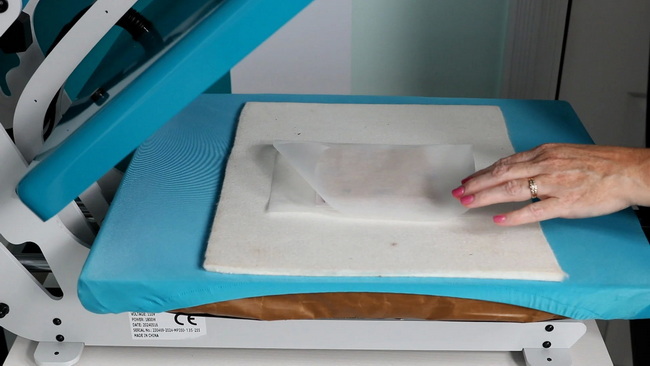
A high‑quality heat press ensures stable temperature, even pressure, and consistent contact with the garment.
- In these tests, transfers were pressed using an HPN Signature Series 15\" × 15\" Auto‑Open Heat Press.
- Auto‑open functionality helps avoid over‑pressing and improves workflow for high‑volume production.
While the exact settings vary by substrate and ink, good practice is to:
- Follow the manufacturer's recommended time and temperature curve.
- Apply medium, even pressure to avoid fuzzy edges or incomplete transfers.
- Maintain consistent settings across batches to support repeatable results.
When you combine 100% polyester garments with a dedicated sublimation printer and a reliable heat press, your chance of defects drops significantly.
Use this straightforward workflow to maximize print quality and minimize rework when sublimating on polyester shirts.
- Select white 100% polyester tees for maximum vibrancy and accuracy.
- For sport or moisture‑wicking styles with a slick feel, choose sublimation‑ready performance fabrics designed for heat transfers.
- Use high‑resolution graphics (at least 300 DPI at print size).
- Convert text to outlines and flatten layers to avoid unexpected changes.
- Set your design on a transparent or white background to prevent accidental color blocks.
- Use genuine sublimation inks compatible with your printer model.
- Mirror the image before printing so it reads correctly after transfer.
- Print on high‑quality sublimation paper to improve color release and reduce ghosting.
- Pre‑press the garment for a few seconds to remove moisture and smooth wrinkles.
- This step helps prevent uneven transfers and unwanted steam marks.
- Align the transfer on the shirt and secure with heat‑resistant tape.
- Press at the recommended time and temperature with medium pressure.
- Lift the press carefully and peel the paper while hot to reveal the final print.
Clearing up a few popular myths will help you make better material decisions.
- “Any shirt will work as long as I have sublimation ink.”
Not true. Only polyester fibers permanently bond with sublimation dye; cotton and other natural fibers will fade or wash out.
- “I can get bright colors on dark shirts with standard sublimation.”
Standard sublimation does not include white ink, so dark garments limit visible color range; the shirt color darkens or hides lighter tones.
- “Blends are always worse than 100% cotton.”
Blends are actually better than pure cotton for sublimation because the polyester portion retains color, though not as strongly as 100% polyester.
Understanding these realities helps you manage both customer expectations and production quality.
Because of their durability and vibrancy, 100% polyester shirts are a smart choice for many commercial and creative applications.
Ideal use cases include:
- Team and club jerseys
- Corporate uniforms and promotional tees
- Event merchandise and tour shirts
- Sportswear and moisture‑wicking performance apparel
- High‑detail graphic tees and full‑color photo prints
In each case, the combination of lightweight feel and long‑lasting color makes polyester garments a practical and profitable option.
If you want sharp, vibrant, and durable prints that keep customers coming back, make 100% polyester shirts your default choice for sublimation projects. Evaluate your current garment lineup, replace underperforming cotton options with high‑quality polyester styles, and pair them with reliable sublimation equipment to standardize your production quality. For more guidance on choosing the right heat press and accessories for your sublimation workflow, visit HeatPressNation.com and explore their range of sublimation printers, papers, and presses designed for professional results.
Contact us to get more information!
No. Increasing temperature or time cannot change the fact that cotton fibers do not chemically bond with sublimation dye, so the print will still fade quickly.
Yes. 50/50 blends can be useful when you want a softer, “vintage” style print with slightly faded colors, as long as you understand they will not be as bold as 100% polyester.
Most performance polyester garments are excellent for sublimation, as long as they are at or near 100% polyester and rated as suitable for heat transfer processes.
Because sublimation printers do not use white ink, the base shirt color interacts with the printed colors, altering or reducing the visibility of lighter tones and whites.
You need a dedicated sublimation printer (such as models similar to the Sawgrass Virtuoso series), compatible sublimation ink and paper, and a quality heat press like a 15\" × 15\" auto‑open machine.
1. https://www.heatpressnation.com/blogs/blog/why-you-should-use-100-polyester-shirts-for-sublimation


