If you have any questions, please feel free to contact us.| Email Us: info@dcheatpress.com


Views: 222 Author: Amanda Publish Time: 2026-02-24 Origin: Site


Content Menu
● Can You Use an Oven for Sublimation Drinkware
● Why You Need a Dedicated Oven for Sublimation
● Choosing the Right Oven for Sublimation Drinkware
● How to Test and Calibrate Your Sublimation Oven
>> Step‑by‑Step Oven Calibration
● Recommended Time and Temperature Ranges for Oven Sublimation
>> Typical Starting Points for Common Drinkware
● How to Prepare Drinkware for Sublimation in an Oven
>> Design, Printing, and Taping Tips
● Using Shrink Wrap Sleeves and Oven Wraps
>> How to Apply Shrink Wrap for Oven Sublimation
● Safe Loading and Sublimation Workflow in an Oven
>> Basic Oven Sublimation Steps
● How to Increase Productivity: Batch Sublimation Strategies
>> Practical Ways to Maximize Each Cycle
● Safety and Ventilation When Using a Sublimation Oven
>> Personal and Workspace Safety Tips
● Troubleshooting Common Oven Sublimation Problems
● Expert Best Practices for Consistent Oven Sublimation
● When to Upgrade from an Oven to a Press or Larger System
● Call to Action: Build a Safer, More Efficient Sublimation Drinkware Line
● FAQs About Sublimation Drinkware Using an Oven
>> 1. Can I use my regular kitchen oven for sublimation drinkware
>> 2. What temperature and time should I start with for mugs and tumblers
>> 3. Do I have to use shrink wrap when sublimating drinkware in an oven
>> 4. How many mugs or tumblers can I sublimate at once in an oven
>> 5. Is sublimation drinkware made in an oven dishwasher‑safe
Sublimating drinkware in an oven is a powerful way to produce mugs, tumblers, and glassware without investing in multiple specialty presses, as long as you follow safe practices and dial in the right settings for your equipment. This upgraded guide expands the basic tips into a full 2026 workflow, including safety, testing, time and temperature, productivity strategies, and expert best practices for consistent, production‑ready results.
Using an oven for sublimation is common for mugs and tumblers, but it must be treated as dedicated equipment and never reused for food. Convection ovens and purpose‑built sublimation ovens provide better heat circulation, more even results, and fewer failures than typical household ovens that are not designed for industrial‑style heat transfer.
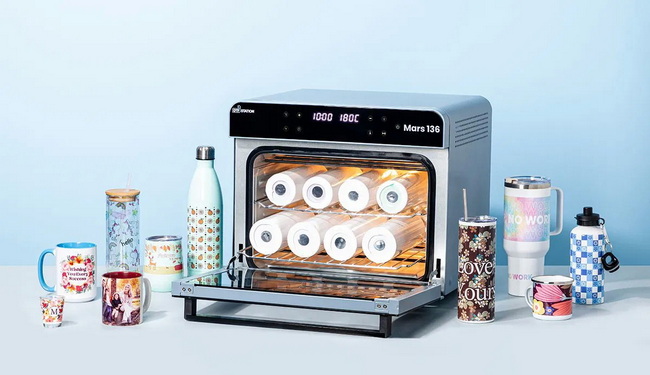
Once an oven has been used for sublimation, it should not be used to cook food, because gaseous dye can contaminate the interior and re‑vaporize at high temperatures. Dedicated sublimation ovens are recommended not only for safety, but also because they are easier to keep at stable, repeatable temperatures between 350–400 °F (175–205 °C), which is the core range for most sublimation drinkware.
For most users, a countertop convection oven that can reach at least 400 °F is a practical starting point, while larger operations may upgrade to industrial machines like dedicated sublimation ovens or tunnel systems. Look for models with accurate thermostats, good airflow, and enough interior space to keep mugs or tumblers away from heating elements so you do not scorch one side while under‑heating another.
Oven Type | Best Use | Typical Pros | Typical Cons |
Small countertop convection oven | Home crafters, startups | Affordable, easy to dedicate to sublimation, good airflow for 2–6 mugs | Limited capacity, temperature may vary by zone |
Large convection / commercial oven | Small to mid-size studios | Higher capacity, more stable temperature, can run multiple shelves | Higher cost, needs more space and ventilation |
Purpose-built sublimation oven | Professional drinkware production | Designed for sublimation blanks, better safety and controls, optimized airflow | Highest upfront cost, single-purpose machine |
Every convection oven has its own heating pattern, so calibration is critical before you run real orders. A simple test with two or more oven thermometers placed at opposite corners helps you identify hot and cold spots and understand how far the display temperature differs from the true internal temperature.
- Place thermometers in two diagonal corners on the oven rack, away from direct contact with elements.
- Preheat the oven to 350 °F and let it stabilize for at least 10–15 minutes before reading the thermometers.
- Record readings and repeat at 375 °F and 400 °F to see whether the oven runs hot or cool across the sublimation range.
- Note hot spots where one thermometer reads significantly higher; you may need to rotate blanks or adjust placement to avoid banding.
- Create a calibration chart mapping set temperature to actual temperature so you can compensate during production.
Unlike a mug or tumbler press, an oven heats drinkware using ambient hot air, so cook times are longer even when the target temperature is similar. For many ceramic mugs and stainless tumblers, initial tests between 350–400 °F for 6–8 minutes are a reasonable starting point, but you should always verify the manufacturer's instructions for each blank.
Blank Type | Starting Temperature | Starting Time | Notes |
11–15 oz ceramic mug | 375–400 °F | 6–8 minutes | Use shrink wrap or tight oven wrap; rotate halfway if your oven has hot spots. |
20 oz stainless skinny tumbler | 375–385 °F | 5–7 minutes | Use shrink wrap sleeves; avoid placing too close to upper elements. |
Frosted or clear glass tumbler | 350–365 °F | 4–6 minutes | Start lower to reduce risk of cracking; increase gradually after tests. |
Pint glass / beer stein | 350–375 °F | 6–8 minutes | Thicker glass may require slightly longer times. |
Always test one sample blank before running a full batch, adjusting time in 30–60 second increments and temperature in 5–10 °F steps as needed.
Proper surface preparation improves color, reduces ghosting, and minimizes wasted blanks. Before taping your transfer, clean each item with a lint‑free cloth and, for glass and metal, a small amount of isopropyl alcohol to remove dust, oils, and fingerprints.
- Print with a sublimation printer on coated sublimation paper, mirroring your artwork for full‑wrap designs.
- Trim the transfer so seams meet cleanly; overlapping edges can create a visible line on the finished drinkware.
- Use heat‑resistant tape along the full seam and around the top and bottom edges to keep the paper tight, especially near curves.
- For full‑wrap tumblers, stretch the sheet firmly around the blank, press the seam with your thumb, and tape from center outward to push out air.
Shrink wrap sleeves and reusable oven wraps are key to getting even pressure around drinkware in an oven, especially for full‑wrap designs. When properly applied, they hold the transfer flush to the blank, helping avoid faded bands, light spots, or ghosting near seams.
- Wrap the printed transfer tightly around your mug or tumbler and tape the seam securely.
- Slide the drinkware into a correctly sized shrink wrap sleeve, making sure the seam of the sleeve does not sit directly over your transfer seam.
- Use a heat gun to shrink the sleeve, moving quickly and evenly so you do not over‑heat one area and risk tearing.
- Check for wrinkles; minor wrinkles over taped areas are usually fine, but large loose sections may cause light spots and should be re‑done.
Reusable silicone oven wraps work similarly but are tightened with clamps or fasteners; they are ideal for higher‑volume workflows because they produce less plastic waste over time.
How you load your oven affects airflow and color consistency across a batch. Do not overcrowd the rack; leave space around each item so hot air can circulate freely, especially when working with tall tumblers close to the oven's top elements.
- Preheat the oven to your target temperature and let it stabilize for 10–15 minutes.
- Place wrapped drinkware upright on a rack or tray, avoiding direct contact with heating elements and walls.
- Set a separate timer (not just the oven timer) for your planned cook time, typically 6–8 minutes for many ceramic mugs.
- For ovens with noticeable hot spots, rotate items halfway through — front to back or top shelf to bottom — to balance exposure.
- When time is up, remove the items carefully using heat‑resistant gloves and place them on a heat‑safe surface to cool slightly before removing wraps and paper.
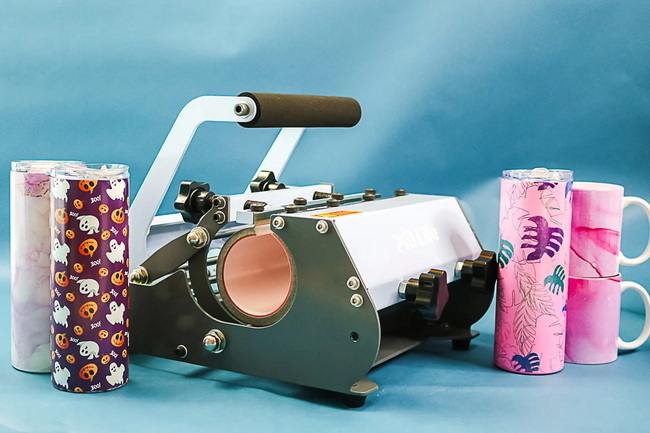
Cook time in an oven does not have to be downtime; you can use it to prepare more blanks, manage artwork, or even run a mug press in parallel. Many small businesses scale production by combining a sublimation oven for full‑wrap tumblers with mug or tumbler presses for repeat orders and smaller runs.
- Batch similar items together (same material, size, and coating) so you can reuse the same time and temperature settings.
- Use a two‑stage workflow: while one batch is in the oven, tape new transfers, weed decals, or prepare shipping labels.
- For larger operations, consider multi‑shelf or larger‑capacity ovens to process more units in the same cook time.
Sublimation inks release chemical vapors when heated, so good ventilation is essential, especially in small craft rooms. Position your oven in a well‑ventilated area, consider a small fume extractor or exhaust fan, and avoid placing it under low cabinets where heat and fumes can build up.
- Wear heat‑resistant gloves when loading and unloading drinkware to prevent burns.
- Avoid leaning face‑first into the oven when opening the door so you do not inhale a concentrated burst of vapors.
- Do not use the oven for any food once it has been used for sublimation, even if you believe you can “clean it out”.
- Keep a small, appropriate fire extinguisher nearby and ensure outlet and wiring can handle the oven's power draw.
Even experienced decorators occasionally see issues such as banding, faded colors, or ghosting, especially when switching to new blanks or ovens. A structured troubleshooting approach helps you get back to consistent results quickly.
- Faded overall print: Increase cook time in 30–60 second increments or raise temperature by 5–10 °F, checking that your oven actually reaches the set temperature.
- Light band or stripe around middle: Often caused by uneven pressure or a cool zone; tighten wraps, reposition in the oven, or rotate halfway.
- Ghosting / shadows near edges: Transfer or wrap moved during heating; use more tape at the rim and base, and avoid bumping items when loading or unloading.
- Scorching or yellowing: Temperature too high or time too long; reduce both slightly and keep blanks away from direct radiant elements.
- Cracked glass: Heat ramped too fast or temperature too high; pre‑warm glassware at a lower temperature, then increase gradually, and never place cold glass straight into a very hot oven.
Over time, building standard operating procedures turns one‑off success into repeatable, profitable production. Professional shops document their preferred settings for each blank, keep a sample reference wall, and train staff to follow the same taping, wrapping, and loading routines for every batch.
Key expert habits include:
- Keeping a sublimation journal for each drinkware type — noting supplier, coating, artwork coverage, time, temperature, and results.
- Testing new suppliers with at least two or three blanks before committing to large orders.
- Periodically re‑checking oven calibration, especially after moving the machine, changing racks, or noticing subtle color shifts.
An oven is ideal for starting out or for full‑wrap designs, but many decorators eventually complement it with mug presses, tumbler presses, or multi‑station heat systems. Upgrading your heat transfer equipment improves throughput, reduces failure rates, and unlocks more product types such as plates, tiles, or apparel that are better suited to flat or specialty presses.
If your order volume is growing and you are regularly running multiple oven cycles per day, it may be time to invest in:
- A larger, more precise sublimation oven for big batches of drinkware.
- Dedicated mug or tumbler presses for small, quick orders and re‑runs.
- Professional heat presses or automated lines from manufacturers like COLORFUL to support a broader product catalog and higher consistency.
If you are ready to move beyond trial‑and‑error and turn oven sublimation into a reliable drinkware business, now is the time to refine your equipment and workflow. Apply the tips in this guide to calibrate your oven, standardize your settings, and plan your next upgrade so every mug or tumbler comes out vibrant and consistent. When you are prepared to expand capacity or improve quality, consider combining your dedicated sublimation oven with professional heat transfer equipment from COLORFUL, so your drinkware production line is safer, faster, and built for long‑term growth.
Contact us to get more information!
You should not use a household kitchen oven for sublimation if you plan to cook food in it later, because sublimation ink vapors can contaminate the oven interior and potentially transfer to food. Always dedicate a separate oven exclusively to sublimation projects.
A common starting range is 375–400 °F for about 6–8 minutes for ceramic mugs, and around 375–385 °F for 5–7 minutes for stainless skinny tumblers, adjusting based on your blank manufacturer's directions and test results. Because ovens heat by ambient air, you may need more time than you would in a mug press at similar temperatures.
Shrink wrap sleeves or silicone oven wraps are strongly recommended because they keep the transfer tight against the surface, improving color and reducing banding or ghosting on full‑wrap designs. Without wraps, it is difficult to maintain uniform pressure around curved drinkware inside an oven.
Capacity depends on your oven size, but it is better to run fewer items with good airflow than to overcrowd and get uneven results. As a rule, leave space between items and test your specific oven to find the maximum number you can process while maintaining consistent color across the batch.
Most quality sublimation coatings on mugs and tumblers are designed to be durable, but actual dishwasher performance depends on the blank's rating and how closely you followed the recommended time and temperature. For longevity, many decorators still recommend hand washing or using the top rack only, especially for glass and specialty finishes.
1. https://www.heatpressnation.com/blogs/heat-press-tips-tricks/essential-tips-for-sublimation-drinkware-using-an-oven
2. https://www.heatpressnation.com/pages/hpn-sublimation-pint-glass-instructions
3. https://heyletsmakestuff.com/how-to-sublimate-a-tumbler/
4. https://tastefullyfrugal.org/how-to-make-sublimation-tumblers-in-convection-oven/
5. https://www.mecolour.com/can-you-use-a-normal-oven-for-sublimation/
6. https://www.heatpressnation.com/blogs/blog/how-to-tackle-multiple-sublimation-tumblers-for-production
7. https://www.youtube.com/watch?v=Gnoafklgglo
8. https://www.youtube.com/watch?v=kqrNgptFC4s
9. https://www.reddit.com/r/Sublimation/comments/1i18ucy/health_risks_precautions_for_sublimation/
10. https://www.reddit.com/r/Sublimation/comments/1hxrgxa/help_sublimation_newbie/


