If you have any questions, please feel free to contact us.| Email Us: info@dcheatpress.com


Views: 222 Author: Amanda Publish Time: 2026-01-04 Origin: Site


Content Menu
● What Are Sublimation Machines?
● Why Egypt Needs Strong Sublimation Machines Manufacturers and Suppliers
● Core Components of a Sublimation Workflow
● Heat Press Machines: The Heart of the Transfer
● Types of Sublimation Machines Used in Egypt
>> Desktop and Small‑Format Systems
>> Wide‑Format Roll‑to‑Roll Systems
>> Industrial Direct‑to‑Fabric Solutions
● Key Sublimation Solutions Providers in Egypt
>> Thebes International and Mimaki Technology
>> DGI Egypt
>> Alwan Fashion and Sublimation Services
● Global Technology Shaping Egypt's Sublimation Market
>> Eco‑Friendly Sublimation Solutions
● COLORFUL (dcsbheatpress.com) as a Global Partner
>> How COLORFUL Complements the Egyptian Market
● How Egyptian Buyers Should Evaluate Sublimation Machines Manufacturers and Suppliers
>> Technical Performance and Reliability
>> Service, Training, and Spare Parts
>> Scalability and Upgrade Paths
● Practical Tips for Egyptian Textile Printers and Converters
● Working With Distributors, Agents, and Global Partners
● Future Trends in Sublimation for the Egyptian Market
● FAQ – Sublimation Machines Manufacturers and Suppliers
>> 2) How should Egyptian factories balance investment between printers and heat presses?
>> 4) What factors should new Egyptian businesses consider before buying their first sublimation setup?
Egypt has a rapidly expanding apparel, sportswear, home textile, and promotional products industry, which depends heavily on reliable and efficient sublimation technology. The choice of Sublimation Machines Manufacturers and Suppliers directly shapes print quality, production efficiency, and long‑term profitability across Egyptian factories and workshops. This article explains the sublimation process, outlines the local ecosystem in Egypt, and shows how a global partner like COLORFUL (dcsbheatpress.com) can support high‑value heat transfer production.
Sublimation Machines are systems designed to transfer dye from a solid state on paper into a gaseous state that permanently bonds with polyester fibers or polymer‑coated surfaces under heat and pressure. These systems typically combine a digital sublimation printer with transfer paper, specialized inks, and a calibrated heat press or calender. When operated correctly, sublimation produces vivid, wash‑resistant images that do not crack or peel because the dyes are embedded inside the substrate rather than sitting on top.
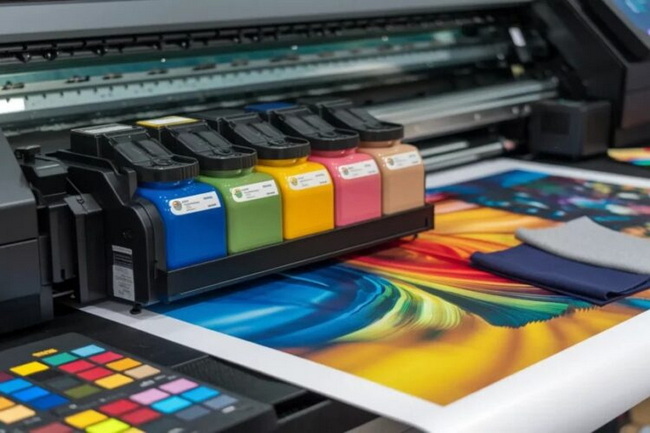
In practical terms, sublimation is ideal for high‑quality fashion fabrics, performance sportswear, flags, home textiles, and a wide array of customized promotional items. For Egyptian producers facing growing demand for short runs and personalization, sublimation offers flexibility, fast turnaround, and a relatively low cost of entry compared with many analog printing methods.
Egypt is one of the key textile and garment hubs in the MENA region, serving both local consumers and export markets. As brands move toward fast fashion, limited drops, and personalized products, digital textile printing based on sublimation has become a strategic technology. Reliable Sublimation Machines Manufacturers and Suppliers are therefore critical for:
- Ensuring consistent color quality and sharpness across large production runs.
- Providing fast access to spare parts, consumables, and technical service to minimize downtime.
Because many Egyptian factories work with tight delivery windows and strict quality requirements, they require industrial‑grade printers, calenders, and heat presses that can operate continuously. At the same time, small and medium‑sized workshops need compact, user‑friendly solutions for customized apparel, mugs, caps, and gift items. Therefore, Egypt's market spans everything from entry‑level desktop press systems to wide‑format industrial sublimation lines.
For both small workshops and large factories in Egypt, a complete sublimation workflow typically includes:
- Digital sublimation printer: Inkjet printer configured with sublimation inks to print designs onto transfer paper.
- Transfer paper: Specially coated paper that holds the ink in place until it is vaporized under heat.
- Sublimation ink: Dye‑based ink formulated to sublimate at specific temperatures and bond with polyester or polymer coatings.
- Heat press or calender: Machine that applies controlled heat, pressure, and time to drive the dye into the substrate.
This combination allows Egyptian businesses to print complex patterns, gradients, and photographic images with high color intensity and fine details. For roll‑to‑roll fabric printing, a continuous calender press is often used, while flat presses are preferred for cut panels, garments, and rigid blanks.
Even the best printer cannot produce acceptable results without a precise heat press. The press is responsible for transferring the image from paper to substrate at the correct temperature, pressure, and dwell time. If temperature is too low, the dyes may not fully sublimate, leading to dull colors and weak wash resistance. If temperature or dwell time is too high, the fabric can be scorched or the colors can shift.
Egyptian users of sublimation technology typically work in temperature ranges around 180–200°C with times between 30 and 60 seconds, depending on fabric type and thickness. Pressure must be adjusted carefully to avoid banding, blurred edges, or ghosting. Because of Egypt's hot climate and high‑volume production environment, robust, well‑insulated presses with stable electronics are particularly valuable. That is why many businesses place strong emphasis on sourcing presses from experienced Sublimation Machines Manufacturers and Suppliers that understand textile production conditions.
Across Egypt's varied printing landscape, different types of sublimation systems are used depending on application, volume, and available budget.
Small‑format printers and compact flat presses are popular among startups, gift shops, and online customization brands. These systems are suitable for:
- T‑shirts, jerseys, and small apparel orders.
- Personalized mugs, phone covers, and photo gifts.
They appeal to entrepreneurs who want to enter the market with relatively low capital investment while still delivering professional results.
For high‑volume textile and soft signage production, wide‑format printers combined with calender presses are essential. Egyptian textile mills and garment exporters use them to:
- Print continuous rolls of polyester fabric for sportswear, flags, and fashion.
- Create soft signage, fabric backlits, and display graphics for retail and events.
These systems demand reliable ink delivery, precise media handling, and efficient drying and fixation to keep up with production goals.
Some large Egyptian producers invest in industrial direct‑to‑fabric printers that integrate printing and fixation or that work in line with high‑capacity calenders. Such systems reduce handling, improve registration, and support long production runs, making them attractive for export‑oriented operations. Industrial solutions often come from global Sublimation Machines Manufacturers and Suppliers with strong R&D capability and proven track records in textile markets worldwide.
Egypt's sublimation market is served by a combination of local integrators, regional dealers, and international manufacturers. While not all of them build equipment locally, they act as essential links between global technology and Egyptian end users.
Thebes International works as an agent for Mimaki, a well‑known Japanese manufacturer of digital printing equipment. Through this partnership, Thebes supplies sublimation printers such as models designed for transfer paper printing on textiles. These printers are valued for:
- High print quality with fine droplet control and precise color management.
- Productivity modes tailored for both sample production and continuous industrial work.
As a result, Thebes International functions as an important member of the wider network of Sublimation Machines Manufacturers and Suppliers active in Egypt, even though it operates primarily as a distributor and solutions provider.
Another prominent presence in digital textile printing in Egypt is Taiba International, which also represents Mimaki solutions for the local market. Through its portfolio, Egyptian customers can access:
- High‑speed sublimation printers geared toward industrial textile applications.
- Direct‑to‑fabric systems for fashion, home textile, and flag production.
Taiba supports users with installation, color management, and service, helping them get the most out of advanced inkjet technology.
DGI Egypt builds on decades of experience in printing and paper to offer digital textile and large‑format solutions tailored to local needs. Its portfolio typically focuses on dye‑sublimation and transfer printing for textiles and signage. Through its FABRIJET and related product lines, DGI Egypt plays several roles:
- Advising clients on appropriate printer widths, ink sets, and fabric types.
- Helping factories design efficient workflows that integrate printers, calenders, and finishing equipment.
In this way, DGI Egypt acts as both equipment supplier and technology partner, connecting Egyptian producers with global Sublimation Machines Manufacturers and Suppliers.
Alwan Fashion is an example of a company that specializes in sublimation printing services rather than manufacturing equipment. It offers sublimation on fabrics for apparel and fashion projects, using integrated printer‑and‑press systems. Its role in the ecosystem is to:
- Demonstrate what can be achieved with correct settings for temperature, pressure, and time.
- Educate customers about appropriate fabric choices, such as high‑polyester blends, for optimal sublimation results.
By showcasing best practices, Alwan Fashion indirectly encourages higher standards for equipment and consumables supplied by manufacturers.
MAK Printing Solutions started in Egypt as a partner for HP latex plotters and expanded into other digital printing technologies, including brands such as MUTOH and SUMMA. Although its core offerings are not limited to sublimation, many clients that invest in signage or display printers also integrate sublimation lines into their production. MAK therefore occupies a strategic position:
- Helping customers choose combinations of technologies that cover both rigid signage and textile applications.
- Enabling print shops to diversify into fabric backlits, soft signage, and display systems that complement sublimation apparel lines.
This blended approach reflects how Sublimation Machines Manufacturers and Suppliers often interact with other segments of digital printing.
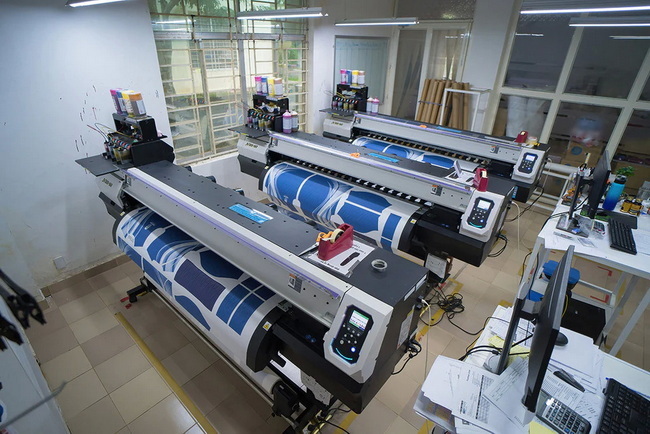
Egyptian buyers frequently monitor developments among leading global Sublimation Machines Manufacturers and Suppliers to guide their investments. Several global trends are particularly influential:
- Integration of printing and fixation in single devices to simplify workflows and reduce operator handling.
- Use of high‑efficiency print heads that combine speed, resolution, and long life.
- Greater focus on eco‑friendly inks, energy‑efficient dryers and presses, and reduced waste.
At major trade shows and regional exhibitions, Egyptian buyers see new systems that promise higher productivity and lower running costs. These observations influence both immediate purchasing decisions and long‑term modernization plans for factories.
Suppliers that present environmental benefits often gain extra attention from Egyptian producers seeking to comply with global sustainability expectations. Systems marketed as eco‑friendly tend to feature:
- Low‑VOC or water‑based sublimation inks.
- Energy‑efficient fixation units with improved insulation and smarter temperature control.
- Workflow designs that reduce paper waste and misprints.
As environmental regulations and buyer requirements evolve, eco‑oriented Sublimation Machines Manufacturers and Suppliers can help Egyptian factories remain competitive in export markets.
COLORFUL is a specialized producer dedicated to research, development, manufacturing, sales, and service of high‑quality heat transfer equipment. Its portfolio covers heat presses, welding machines, and embossing machines that are widely used in garment decoration, label finishing, and specialty applications. Although COLORFUL operates globally rather than from within Egypt, its focus makes it a valuable partner for Egyptian buyers looking to strengthen their sublimation and heat transfer infrastructure.
COLORFUL's range of heat transfer equipment is designed to cover both general and niche applications. Key product categories include:
- Flat heat presses for T‑shirts, sportswear, and fabric panels.
- Specialized presses for caps, mugs, plates, and irregular‑shaped substrates.
- Industrial presses for larger formats, continuous production, or integration into semi‑automatic lines.
By providing diverse machines with carefully engineered temperature and pressure control, COLORFUL enables users to achieve consistent transfer results, whether they are decorating apparel, promotional items, or technical textiles.
Egyptian textile printers and promotional product manufacturers frequently purchase printers and calenders through local agents and distributors. COLORFUL can complement this ecosystem by supplying reliable heat presses and related equipment that integrate seamlessly into existing lines. This synergy offers several advantages:
- Egyptian buyers can source robust presses capable of handling demanding production schedules and high ambient temperatures.
- Distributors and importers in Egypt can expand their offerings by partnering with COLORFUL, adding high‑quality heat transfer solutions to their portfolios of printers, inks, and media.
Through this combination of local and global strengths, COLORFUL becomes part of the extended family of Sublimation Machines Manufacturers and Suppliers serving the Egyptian market.
Choosing the right supplier is not simply a matter of picking the lowest price or the fastest headline speed. Egyptian businesses should evaluate Sublimation Machines Manufacturers and Suppliers according to several key criteria.
- Printer resolution, color gamut, and print speed must match the product mix and quality standards of the factory.
- Heat presses and calenders should maintain stable temperature profiles and uniform pressure over time, even under heavy use.
Testing sample prints and running trial jobs can reveal issues with banding, color consistency, and mechanical stability that are not obvious from brochures.
- Local service availability is crucial, especially for high‑volume environments where even a few hours of downtime can be costly.
- Comprehensive training on color management, RIP software, maintenance, and safety procedures ensures that teams can operate machines efficiently.
Suppliers or their representatives who maintain spare parts stocks, remote support channels, and clear maintenance schedules offer greater long‑term value than those who only handle initial installation.
The real cost of sublimation equipment includes:
- Purchase price of printers, presses, and accessories.
- Ongoing expenses for inks, paper, electricity, and routine maintenance.
- Potential costs from waste, reprints, and unexpected downtime.
By working with reputable Sublimation Machines Manufacturers and Suppliers, Egyptian businesses gain transparency in running costs, enabling more accurate pricing and better profit control.
Egyptian companies that start with modest production volumes often plan to grow into regional or global suppliers. When selecting equipment, it is important to consider:
- Whether the supplier offers higher‑capacity models with similar ink systems and workflows.
- The possibility of adding more presses, integrating automation, or connecting to online ordering and job management platforms.
Suppliers that provide clear upgrade paths are attractive because they allow factories to scale without completely redesigning their production systems.
To make the most of what Sublimation Machines Manufacturers and Suppliers can offer, Egyptian businesses can follow several practical steps:
- Define target markets and product categories before investing, such as sportswear, fashion, flags, or promotional gifts, and match them to appropriate printer widths and press formats.
- Request real‑world sample prints on the same types of fabrics or blanks used in daily production to evaluate quality and durability.
- Compare not only equipment specifications but also service contracts, response times, and training programs.
- Start with a balanced setup—adequate printing capacity and enough pressing capacity—so that one part of the workflow does not become a bottleneck.
By following these guidelines, printers and converters in Egypt can build robust sublimation operations capable of competing in both local and export markets.
In Egypt, many factories purchase equipment through local distributors and agents rather than directly from overseas manufacturers. This arrangement has several implications:
- Local agents provide cultural and language familiarity, making communication easier for troubleshooting and training.
- They often handle import logistics, customs, and warranty processes, which can be complicated for individual factories.
However, direct relationships with international Sublimation Machines Manufacturers and Suppliers can be useful when factories require customized machines, large‑volume purchasing, OEM projects, or specialized engineering support. A hybrid strategy—working closely with both capable local partners and responsive global manufacturers—can deliver the best of both worlds.
Looking ahead, several trends are likely to shape how sublimation develops in Egypt:
- Automation and workflow software: Integration between printers, presses, and MIS/RIP systems promises better scheduling, job tracking, and color control.
- New materials and applications: Innovative polyester blends, performance fabrics, and coated substrates will open new product categories for Egyptian producers.
- Sustainability and compliance: Buyers in Europe and other regions will continue to demand environmentally responsible production, driving adoption of cleaner inks and more efficient equipment.
Sublimation Machines Manufacturers and Suppliers that invest in these areas will be particularly relevant for Egyptian businesses seeking to stay ahead of regional competition.
Egypt's textiles, apparel, and promotional goods industries are undergoing rapid transformation, driven by demand for customization, shorter production runs, and faster time‑to‑market. Sublimation technology stands at the center of this shift, offering vivid, durable prints on polyester fabrics and polymer‑coated substrates. To harness this potential, Egyptian businesses must work with reliable Sublimation Machines Manufacturers and Suppliers that can deliver not only advanced printers and heat presses but also strong technical support, training, and upgrade paths.
Local agents and integrators, such as those representing major international brands, help ensure fast service and tailored solutions for the Egyptian context. At the same time, global partners like COLORFUL (dcsbheatpress.com) contribute specialized heat transfer equipment that complements existing printers and workflows. By carefully evaluating technical performance, service quality, and total cost of ownership, Egyptian producers can build sublimation operations that are flexible, sustainable, and globally competitive.
Established suppliers offer tested equipment, consistent consumables, and documented best practices, which reduce the risk of print defects and production interruptions. They also provide structured service and training programs that help Egyptian teams operate and maintain their sublimation lines efficiently over the long term.
Printers generate the images, but heat presses complete the transfer, so both must be sized and specified to match each other's capacity. Factories should avoid overspending on high‑speed printers while relying on underpowered presses that create bottlenecks, and instead design a balanced system that maintains steady throughput from printing to pressing.
Local dealers generally provide faster on‑site support, localized training, and easier communication, which is essential for daily operations and troubleshooting. International manufacturers add value through deep engineering knowledge, firmware and software updates, and access to the latest hardware, so the best approach is often to rely on both local and global partners working in coordination.
New businesses should clearly define their target products and volumes, then choose printers, inks, papers, and presses that match those needs rather than chasing the highest specifications. Owners should also evaluate space, electrical capacity, ventilation, and staff skills, as well as investigate whether their chosen Sublimation Machines Manufacturers and Suppliers can provide training and gradual upgrade options as the business grows.
COLORFUL focuses on the R&D and manufacturing of heat transfer equipment, offering a wide range of flat and specialized presses, welding machines, and embossing solutions that integrate into existing sublimation lines. For Egyptian buyers, this means access to dedicated heat transfer expertise, robust machines suitable for intensive use, and the possibility to collaborate with a global partner that understands the demands of textile and promotional product decoration.


