If you have any questions, please feel free to contact us.| Email Us: info@dcheatpress.com


Views: 222 Author: Amanda Publish Time: 2026-02-01 Origin: Site


Content Menu
● Introduction to Pneumatic Heat Transfer Machines
● Why Pneumatic Heat Transfer Machines Dominate the Indian Market
>> Uniform Pressure and Print Consistency
>> Higher Productivity and Dual‑Station Designs
>> Versatility Across Applications
● Key Features Offered by Top Pneumatic Heat Transfer Machine Manufacturers and Suppliers
>> Advanced Temperature and Time Control
>> Robust Build and Safety Systems
● Leading Pneumatic Heat Transfer Machine Manufacturers and Suppliers in India
>> R K D Industries (Amritsar, Punjab)
>> SSM Machines (Coimbatore, Tamil Nadu)
>> Other Notable Indian Suppliers
● How COLORFUL Serves Global Buyers Looking at India
>> Example Use‑Case for Indian Buyers
● Practical Buying Guide for Indian Businesses
>> Step‑by‑Step Selection Factors
>> Role of Video Demonstrations in Evaluation
● Best Practices for Operating Pneumatic Heat Transfer Machines in India
>> Environmental and Maintenance Considerations
● FAQ – Pneumatic Heat Transfer Machine Manufacturers and Suppliers
>> 1. What is a pneumatic heat transfer machine, and why is it popular in India?
>> 2. How do I choose between single‑bed and double‑bed pneumatic heat presses?
>> 3. What role do Indian manufacturers play compared with global suppliers?
>> 4. Why are video demonstrations important when evaluating pneumatic heat presses?
Pneumatic heat transfer technology has become the backbone of modern garment, textile, and industrial printing in India, and choosing the right Pneumatic Heat Transfer Machine Manufacturers and Suppliers is critical for consistent quality and long‑term profitability.
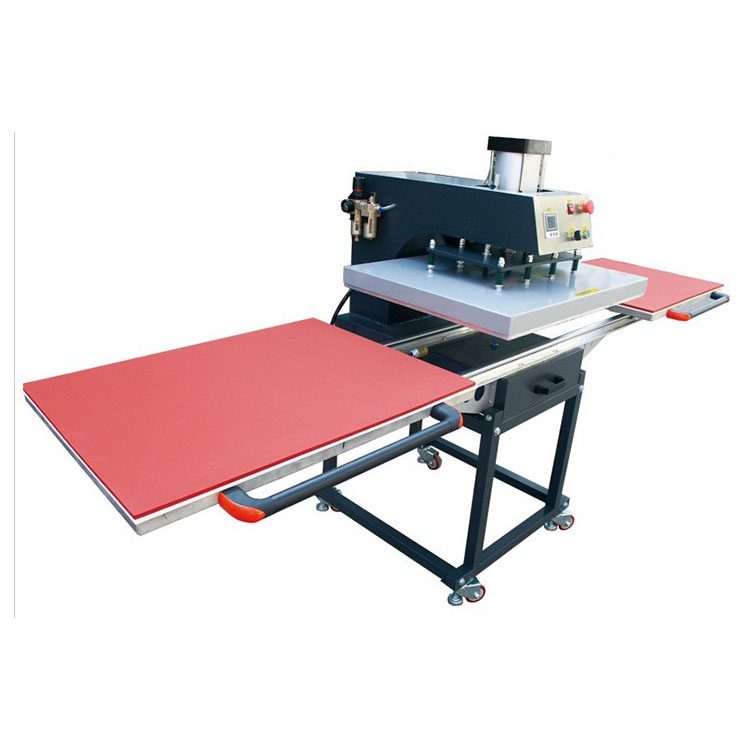
Pneumatic heat transfer machines use compressed air to apply uniform pressure and controlled heat to transfer graphics, logos, and images onto a wide range of substrates, including garments, ceramics, and metal products.
Compared with manual presses, they deliver higher repeatability, reduced operator fatigue, and faster production cycles, making them ideal for growing print shops and industrial users in India.
In India, demand for these systems spans small custom T‑shirt start‑ups, high‑volume export apparel units, corporate gifting suppliers, and specialized industrial decorators.
As a result, Pneumatic Heat Transfer Machine Manufacturers and Suppliers now compete not only on price but also on automation level, safety features, platen size, and after‑sales service.
Pneumatic presses are also valued for their ability to maintain performance over long production runs, which is crucial for export‑oriented units working to strict deadlines.
With the rise of customized fashion, sports merchandising, and on‑demand printing, the importance of durable pneumatic systems is only set to increase.
Because pneumatic presses use air cylinders and valves to control downforce, they can reach and maintain precise pressure levels across the entire platen surface.
This uniform pressure helps avoid common defects such as incomplete transfers, ghosting, or uneven colors, which are especially problematic on larger platens like 16 × 20 inches and 16 × 24 inches.
For Pneumatic Heat Transfer Machine Manufacturers and Suppliers, emphasizing pressure stability is a major differentiator, particularly for customers printing complex multicolor graphics or high‑resolution photographic images.
Consistent pressure also reduces rework and rejects, lowering the effective cost per print over time.
Uniformity is especially important when customers work with layered heat transfer vinyl, thick hoodies, or seams and zippers that can disrupt contact on basic manual presses.
Pneumatic clamping can compensate for these variations far more consistently than a purely manual system.
Many industrial‑grade pneumatic heat presses in India now feature dual‑station or shuttle configurations that allow operators to load one platen while the other is pressing.
This design dramatically increases throughput and is especially useful when handling bulk orders of T‑shirts or flat textile panels.
Leading Pneumatic Heat Transfer Machine Manufacturers and Suppliers offer double‑bed systems where the platens move in and out of the pressing zone automatically, driven by pneumatic actuators.
These systems maintain fast cycle times and smooth workflows, making them suitable for export‑oriented garment factories and corporate branding units.
By reducing idle time, dual‑station systems can significantly increase pieces per hour without adding more operators.
For many Indian businesses, this combination of higher output and modest staffing makes pneumatic double‑bed presses a very attractive investment.
The Indian market covers a wide spectrum of products, from basic cotton T‑shirts to technical textiles, caps, mugs, tiles, lanyards, and promotional items.
Pneumatic presses with interchangeable platens or modular attachments enable users to diversify into multiple product lines without investing in separate machines.
Many Pneumatic Heat Transfer Machine Manufacturers and Suppliers now design machines that can handle sublimation transfers, vinyl, DTF (direct‑to‑film) transfers, and traditional plastisol heat transfers on the same platform.
This flexibility is especially valuable for Indian SMEs that need to respond quickly to seasonal campaigns, festival‑based designs, and corporate customizations.
By choosing versatile pneumatic systems, a single workshop can serve fashion brands, sports clubs, schools, and corporate clients with one equipment line.
This adaptability reduces risk and allows businesses to pivot quickly as trends change.
Modern pneumatic heat press machines in India typically incorporate digital controllers with fine‑tuned temperature and timer settings, allowing operators to store and recall process parameters for different substrates.
This level of control ensures consistent transfer quality and makes it easier to train new operators in busy production environments.
Many Pneumatic Heat Transfer Machine Manufacturers and Suppliers specify maximum temperatures that comfortably cover both low‑temperature films and higher‑temperature sublimation processes.
Some industrial models add power‑off presets, auto‑release, or audible alarms to minimize the risk of scorching or over‑pressing.
In more advanced lines, microprocessor‑based controllers can maintain temperature uniformity across the platen, even in non‑air‑conditioned Indian workshops.
This is vital for ensuring that the first print of the day and the last print of a long shift look identical.
Industrial‑grade pneumatic presses in India often feature heavy‑duty frames, high‑quality aluminum or steel platens, and thoughtfully designed air circuits to handle prolonged operation.
Safety elements such as thermal fuses, circuit breakers, and emergency stop switches help protect both operators and equipment, especially when running at high temperatures for long hours.
For Pneumatic Heat Transfer Machine Manufacturers and Suppliers, structural rigidity and reliable pneumatics directly influence registration accuracy and long‑term alignment of the platens.
These characteristics are vital for customers printing multi‑panel designs, large logos, or repeat patterns that must maintain precise positioning.
Ergonomic handle placement, guarded moving parts, and well‑insulated platens further reduce the risk of accidental burns or pinching injuries.
Such safety and durability considerations are increasingly important as factories move toward 24/7 operations.
Automation is no longer a luxury in India's competitive printing sector; it is becoming a standard expectation.
Features like auto‑clamp, auto‑release, pneumatic up‑and‑down movement, and shuttle platens reduce operator fatigue and enable consistent cycle times, even with a relatively unskilled workforce.
Top Pneumatic Heat Transfer Machine Manufacturers and Suppliers frequently include ergonomic details such as easy‑glide platens, front‑loading designs, and intuitive control panels.
These touches help reduce learning curves and prevent repetitive‑strain injuries in facilities operating multiple shifts.
Foot‑pedal operation, programmable cycles, and clear status indicators (lights or buzzers) also make it easier for operators to manage multiple tasks in a busy production environment.
The end result is a safer, more efficient workplace with fewer mistakes and higher output.
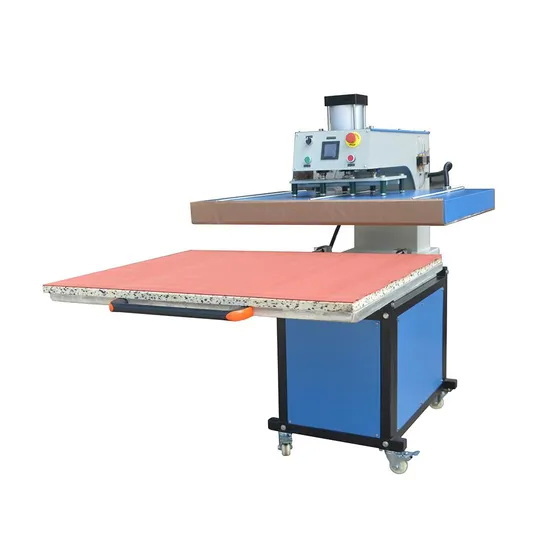
While there are many regional players in India, certain brands and suppliers have established a strong presence in pneumatic heat transfer technology for garments and industrial applications.
They support both small custom units and large‑scale factories with a range of models and configurations.
R K D Industries is widely known as a manufacturer of pneumatic heat press machines, double bed pneumatic heat press machines, and pneumatic double station heat press machines for garment applications.
Its catalog typically includes pneumatic heat transfer fusing machines, double‑bed units, automatic pneumatic double‑bed fusing machines, and multi‑functional heat press machines.
These products target applications such as garment transfer stickers, labels, and logos, as well as larger format work in specialized versions.
With options for automatic operation, adjustable fusing time, and varying platen sizes, R K D Industries has become a familiar name among Pneumatic Heat Transfer Machine Manufacturers and Suppliers serving North Indian garment hubs.
SSM Machines focuses on large‑format and double‑bed pneumatic heat transfer presses aimed at high‑volume industrial users.
Their range includes large format heat press machines and pneumatic heat transfer presses designed for wider fabrics and heavy workloads.
With print areas going up to large dimensions and power ratings suited for continuous use, these machines are tailored for customers working with big textile panels, home furnishing fabrics, and industrial materials.
For many buyers in South India, SSM represents a key local option among Pneumatic Heat Transfer Machine Manufacturers and Suppliers.
India also hosts a network of wholesalers, traders, and regional manufacturers that deal in pneumatic heat transfer presses, bucket printing machines, and specialized fusing units.
Some focus on niche areas such as bucket printing, lanyard printing, or sublimation of unusual shapes and containers.
By sourcing from multiple Pneumatic Heat Transfer Machine Manufacturers and Suppliers, these trading houses can offer a range of budgets and specifications.
This ecosystem ensures that small workshops and rural entrepreneurs can still access pneumatic technology without importing equipment directly.
Although many customers focus on local Indian brands, a growing segment of buyers looks globally for specialized pneumatic heat transfer and welding solutions with higher automation and stability.
COLORFUL (dcsbheatpress.com) positions itself as a research‑driven manufacturer dedicated to designing, producing, selling, and servicing high‑quality heat transfer equipment, welding machines, and embossing machines for worldwide users.
For customers in India, partnering with an international specialist such as COLORFUL can provide access to advanced dual‑station pneumatics, optimized platen coatings, and robust control systems that complement the offerings of domestic Pneumatic Heat Transfer Machine Manufacturers and Suppliers.
This global–local mix gives end users more options in terms of configuration, customization, smart control features, and long‑term scalability.
By leveraging COLORFUL's experience in multiple markets, Indian buyers can gain insight into international best practices around workflow design, airflow optimization, and energy‑efficient operation.
They can also explore specialized solutions for technical textiles, seam sealing, or embossing that might not be widely available locally.
A mid‑sized T‑shirt and sportswear producer in India might start with a domestic single‑bed pneumatic press and later integrate imported dual‑station machines with higher automation as order volumes grow.
By combining local support with global hardware, they can maintain competitive pricing while meeting strict export quality requirements.
For such customers, the ecosystem of Pneumatic Heat Transfer Machine Manufacturers and Suppliers—including COLORFUL—becomes an asset, providing options at each stage of business growth.
The business can gradually upgrade from manual or semi‑automatic systems to full pneumatic lines without disrupting existing production.
Choosing among multiple Pneumatic Heat Transfer Machine Manufacturers and Suppliers can be challenging for new or expanding print businesses.
A structured approach helps buyers match machine capabilities to their real production needs.
1. Production Volume and Product Mix
Assess the number of prints per day and product types (T‑shirts, caps, panels, tiles, buckets, etc.) before shortlisting machine sizes and station configurations.
High‑volume shops typically benefit from dual‑station or double‑bed pneumatic presses, whereas low‑volume or boutique businesses may choose smaller single‑platen models to control costs.
2. Platen Size and Temperature Range
Confirm that platen dimensions match your largest artwork and garment sizes, such as 16 × 20 or 16 × 24 inches for standard apparel, or larger sizes for home textiles.
Check that the temperature range supports both low‑temperature vinyl and higher‑temperature sublimation applications, especially if you plan to work with ceramics, metal, or thick polyester.
3. Air Supply and Electrical Requirements
Since pneumatic machines require an air compressor, verify compressor capacity, air quality, and pressure compatibility with the press.
Ensure your facility's electrical supply can support machine wattage, compressor load, and any auxiliary curing, fusing, or drying equipment.
4. Service, Warranty, and Spare Parts
Review warranty terms, typical lead times for spare parts, and the availability of local service support or authorized technicians.
Pneumatic Heat Transfer Machine Manufacturers and Suppliers that maintain spares and training support in India can significantly reduce downtime.
5. Future Expansion and Automation
Consider whether your chosen model can integrate later with conveyors, pre‑press stations, or automated loading systems.
Planning for expansion makes it easier to scale from a small workshop to a multi‑line factory without replacing all your equipment.
Many suppliers and users share demonstration clips and in‑depth reviews of pneumatic dual head and shuttle presses, showcasing pressure control, platen motion, and workflow examples.
These videos, often shot in live production environments, help buyers understand operating noise levels, loading ergonomics, and cycle times before investing.
Because Pneumatic Heat Transfer Machine Manufacturers and Suppliers may list similar technical specifications on paper, real‑world visual demonstrations often reveal meaningful differences in build quality, safety guarding, and operator comfort.
Indian businesses evaluating global and local options can use these videos alongside technical data sheets for a more confident decision.
Watching how experienced operators set up large runs, align transfers, and handle bulk orders can also provide free training insights.
This visual knowledge can then be adapted to your own shop floor procedures.
Operating conditions in India can include high temperatures, varying humidity, and sometimes unstable power supplies, so best practices are particularly important.
By following a few core guidelines, businesses can protect their investment and maintain reliable production.
Keep machines in well‑ventilated areas to manage heat build‑up and ensure comfortable working conditions for operators.
Regularly check the air compressor for moisture, leaks, and contamination to avoid inconsistent pressure and premature wear on pneumatic components.
Clean the platen surfaces often to prevent ink, adhesive, or paper residues from affecting subsequent prints.
Schedule periodic inspections of wiring, sensors, and safety switches, especially in factories running extended shifts.
Organize pre‑press (design, cutting, and transfer preparation), pressing, and post‑press (quality check and packing) into clearly defined zones.
This reduces bottlenecks and allows operators to focus on their tasks without constant back‑and‑forth movement.
Use standardized job cards with clear temperature, time, pressure, and placement instructions for each product line.
By standardizing process parameters, you ensure that even newer operators can deliver consistent results with your pneumatic machines.
India's fast‑growing garment and promotional printing industry relies increasingly on pneumatic heat transfer technology for its combination of speed, consistency, and versatility.
From regional manufacturers such as R K D Industries and SSM Machines to global specialists like COLORFUL, the ecosystem of Pneumatic Heat Transfer Machine Manufacturers and Suppliers now offers solutions ranging from entry‑level presses to fully automated dual‑station systems for industrial users.
By carefully evaluating production volume, platen size, automation level, local service, and future expansion plans, Indian businesses can select pneumatic heat transfer machines that meet today's needs while leaving room for tomorrow's growth.
Combining local service with advanced international designs enables print shops and factories across India to deliver reliable, high‑quality transfers for both domestic and export markets.
Contact us to get more information!
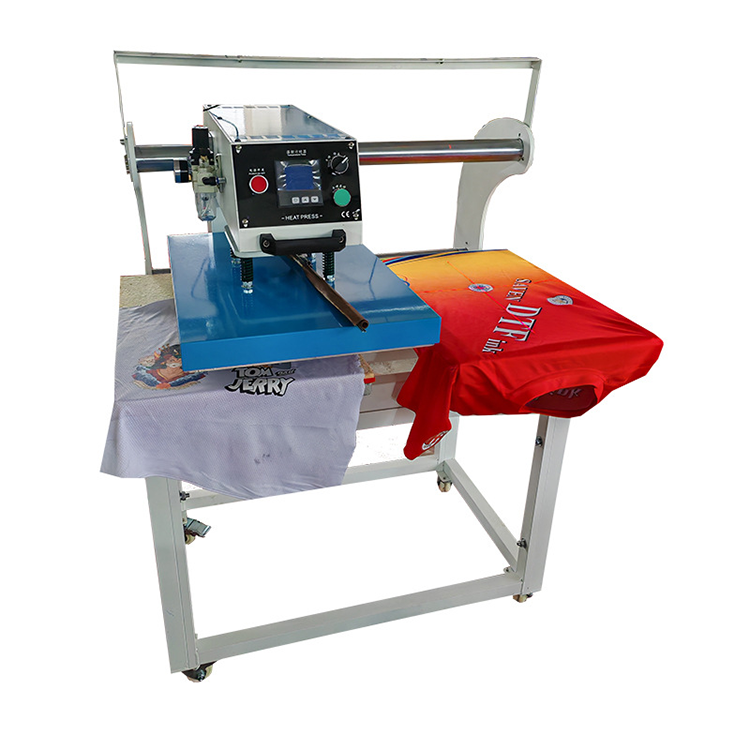
A pneumatic heat transfer machine is a press that uses compressed air to apply controlled heat and uniform pressure for transferring prints onto fabrics and other substrates.
It is popular in India because it offers higher consistency, faster throughput, and reduced operator fatigue compared with fully manual presses, making it ideal for busy garment and promotional printing operations.
Single‑bed pneumatic presses are often sufficient for small to mid‑volume print shops that handle varied or customized orders and want to control initial investment.
Double‑bed or shuttle pneumatic presses are recommended when you need higher daily output and wish to minimize idle time by loading one platen while the other is pressing.
Indian Pneumatic Heat Transfer Machine Manufacturers and Suppliers provide competitively priced machines tailored to domestic power conditions, infrastructure, and service realities.
Global suppliers complement them by offering specialized, highly automated, or large‑format solutions, giving Indian buyers more options for advanced or export‑oriented production lines.
Video demonstrations show real‑world performance such as platen motion, pressure control, noise levels, and loading ergonomics that technical datasheets cannot fully convey.
They help buyers compare how different Pneumatic Heat Transfer Machine Manufacturers and Suppliers implement similar specifications in practice, highlighting differences in build quality, ease of use, and reliability.
Reliable suppliers typically offer installation assistance, operator training, a clear warranty period, and access to spare parts and technical support.
For busy Indian production environments, quick response times, local or regional service centers, and readily available consumables are crucial to minimize downtime and protect your investment in pneumatic heat transfer equipment.
1. https://www.rkdindustries.co.in/heat-press-machine.html
2. https://www.rkdindustries.co.in
3. https://www.indiamart.com/rkdindustries/heat-press-machine.html
4. https://www.ssmfusing.com/heat-press-machine.html
5. https://www.ssmmachines.com
6. https://www.ssmmachines.com/pneumatic-heat-transfer-press-9567984.html
7. https://www.screenprintingmachines.in/heat-transfer-bucket-printing-machine.html
8. https://dir.indiamart.com/impcat/heat-transfer-presses.html?biz=10
9. https://bsmindia.com/product/heat-press-equipment/
10. https://www.cholaindustries.in/heat-transfer-fusing-machine.html
11. https://www.dreampressmachinery.com
12. https://dcsbheatpress.com


