If you have any questions, please feel free to contact us.| Email Us: info@dcheatpress.com


Views: 222 Author: Amanda Publish Time: 2025-12-30 Origin: Site


Content Menu
● Overview of the Indian Heat Transfer Machine Market
● Core Types of Heat Transfer Machines
>> Manual Flatbed Heat Press Machines
>> Semi‑Automatic and Pneumatic Heat Press Machines
>> Large‑Format and Industrial Fusing Machines
>> Specialized Heat Transfer Systems
● Technology Trends Among Indian Manufacturers
>> Digital Control and Process Automation
>> Energy Efficiency and Sustainability
>> Safety and Ergonomic Design
● Profile of Key Heat Transfer Machines Manufacturers and Suppliers in India
● Why Global Buyers Source from India
>> Cost Advantage with Engineering Depth
>> Integration with Textile and Apparel Clusters
>> Customization and Flexible Production
● How to Select the Right Indian Supplier
>> 1. Clarify Application, Volume, and Growth Plans
>> 2. Evaluate Technical Specifications in Detail
>> 3. Assess Service, Training, and Documentation
>> 4. Compare Total Cost of Ownership, Not Just Price
● Role of International Multi‑Discipline Equipment Brands
● Using Visual Content and Demonstrations in Supplier Evaluation
>> Benefits of Operational Videos and Demonstrations
>> Visual Training and Onboarding
● Best Practices for Working with Indian Heat Transfer Machines Manufacturers and Suppliers
>> Establish Clear Technical and Quality Standards
>> Start with Pilot Orders and Performance Monitoring
>> Maintain Continuous Communication and Feedback
● FAQ
>> Q1. What are the main types of heat transfer machines offered by Indian manufacturers?
>> Q2. Why do international buyers choose India for heat transfer machinery?
>> Q3. How should a company decide between manual, semi‑automatic, and industrial fusing machines?
>> Q4. What technical features are most important when evaluating heat transfer machines?
>> Q5. How can buyers ensure reliable after‑sales service from Indian suppliers?
India has become one of the most dynamic hubs for Heat Transfer Machines Manufacturers and Suppliers, serving domestic and international businesses in textiles, garments, packaging, and promotional products. For global brands looking to source reliable equipment partners, understanding India's machine ecosystem, technology capabilities, and selection criteria is essential.
India's heat transfer machinery ecosystem spans from compact manual presses for start‑ups to heavy‑duty industrial lines for large export‑oriented factories. As demand for customized apparel, sportswear, fashion accessories, and branded merchandise grows worldwide, Heat Transfer Machines Manufacturers and Suppliers in India are rapidly increasing capacity, automation, and product specialization.
The industry benefits from the country's strong textile and apparel clusters, which create a continuous need for consistent, high‑quality heat transfer, fusing, and embellishment processes. Many Indian manufacturers now design machines not only for domestic buyers but also for international markets in Asia, Europe, the Middle East, and Africa.
Manual flatbed presses (including clamshell and swing‑away designs) are popular among small workshops, boutique brands, and print‑on‑demand entrepreneurs. These machines typically offer basic digital temperature control, adjustable pressure, and timer functions suitable for T‑shirts, hoodies, tote bags, and small fabric panels. They provide an affordable entry point into the market while still delivering reliable transfer quality when operated correctly.
Because they are mechanically simple and easy to maintain, manual machines are often the first choice for businesses testing new product lines or operating from limited spaces. Many Heat Transfer Machines Manufacturers and Suppliers in India offer modular designs so customers can upgrade to larger platens or add accessories without replacing the entire unit.
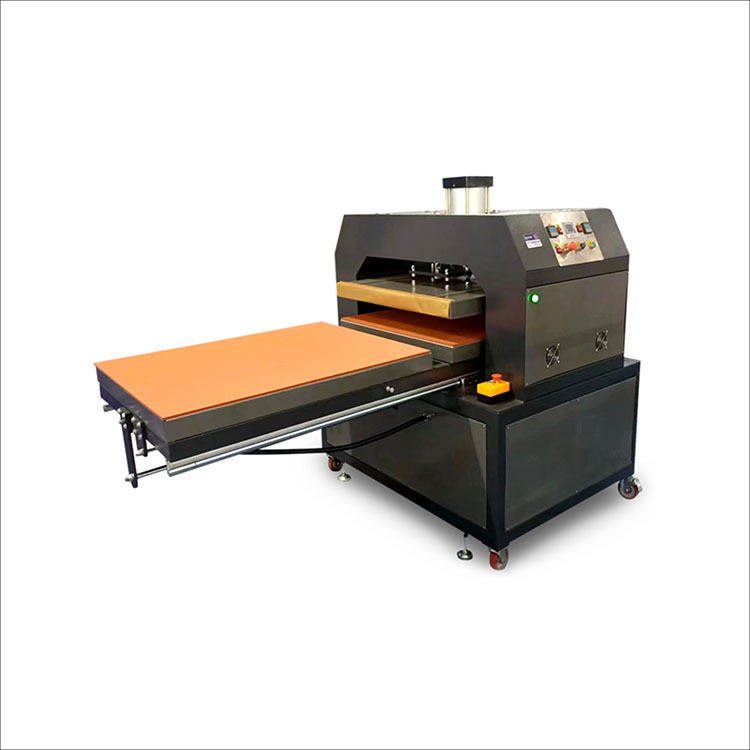
Semi‑automatic and pneumatic presses are designed for businesses that need higher throughput and more consistent results than manual systems can deliver. These machines often include automated opening mechanisms, stable pneumatic or hydraulic pressure, and advanced control panels with programmable recipes. Such features are crucial for medium‑sized factories that handle repeated production runs and strict quality requirements.
In high‑volume garment and sportswear production, consistent pressure across the entire platen is essential to avoid partial transfers, ghosting, or uneven colors. Many Indian Heat Transfer Machines Manufacturers and Suppliers have invested in improved pneumatics, reinforced frames, and precision‑machined platens to meet these demands.
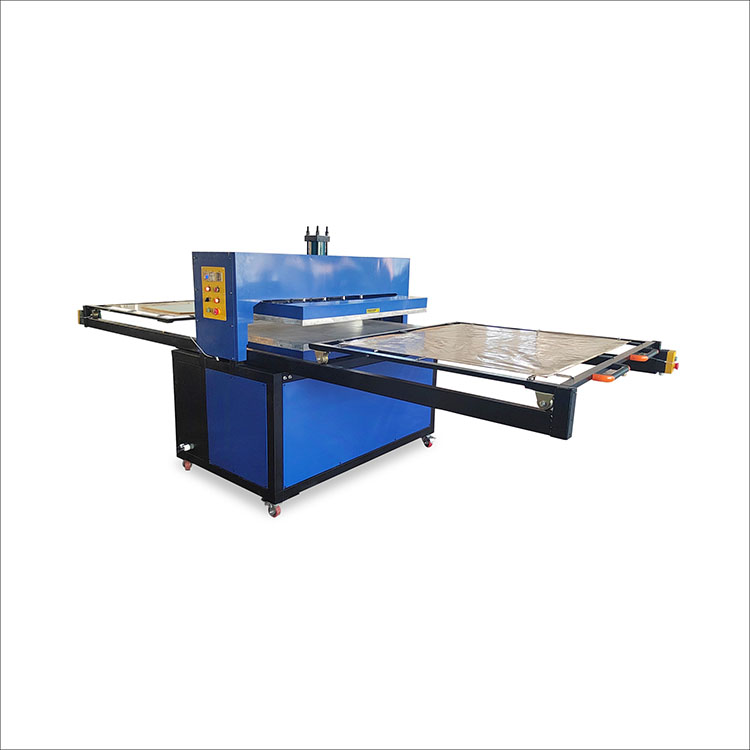
Large‑format flatbed presses and fusing machines serve export‑oriented garment factories, home textile manufacturers, and technical textile producers. These machines may offer wide platens or conveyor‑based systems for continuous feeding of fabric, interlinings, or laminated materials. They support applications such as large panels, cut‑and‑sew components, and roll‑to‑roll transfer processes.
Industrial fusing machines are particularly important in tailored garments and fashion apparel, where interlining adhesion affects garment shape, durability, and appearance. Indian manufacturers frequently customize temperature zones, pressure rollers, and feeding speeds to match specific fabrics and adhesive requirements.
Beyond standard flat presses, the Indian market includes specialized systems tailored to specific products and industries. Examples include label transfer machines, cap presses, cylindrical object presses, roll‑to‑roll transfer equipment, and machines designed for cosmetic or personal care packaging. These niche solutions allow Heat Transfer Machines Manufacturers and Suppliers to serve diverse customer needs while differentiating themselves in a competitive market.
Specialized systems often feature dedicated jigs, custom tooling, or interchangeable fixtures. This approach enables quick changeovers between product types and supports brands that need flexible production for limited‑edition designs or seasonal product lines.
A key trend among Heat Transfer Machines Manufacturers and Suppliers in India is the adoption of advanced digital controls. Many machines now include programmable logic controllers (PLCs), touch‑screen interfaces, and pre‑set “recipes” for different substrates and transfer media. This reduces operator error, improves repeatability, and makes it easier to train new staff.
Automation is also increasing in areas such as auto‑open mechanisms, dual‑station designs, shuttle trays, and conveyor feeding systems. These features help reduce idle time and boost output, particularly in high‑volume garment decoration operations.
Energy costs and sustainability expectations from international buyers are pushing manufacturers to create more energy‑efficient heat transfer equipment. Modern heaters, improved insulation, and optimized thermal profiles reduce power consumption while maintaining stable operating temperatures. Some Heat Transfer Machines Manufacturers and Suppliers are experimenting with advanced heating technologies and smarter standby modes to minimize wasted energy.
In addition, durable construction and longer service life contribute to lower environmental impact over the equipment's lifecycle. Buyers increasingly ask about spare‑part availability, recyclability of components, and maintenance practices that extend the usable life of machines.
As production speeds increase, safety and ergonomics become critical. Many India‑based manufacturers now include safety interlocks, guarded hot surfaces, emergency stop buttons, and protective enclosures on their machines. Thoughtful handle placement, balanced lids, and smooth opening motions reduce operator fatigue and risk of injury.
Ergonomic improvements also help ensure consistent pressure application and proper loading of garments or substrates. Clear labeling, intuitive control panels, and standard operating procedures further contribute to safer and more efficient daily use.
India's landscape includes both long‑established engineering firms and younger technology‑focused companies. While naming specific brands is less important than understanding their capabilities, typical characteristics of reputable Heat Transfer Machines Manufacturers and Suppliers include:
- In‑house design and fabrication teams capable of customizing platens, frames, and controls.
- Experience serving multiple sectors such as apparel, sportswear, home textiles, labels, footwear, and packaging.
- Export experience with an understanding of international standards, documentation, and logistics.
- Dedicated service teams or partners who can handle installation, maintenance, and operator training.
Many manufacturers participate in trade fairs, textile expos, and digital marketplaces where they showcase new models and gather feedback from domestic and international buyers. These events often highlight innovations in automation, multi‑station layouts, and integration with upstream digital printing systems.
One of the biggest reasons international buyers choose Indian Heat Transfer Machines Manufacturers and Suppliers is the combination of competitive pricing and strong engineering capability. Labor and manufacturing costs can be lower than in many Western countries, yet technical skills and design capabilities remain robust.
This balance allows buyers to acquire reliable machines at attractive price points without sacrificing core performance. When a long‑term relationship is established, Indian manufacturers can become partners in co‑development, adapting designs for specific production lines or brand requirements.
India's textile and garment clusters create a natural environment for continuous product improvement. Manufacturers of heat transfer equipment receive direct feedback from major factories, fashion brands, and export houses that use the machines daily. This close connection accelerates improvements in pressure systems, temperature controls, and machine ergonomics.
For global buyers, sourcing equipment from such an ecosystem ensures that machines are tested under demanding, real‑world production conditions. This is particularly valuable when scaling up operations or transitioning from manual to semi‑automatic or fully automated lines.
Another advantage of Indian Heat Transfer Machines Manufacturers and Suppliers is their willingness to adapt machines to unique customer needs. Examples include non‑standard platen sizes, customized jigs and fixtures, integration with specific conveyor systems, or machine layouts optimized for limited floor space.
Such flexibility is difficult to achieve with strictly mass‑produced equipment. For brands that regularly introduce new product categories or require unique placement of logos, graphics, or labels, this customization potential becomes a strategic asset.
Before starting supplier discussions, buyers should define:
- Substrate types (cotton, polyester, blends, performance fabrics, non‑wovens, packaging materials).
- Product categories (T‑shirts, jerseys, leggings, caps, bags, labels, panels, cosmetic components).
- Current and projected production volumes, broken down by product line.
With this information, Heat Transfer Machines Manufacturers and Suppliers can recommend suitable configurations, heating technologies, and automation levels. It also helps them suggest whether multiple smaller presses or a few large‑format machines would be the best investment.
Key technical parameters to review include:
- Platen size and geometry, matching the largest design or panel you plan to transfer.
- Temperature range, stability, and uniformity across the platen.
- Pressure type (manual, pneumatic, hydraulic) and maximum load.
- Control system capabilities, such as programmable presets and integrated timers.
- Electrical requirements and compliance with target country standards.
A detailed technical comparison of several Heat Transfer Machines Manufacturers and Suppliers enables buyers to avoid over‑specifying or under‑specifying equipment. It also exposes hidden differences in build quality and long‑term durability.
Equipment reliability is closely tied to service quality. Buyers should investigate:
- Availability of installation support and on‑site commissioning.
- Quality of operator manuals, wiring diagrams, and maintenance guides.
- Training programs for machine operators, supervisors, and maintenance staff.
- Estimated response times for technical queries and spare‑part shipments.
Experienced Heat Transfer Machines Manufacturers and Suppliers often provide remote troubleshooting options, training videos, and preventive maintenance schedules. Clarifying these aspects before purchase reduces the risk of extended downtime later.
Initial purchase price is only part of the investment decision. Total cost of ownership (TCO) includes:
- Energy consumption at typical operating temperatures and duty cycles.
- Cost and frequency of spare parts and consumables.
- Expected lifespan of key components such as heaters, pressure systems, and control boards.
- Productivity benefits from automation, dual stations, or larger platens.
Comparing TCO across multiple Heat Transfer Machines Manufacturers and Suppliers highlights which machines are genuinely cost‑effective over several years of operation. In many cases, a slightly higher initial price is justified if it reduces energy usage and unplanned downtime.
Alongside domestic manufacturers, international equipment brands specializing in heat transfer, welding, and embossing technologies play an important role in the Indian and global market. These companies often focus heavily on research and development, offering high‑precision, multi‑purpose machines that complement local equipment options.
Such brands may provide:
- Integrated solutions that combine heat transfer, ultrasonic welding, and embossing in coordinated production lines.
- Advanced control systems designed to interface with digital printing, cutting, and quality‑inspection technologies.
- Comprehensive after‑sales service programs, including process optimization, application testing, and upgrades.
For large factories and international buyers, collaborating with both Indian Heat Transfer Machines Manufacturers and Suppliers and global technology providers creates a balanced sourcing strategy. Local machines can handle mainstream production, while specialized imported equipment addresses highly technical or niche applications.
When evaluating new suppliers, visual documentation is extremely valuable. Demonstration videos show real‑time operation, including loading, pressing, unloading, and cycle times. They also reveal control interfaces, safety behavior, and ergonomics. This information helps buyers compare multiple Heat Transfer Machines Manufacturers and Suppliers without visiting each factory in person.
Live video calls or virtual demonstrations allow buyers to ask specific questions, such as how the machine handles thick fabrics, uneven seams, or multi‑layer transfers. They can also request close‑ups of wiring, frames, and heating elements to assess build quality.
Once machines are installed, visual training materials—such as step‑by‑step operation clips, maintenance walkthroughs, and troubleshooting guides—help operators quickly reach consistent performance. Many forward‑thinking Heat Transfer Machines Manufacturers and Suppliers now include such resources as part of their standard documentation package.
These materials reduce the learning curve for new staff, decrease operator error, and support standardization across shifts and production sites. For organizations with multiple factories or global partners, visual training resources are especially valuable.
From the first discussion, buyers should communicate their quality requirements, including acceptable defect rates, color fastness expectations, and mechanical reliability thresholds. Providing sample garments, transfer papers, or films allows manufacturers to test and optimize machine settings before delivery.
Written specifications covering temperature tolerance, pressure uniformity, and safety features help align expectations. This clarity ensures that Heat Transfer Machines Manufacturers and Suppliers can design or recommend appropriate configurations and avoid misalignment later.
For new supplier relationships, it is wise to begin with a pilot machine or a small batch of equipment. After installation, performance can be tracked over several months, focusing on throughput, defect rates, and maintenance frequency. Feedback from operators and maintenance teams should be documented and shared with the supplier.
If results are positive, buyers can scale up orders with greater confidence. This phased approach builds trust and allows both sides to refine specifications based on real‑world data.
Long‑term success with Heat Transfer Machines Manufacturers and Suppliers depends on open, ongoing communication. Regular review meetings, technical updates, and joint improvement projects ensure that machines continue to meet evolving needs. When new fabrics, inks, or transfer films are introduced, the supplier can help fine‑tune settings or recommend upgrades.
This collaborative mindset transforms the relationship from a one‑time purchase into a sustained partnership that supports innovation and growth on both sides.
India has developed a comprehensive ecosystem of Heat Transfer Machines Manufacturers and Suppliers capable of serving start‑ups, growing brands, and large export‑oriented factories alike. From manual presses and semi‑automatic units to industrial fusing and specialized systems, the market offers a broad spectrum of solutions for garments, textiles, and packaging applications. Global buyers are attracted by competitive pricing, strong engineering skills, and the ability to customize equipment around specific production requirements.
By carefully defining application needs, evaluating technical specifications, and considering total cost of ownership, businesses can identify Indian suppliers that align with their operational and quality goals. Combining domestic equipment with technology from international multi‑discipline brands further enhances flexibility and performance. With thoughtful supplier selection and ongoing collaboration, buyers can build robust, scalable production lines supported by reliable heat transfer machinery sourced from India.
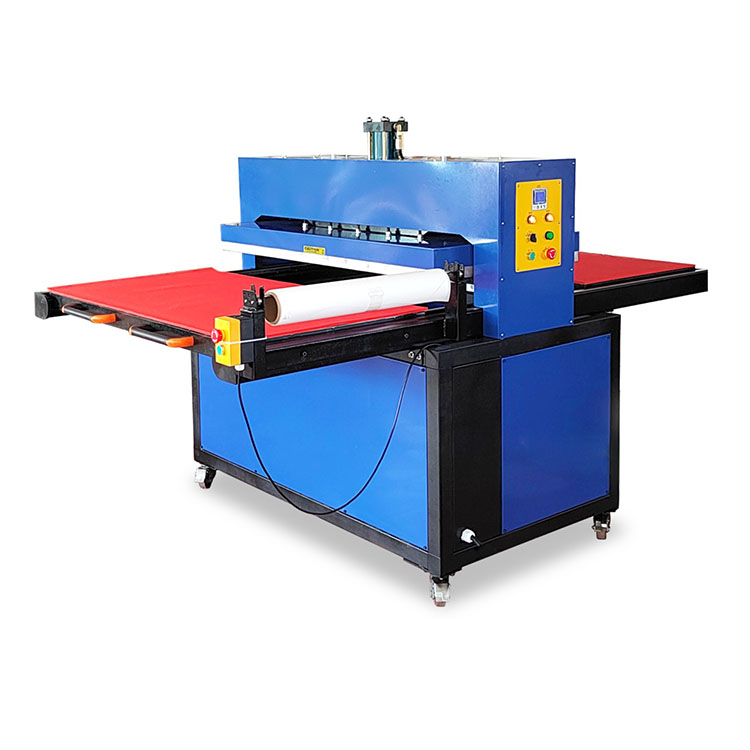
Indian Heat Transfer Machines Manufacturers and Suppliers typically offer manual flatbed presses, semi‑automatic and pneumatic presses, large‑format fusing machines, and specialized systems for labels, caps, roll‑to‑roll transfers, and packaging components. These categories cover the needs of small studios, mid‑sized factories, and high‑volume industrial operations, allowing buyers to select equipment that matches their scale and product mix.
International buyers often source from India because Heat Transfer Machines Manufacturers and Suppliers combine competitive pricing with solid engineering capabilities and strong links to textile and apparel clusters. This environment encourages continuous improvement, customization options, and export‑ready quality standards, making Indian suppliers attractive partners for long‑term equipment strategies.
The choice mainly depends on production volume, product complexity, and available budget. Manual presses suit low‑volume or highly customized work, while semi‑automatic and pneumatic systems support medium‑scale operations needing consistent pressure and higher throughput. Industrial fusing machines are ideal for large garment factories or technical textile producers requiring continuous, high‑speed processing with strict quality control.
Key features include platen size, temperature range and uniformity, pressure system type and stability, control interface, safety mechanisms, and electrical compatibility. Buyers should also consider energy efficiency, availability of spare parts, and ease of maintenance. Comparing these aspects across multiple Heat Transfer Machines Manufacturers and Suppliers helps identify machines that deliver reliable performance and long‑term value.
To secure reliable support, buyers should assess each supplier's service network, response times, training programs, and documentation quality before purchasing. It is important to clarify installation procedures, warranty terms, and spare‑part logistics. Establishing clear communication channels and scheduling regular performance reviews with Heat Transfer Machines Manufacturers and Suppliers further ensures that any issues are resolved quickly and production stays on track.


