If you have any questions, please feel free to contact us.| Email Us: info@dcheatpress.com


Views: 222 Author: Amanda Publish Time: 2025-12-29 Origin: Site


Content Menu
● Why Even Heat Distribution Matters
● Factor 1: Heating Element Design and Layout
>> Types of Heating Element Patterns
● Factor 2: Platen Material and Thermal Conductivity
● Factor 3: Platen Construction and Integration
● Factor 4: Platen Thickness and Thermal Mass
● Factor 5: Pressure System and Uniform Contact
● Factor 6: Temperature Control and Sensor Precision
● Factor 7: Multi-Point Testing and Quality Assurance
● How to Test Even Heat Distribution Yourself
● Buyer's Checklist for Uniform-Heat Presses
● Invest in Dependable Heat Press Performance
● FAQs About Even Heat Distribution
>> 1. Why do my transfers fail around the edges?
>> 2. Is a thicker platen always better?
>> 3. Can uneven heat be fixed with recalibration?
>> 4. Do pneumatic heat presses ensure even temperature?
>> 5. How often should a platen be tested?
Even heat distribution is the foundation of dependable heat press performance. It ensures consistent transfers, durable prints, and reduced production waste. This in-depth guide breaks down the critical engineering factors that enable uniform platen temperature and pressure, helping you identify high-performance heat presses designed for professional results.
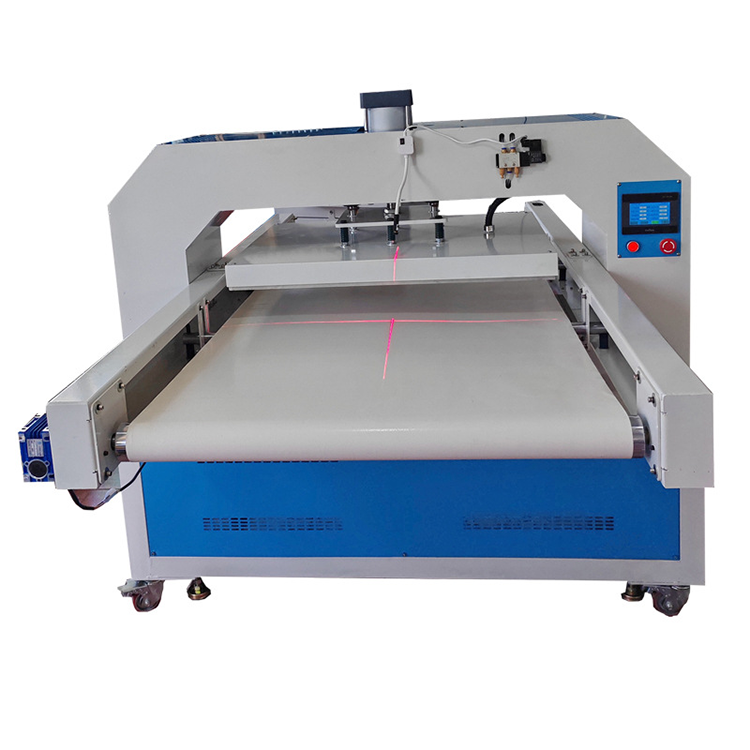
Uneven heating directly leads to inconsistent transfer results, premature wear, and weak bonding, even when correct temperature and pressure settings are used. In production environments, such inconsistencies cause misprints, increased waste, and potential brand damage.
When the platen does not maintain even heat:
- Cold zones cause insufficient adhesive activation or faded colors.
- Hot spots overmelt adhesives, distort colors, and scorch fabrics.
- Edge drop-off creates cooler corners that ruin large-format transfers.
A high-quality heat press must provide stable heat and uniform pressure across the entire platen surface, ensuring every section of a design cures consistently.
The design and pattern of the heating elements determine how rapidly and evenly heat spreads across the platen.
- Linear or X-pattern elements save material but often result in temperature gaps between coils.
- Serpentine or continuous paths distribute heat evenly and maintain steadier surface temperatures.
- Cast-in tubular elements offer the highest consistency by embedding the heating system within the metal.
Professional heat presses often use cast-in or tightly spaced serpentine elements that extend across the full platen. This design minimizes temperature fluctuation and ensures consistent performance. Asking for a thermal image or heating element diagram is an effective way to verify quality engineering.
The platen's material determines how effectively heat transfers to the printing surface. Most professional-grade machines use aluminum for its excellent thermal conductivity and lightweight durability.
Advantages of industrial-grade aluminum:
- Transfers heat rapidly and evenly.
- Maintains dimensional stability after repeated heating cycles.
- Provides optimal weight balance for daily production.
Poorly cast platens may warp, creating uneven temperature zones and inconsistent pressure. In contrast, precision-machined aluminum platens ensure both surface flatness and long-term reliability.
Even high-quality materials can fail without strong structural integration between the platen and the heating elements.
Design Type | Description | Typical Performance | Ideal Use Case |
Surface-mounted elements | Heating tubes attached externally to the platen surface | Slower heat spread and uneven temperature | Basic hobby presses |
Enclosed channel design | Elements enclosed within dedicated channels | Improved consistency | Entry-level commercial machines |
Die-cast integration | Elements cast directly into aluminum during manufacture | Fastest and most uniform heating | Industrial-grade presses |
The most advanced configuration, die-cast integration, maximizes contact between heating tubes and aluminum, removing air gaps and ensuring uniform temperature from center to edge.
Platen thickness defines temperature stability during repeated cycles. A thicker platen retains heat longer, allowing consistent performance even in high-volume production.
Benefits of greater thermal mass:
- Reduces temperature drop between presses.
- Improves heat recovery time.
- Handles thick fabrics and multi-layer substrates effectively.
For optimal balance, many professional heat presses feature platens around 18–20 mm thick. This provides stability without extending warm-up times excessively.
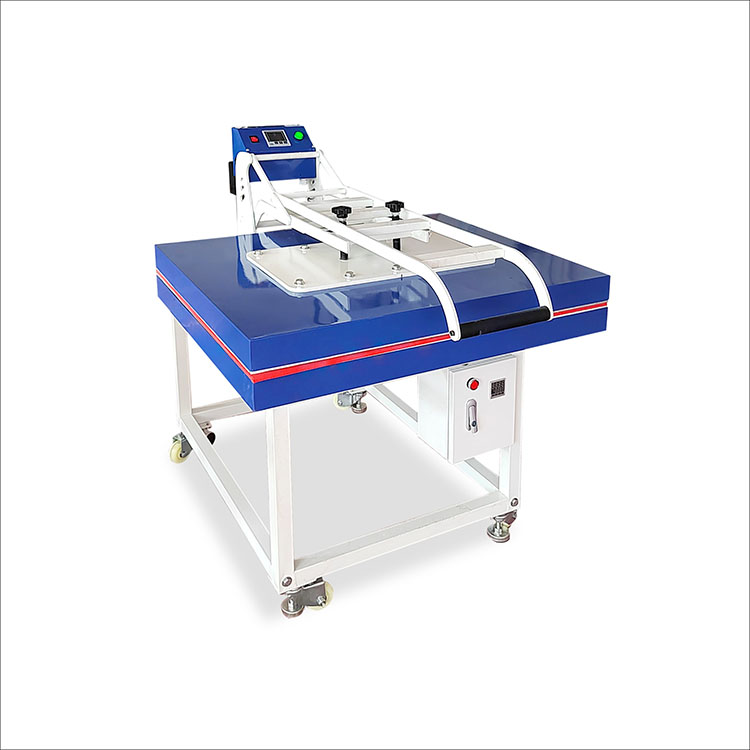
Even heat distribution only translates to reliable output when coupled with even pressure. If the pressure profile varies across the platen, transfer results will be inconsistent.
Issues caused by poor pressure systems:
- Weak edges due to insufficient force.
- Over-flattened centers from excessive contact pressure.
- Uneven bonding on varied fabric thickness.
- Over-the-center adjustment systems deliver consistent force across the platen.
- Pneumatic systems provide repeatable and measurable pressure with each cycle.
- Digital pressure displays eliminate guesswork and improve process control.
A press with a precision-balanced pressure system ensures identical transfer quality across different garment types and fabric densities.
Modern presses rely on advanced PID controllers and high-accuracy sensors to maintain temperature stability. The placement and calibration of these sensors directly affect performance.
Best practices include:
- Multi-point sensors positioned across the platen.
- Fast-response control algorithms minimizing temperature overshoot.
- Integrated safety features to avoid overheating delicate materials.
Accurate sensors aligned with surface temperature data ensure reliability for both DTF and sublimation processes.
True even heat distribution can only be guaranteed through rigorous quality testing.
Professional testing methods:
- Multi-point mapping across dozens of platen points.
- Allowable variation tolerance of ±5°C maximum.
- Cycle endurance testing to simulate continuous production.
Manufacturers that conduct surface mapping and share verified data demonstrate superior engineering standards. This transparency should be a key selection factor for buyers and distributors.
You can quickly verify platen consistency using a simple temperature validation routine.
1. Preheat the press to its operating temperature (160–170°C for most transfers).
2. Place temperature strips at multiple points on the platen.
3. Press as usual, then read and note the recorded values.
4. Variation under ±5°C indicates a well-calibrated press; higher discrepancies signal hardware or calibration issues.
Routine testing ensures early detection of sensor drift or heating element wear.
Different printing methods rely on uniform heat in distinct ways:
DTF Transfers: Require consistent mid-range heat to activate adhesive uniformly.
Sublimation Printing: Needs precise high-temperature stability to ensure accurate color reproduction.
Vinyl & Label Transfers: Depend equally on heat and pressure to achieve strong adhesion and edge retention.
Regardless of the method, heat consistency defines production repeatability and output quality.
Before purchasing or recommending a machine, assess the following:
- Cast-in or serpentine heating element design.
- Precision-machined aluminum platens.
- Sufficient platen thickness for stable thermal mass.
- PID-based digital controller and accurate sensors.
- Over-the-center or pneumatic pressure system with digital display.
- Verified multi-point platen test report or thermal diagram.
A heat press meeting these criteria ensures uniform heating across cycles, minimizing operational variability and maximizing output quality.
Inconsistent results not only waste materials but also damage customer confidence. Choosing a heat press engineered for even heat distribution ensures durable transfers, consistent color quality, and fewer reprints.
If you're aiming to deliver top-tier thermal transfer performance, reach out to a trusted heat press manufacturer offering:
- Proven cast-in heating technology.
- Precision-machined platens with verified uniformity.
- Rigorous post-production platen mapping and after-sales calibration support.
Contact our expert team today to explore high-quality heat press solutions that match your exact production requirements.
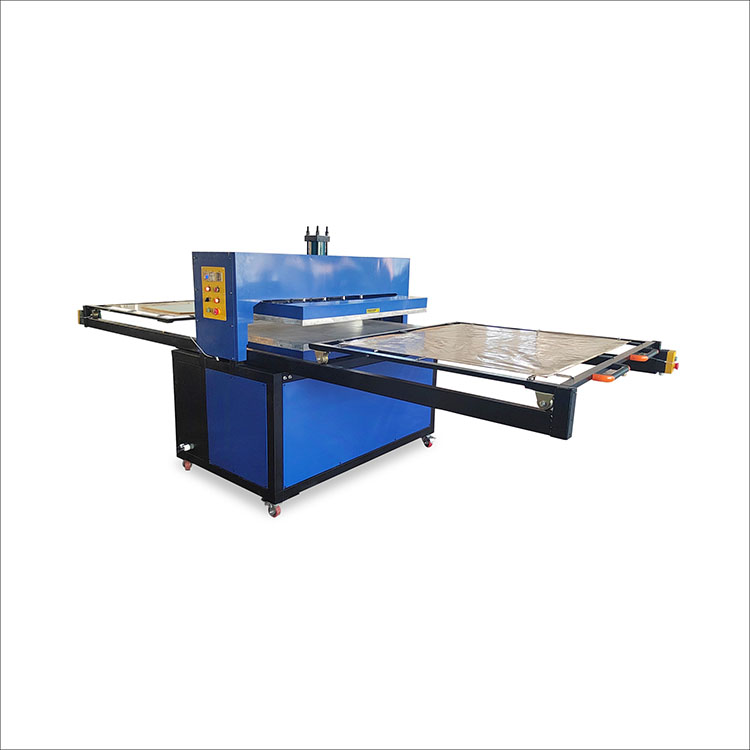
Edge failure often indicates edge drop-off—cooler areas at the platen perimeter or inconsistent pressure. Verify platen temperature and ensure full even contact during pressing.
Thicker platens maintain temperature longer but can extend warm-up times. Optimal performance depends on a balance between thickness, conductivity, and heating element design.
Calibration improves sensor accuracy but cannot correct fundamental design flaws such as poor element spacing or casting defects. Hardware quality determines ultimate uniformity.
Pneumatic presses ensure even pressure, not necessarily even temperature. Perfect heat distribution still depends on platen engineering and element design.
Perform a multi-point temperature check quarterly or whenever print anomalies appear. Early diagnostics prevent costly rework in production environments.


