If you have any questions, please feel free to contact us.| Email Us: info@dcheatpress.com


Views: 222 Author: Amanda Publish Time: 2025-12-29 Origin: Site


Content Menu
● What Is Sublimation Printing?
● What Is DTF (Direct-to-Film) Printing?
● Sublimation vs DTF: Key Comparison
● Advantages of Sublimation Printing
>> 1. Outstanding Print Quality
>> 3. Lightweight and Breathable
>> 1. Universal Fabric Compatibility
>> 2. Flexibility for Small or On-Demand Runs
>> 3. Vibrant Prints on Any Color
● Cost, Profitability, and Scaling Tips
● Choosing the Right Technology
>> A. Evaluate Your Core Products
>> C. Match Your Budget and Space
>> D. Consider Workflow Comfort
● Real-World Business Scenarios
● Simplified Workflow: Sublimation vs DTF
>> DTF Workflow
● Strategic Recommendation for 2025
● Frequently Asked Questions (FAQ)
>> Q1: Can one printer handle both DTF and sublimation printing?
>> Q2: Which printing method offers better wash durability?
>> Q3: How does DTF compare to screen printing?
>> Q4: Do both processes use the same heat press equipment?
>> Q5: Which printing method best suits on-demand commerce?
Choosing between sublimation printing and direct-to-film (DTF) printing can shape the success, quality, and profitability of your printing business. Both technologies offer unique strengths, but each fits different product lines, materials, and business models. This guide gives a professional-level comparison backed by current market data, operational insights, and real-world applications to help business owners invest wisely in 2025 and beyond.
Sublimation printing is a process where heat and pressure transform special sublimation inks into gas that bonds permanently with polyester fibers or polymer-coated surfaces. This technology delivers vibrant, long-lasting, full-color prints that are embedded into the substrate rather than resting on top.
Ideal applications include:
- Polyester apparel and sportswear.
- Coated hard goods such as mugs, tumblers, metal panels, and keychains.
- Custom gifts, promotional items, and photo-based designs.
Key benefits:
- Vivid, photographic color quality.
- Excellent durability with no cracking or peeling.
- Smooth, “no-hand-feel” surface.
- Affordable entry cost for startups.
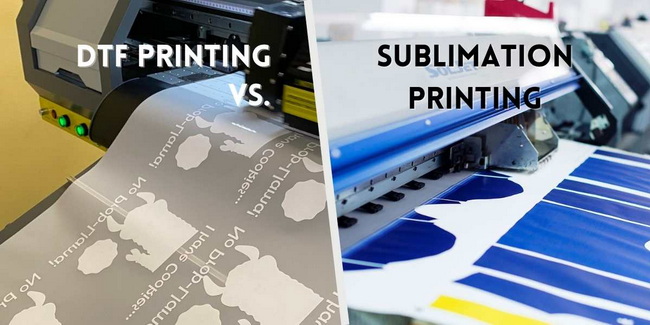
DTF printing transfers your design from a PET film to the target material using pigment-based inks and an adhesive powder. After curing, the transfer is heat-pressed onto fabrics and other materials. This flexibility makes DTF a favorite among apparel decorators seeking maximum versatility.
Ideal applications include:
- Cotton, polyester, blends, dark fabrics, and denim.
- Fashion and streetwear brands.
- Print-on-demand (POD) shops and online customization businesses.
Key benefits:
- Works on nearly any garment color or fiber.
- Produces bright, opaque designs with strong durability.
- Efficient for small batches or one-off prints.
- Minimal material waste and good sustainability performance.
Category | Sublimation | DTF |
Printing process | Dye-to-gas transfer infused into polyester or coated blanks. | CMYK + white ink printed on PET film and heat-transferred via adhesive. |
Material compatibility | Only for white/light polyester or specially coated items. | Works on cotton, blends, polyester, denim, leather, and more. |
Color range | Best on light surfaces; cannot print white ink. | Full-color with opaque white base, ideal for dark fabrics. |
Hand feel | Seamless “in-material” finish, completely smooth. | Soft but slightly raised film layer. |
Durability | Excellent; dye becomes part of the surface. | Very durable but may show light edge wear over time. |
Startup cost | Lower investment, fewer accessories needed. | Higher cost: printer, curing unit, film, and adhesive powder. |
Maintenance | Low—regular use prevents clogging. | Moderate to high—especially for white ink systems. |
Product scope | Hard goods and polyester apparel. | Cotton garments, hoodies, mixed fabrics, fashion wear. |
Sublimation easily reproduces high-definition images with rich gradients and photo-realistic results. It remains the gold standard for vibrancy and fine detail.
Because the dye physically bonds with the substrate, prints resist fading, scratching, and washing. The design never cracks or peels.
Sublimation adds no extra texture. Sportswear and uniforms stay soft, flexible, and fully breathable even after heat application.
Entry-level systems are affordable and straightforward to operate, making sublimation perfect for new entrepreneurs or small studios.
While reliable and cost-effective, sublimation's scope is narrower than DTF.
- Limited to light-colored polyester or polymer-coated blanks.
- Cannot print on cotton or dark fabrics.
- Requires specialized blanks, such as pre-coated mugs or panels.
- Printer heads may clog if idle for extended periods.
DTF has risen in popularity because it overcomes long-standing material restrictions.
DTF transfers work effectively on cotton, poly blends, spandex, canvas, and leather, achieving consistent brightness and adhesion.
Print and store transfers ahead of time, pressing them later as orders arrive. This enables leaner, just-in-time production.
Thanks to white ink underlays, DTF maintains high opacity even on black apparel—ideal for bold streetwear and e-commerce designs.
With proper curing and pressing, top-tier DTF inks achieve 40–60 wash cycles without significant fading.
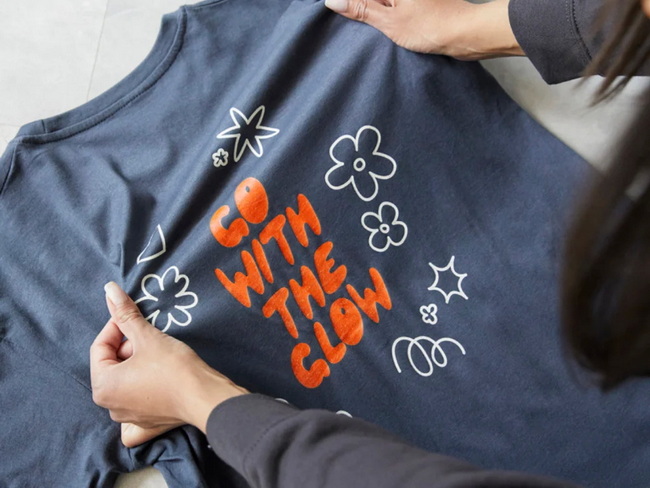
No technology is perfect. DTF has specific trade-offs business owners must plan for.
- Higher initial investment for professional printers and curing systems.
- Complex workflow involving powdering and curing steps.
- Regular maintenance for white ink circulation systems.
- Slightly raised hand feel compared to sublimation's smooth finish.
Sublimation offers a lower financial barrier since it requires only a printer, inks, and a heat press. DTF setups cost more but yield broader production capabilities.
- Sublimation: Economical for small runs and hard goods.
- DTF: Slightly higher consumable cost per print but higher ROI across diverse products.
For growing businesses, DTF enables multi-product agility, while sublimation ensures uniform, repeatable quality for polyester lines and coated blanks. Many print shops use both technologies for full product coverage.
If your revenue centers on polyester sportswear or personalized mugs, sublimation remains unmatched. If apparel diversity is your goal, DTF's versatility wins.
Consumers demanding breathable athletic gear prefer sublimation. Streetwear lovers and POD buyers value the bold, opaque finish of DTF.
A small space or limited capital favors sublimation. DTF setups usually require additional room for curing and film handling.
If you prefer simplicity, sublimation's shorter process may appeal. If you value adaptability, DTF's multiple material capability offsets its steeper learning curve.
Sportswear manufacturers:
Sublimation delivers full-coverage printing that doesn't compromise fabric flexibility—a must for sports jerseys and leggings.
Fashion and lifestyle brands:
DTF enables small-batch production with photographic images on dark cotton hoodies, tote bags, and caps—perfect for limited collections.
Corporate promotions:
Sublimation shines for personalized merchandise such as mugs and plaques, offering professional, durable finishes.
Local print shops:
Combining both printing methods lets you serve multiple customer types without turning down any order.
1. Design and mirror artwork.
2. Print using sublimation inks on transfer paper.
3. Position print on the item and heat-press.
4. Remove paper and cool.
5. Achieve permanent color infusion.
1. Print design (CMYK + white ink) on PET film.
2. Apply adhesive powder; shake off excess.
3. Cure the printed film.
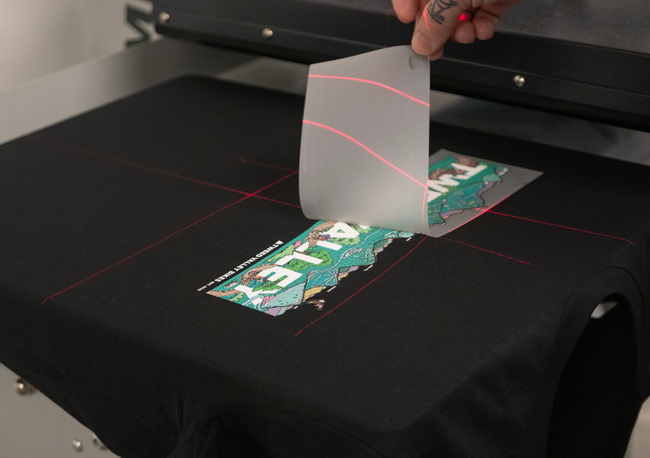
4. Heat-press onto garment.
5. Peel and inspect final product.
- Keep your heat press temperature calibrated for consistent transfer quality.
- Maintain humidity control around the printer to avoid ink inconsistencies.
- Use ICC color profiles for accurate color reproduction.
- Store DTF films flat in a cool, dry area for long-term usability.
Based on current industry trends, businesses that combine sublimation for coated items and DTF for diverse apparel achieve the fastest growth. This dual setup maximizes flexibility, reduces downtime, and increases profit potential. It's an efficient approach for manufacturers and print shops that serve both corporate and retail markets.
To compete successfully in 2025's dynamic print market, choose the printing method that supports your customers' material needs, color expectations, and turnaround times. Whether you specialize in performance polyester products or fashion streetwear, investing in the correct technology—supported by professional-grade heat presses, bonding machinery, and embossing systems—ensures unmatched consistency, durability, and finish quality.
Ready to expand your printing capabilities?
Explore high-efficiency heat press and fusion solutions designed for both sublimation and DTF workflows at COLORFUL (dcsbheatpress.com). Equip your business with reliable, precision-built machines that keep your production running smoothly and your prints looking flawless.
Not efficiently. Each process uses different inks, papers, and printhead technologies. Dedicated printers for each method ensure consistent quality and prevent cross-contamination.
Sublimation typically lasts longer because the dye bonds permanently to the fibers. DTF performs excellently when cured correctly but may display minor edge wear over time.
DTF is ideal for small runs or detailed, full-color artwork, while screen printing remains cost-effective for bulk orders with simple designs.
Yes, most flat heat presses can support both, though sublimation may also require specialized presses for mugs or caps.
DTF offers broader material options and saves time for one-off apparel orders, whereas sublimation excels in personalized merchandise for promotional markets.


