If you have any questions, please feel free to contact us.| Email Us: info@dcheatpress.com


Views: 222 Author: Amanda Publish Time: 2026-01-28 Origin: Site


Content Menu
● What Is Printing Ink? Core Components and Functions
● Main Types of Ink: Liquid Inks vs Paste Inks
>> Liquid inks
>> Paste inks
● Ink Vehicles: The Engine of Ink Performance
● Ink Drying Mechanisms: How Different Inks Cure on Substrates
>> 2. Polymerization and oxidation drying
>> 4. Precipitation (moisture-set) drying
● Quick-Set Inks, Cold-Set Inks, and Specialty Vehicles
>> Other specialty ink vehicles
● Pigments: Color, Gloss, and Texture in Ink
>> Specialty pigments for value-added effects
● Additives: Fine-Tuning Viscosity, Tack, and Durability
>> Driers and curing accelerators
>> Bodying agents and viscosity control
>> Waxes and anti-blocking agents
>> Tack modifiers and slip agents
● How to Choose the Right Ink for Your Printing Process
● Practical Examples: Matching Ink to Application
● Overview Table: Ink Types, Vehicles, and Drying Systems
● Actionable Tips for Print Shops and Production Teams
● Take the Next Step in Optimizing Your Ink Workflow
● FAQs About Ink and Its Elements
>> 1. What are the main components of printing ink?
>> 2. How do quick-set inks differ from conventional offset inks?
>> 3. Why are waxes used in printing inks?
>> 4. What are moisture-set inks?
>> 5. How can I reduce ink tack on delicate papers?
Ink is the hidden backbone of professional printing, and understanding its elements is essential if you want sharper colors, cleaner details, and more consistent results across your workflows. Whether you run a custom apparel shop, a packaging line, or an industrial print operation, choosing the right ink type and drying system can dramatically improve print quality and production efficiency.
Modern printing ink is a carefully engineered mixture of vehicle, pigment, and additives such as driers and waxes. These components work together to carry color to a substrate, control drying speed, and ensure durability in real-world use.
- Vehicle: The fluid portion that transports pigment and controls flow, drying, and adhesion.
- Pigment: The solid, colored (or black or white) particles that provide color, opacity, gloss, and texture.
- Additives: Driers, waxes, and bodying agents that fine-tune viscosity, tack, scuff resistance, and drying behavior.
For print businesses using heat transfer, sublimation, and hybrid workflows, mastering these basics helps you match ink to substrate, drying method, and equipment.
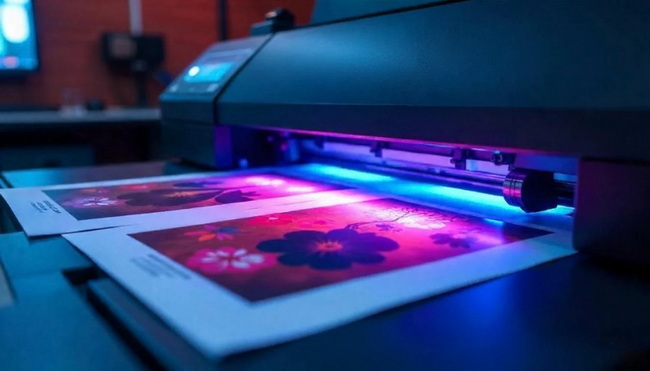
Modern inks are broadly divided into liquid inks and paste inks, each designed for specific printing methods and substrates.
Liquid inks flow easily and are commonly used for high-speed or continuous printing systems.
- Lower viscosity and higher fluidity
- Often used in flexographic and gravure printing
- Well-suited for packaging films, labels, and flexible materials
Paste inks are thicker, with higher viscosity, and are typically used in traditional and high-end commercial printing.
- Thick, buttery consistency
- Preferred for offset lithography and some specialty presses
- Offer excellent edge sharpness and color density on paper and board
For workflows that integrate offset-printed transfers or packaging prints, choosing liquid versus paste ink determines how the print behaves under pressure and temperature.
The vehicle is the liquid or semi-liquid phase that carries pigment to the substrate and controls how ink dries. Different vehicles are used depending on the desired drying mechanism and final application.
- Transport: Carry pigment uniformly to the printed surface.
- Binding: Help pigment adhere to paper, film, or fabric.
- Drying control: Enable absorption, oxidation, evaporation, or precipitation.
- Printability: Affect flow, leveling, and transfer on rollers or plates.
Vehicles can be based on non-drying oils, drying oils, solvent resins, glycols, resins, waxes, or specialty polymers, each optimized for a specific drying pathway.
Understanding how ink dries is crucial when integrating it with presses, dryers, or curing tunnels. Modern inks mainly dry through four primary mechanisms.
Some inks dry when non-drying oil vehicles are absorbed into the substrate rather than chemically converted.
- Use non-drying oil vehicles that remain “wet” until absorbed.
- Common on porous papers that can soak up vehicle.
- Ideal when you want fast handling without high-temperature curing.
Other inks rely on vehicles that oxidize and polymerize after printing.
- Use drying oil vehicles that react with oxygen to form a solid film.
- Require papers with suitable properties to prevent premature draining of the vehicle.
- Often used in high-quality offset work where rub resistance and stability matter.
Inks that dry by evaporation rely on volatile solvents that leave behind a solid resin and pigment layer.
- Use solvent resin vehicles with low boiling points.
- Common in flexible packaging, films, and non-porous substrates.
- Pair well with hot air or infrared dryers and must be handled with proper ventilation.
Some specialized inks dry when the vehicle composition changes and pigment–resin phases precipitate onto the substrate.
- Use glycol-based vehicles that are water soluble.
- Water-insoluble resins are dissolved in the glycol vehicle.
- When water is added, glycol dissolves, but the resin–pigment phase does not, causing it to precipitate onto the surface.
- These are known as moisture-set inks.
This mechanism is particularly useful where fast setting is needed without aggressive heat, making it interesting for hybrid digital and analog workflows.
Commercial and industrial printing also uses engineered hybrid systems such as quick-set and cold-set inks, along with niche vehicle technologies.
Quick-set inks combine multiple drying mechanisms to deliver both fast setting and robust final cure.
- The solvent portion of the vehicle is first absorbed into the paper.
- A resin–oil mixture remains on the surface and then dries by polymerization and oxidation.
- These inks use a resin oil vehicle, balancing speed and durability.
Quick-set systems are ideal for high-speed offset where you need rapid handling but still want a strong, rub-resistant surface.
Cold-set inks are designed to dry without high-temperature ovens.
- Use a resin–wax vehicle that is solid at room temperature.
- This vehicle melts on heated rollers on the press and is then applied to paper.
- After application, it cools and resolidifies, forming the final print film.
Cold-set inks are widely used in newspaper and web printing where energy efficiency and speed are priorities.
There are also niche vehicle systems tailored to unique production environments.
- Water-soluble gum vehicles for certain eco-focused or specialty applications
- Photo-reactive vehicles that set when exposed to specified forms of radiation such as UV or electron beam
These systems open opportunities to integrate UV-curable coatings, textured effects, and energy-efficient curing alongside thermal processes.
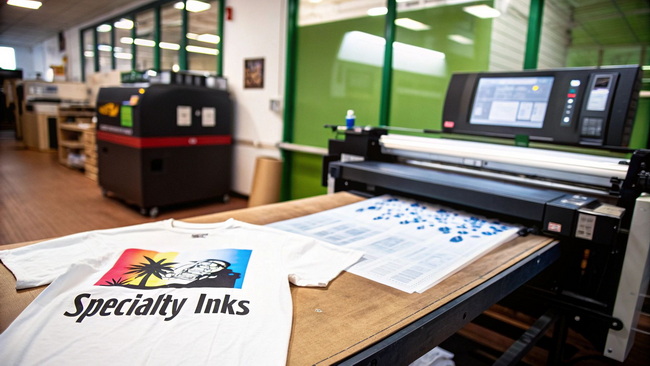
The pigment is the solid component that provides color, opacity, gloss, and texture to printed images. Pigments also strongly influence lightfastness and resistance to chemicals or abrasion.
- White pigments: Provide opacity and brightness; often used as a base layer or for text.
- Black pigments: Used for text, outlines, and deep shadows.
- Color pigments: Spanning the full spectrum, produced from mineral sources or organic derivatives.
Many pigments are derived from mineral sources or organic derivatives, enabling high chroma and stability.
A number of specialty inks incorporate non-standard pigment systems to deliver unique visual or functional performance.
- Metallic powders for metallic or pearlescent finishes
- Special effect pigments for fluorescence, interference, or textured films
- Functional pigments for conductivity, security features, or heat-activated visibility marks
These pigments are particularly attractive for high-end packaging, brand protection, and premium graphics.
In addition to vehicle and pigment, printing inks include carefully selected additives to optimize performance on press and in end use.
Driers are designed to speed up the ink drying process by accelerating oxidation and polymerization reactions.
- Shorten turnaround time between printing and finishing
- Reduce set-off, blocking, and smudging
Bodying agents increase the viscosity of the ink, helping it maintain structure and transfer cleanly.
- Improve control on rollers and plates
- Help prevent ink from flowing uncontrollably on absorbent substrates
Waxes such as paraffin and polyethylene are added to prevent common printing defects.
- Reduce blocking, where sheets stick together
- Minimize ink set-off and increase scuff resistance
Materials such as Teflon and other slip-enhancing agents are used to “shorten” ink and adjust tack.
- Lower ink tack to reduce picking and surface damage on delicate stocks
- Improve slip, helping printed sheets move smoothly through finishing equipment
By balancing these additives, ink manufacturers can tailor products for specific substrates, speeds, and curing systems.
Selecting the correct ink formulation is a strategic decision that affects quality, productivity, and cost.
- Printing method: Offset, flexographic, gravure, screen, digital, or hybrid
- Substrate type: Coated or uncoated paper, cardboard, film, fabric, metal, or composites
- Drying system: Absorption, oxidation, evaporation, moisture-set, UV, electron beam, or heat-assisted
- Production speed: High-speed web versus short-run sheet-fed or custom transfer workflows
- End-use performance: Rub resistance, chemical resistance, gloss level, and color stability
Ensuring compatibility between ink systems and downstream processes helps prevent cracking, smudging, or color shifts.
Applying ink knowledge to real production scenarios helps you reduce waste and achieve consistent results.
- Newspaper or book printing:
Often uses cold-set or absorption-based inks on uncoated paper for quick handling and low cost.
- Premium catalogs or packaging:
Commonly relies on quick-set or oxidation inks on coated stock for high gloss and sharp detail.
- Flexible packaging films:
Typically uses solvent or water-based evaporation inks with controlled drying and exhaust.
- Hybrid transfer workflows:
May combine offset or screen inks with transfer films and thermal finishing, requiring inks that endure added thermal cycles without cracking.
These examples show how vehicle type, pigment selection, and drying mechanism must align with both the printing system and the final use case.
Ink or system | Main vehicle type | Primary drying mechanism | Typical substrates | Key advantages |
Liquid inks | Low-viscosity solvent or water | Mainly evaporation | Films, labels, flexible packs | High speed, good coverage on films |
Paste inks | High-viscosity oil or resin | Absorption and oxidation | Paper, board | Rich color, sharp detail |
Absorption inks | Non-drying oils | Absorption into substrate | Uncoated papers | Simple, no extra curing required |
Oxidation inks | Drying oils | Polymerization and oxidation | Coated or uncoated papers | Durable film, good rub resistance |
Evaporation inks | Solvent resin | Solvent evaporation | Non-porous surfaces, films | Fast drying with proper dryers |
Moisture-set inks | Glycol with dissolved resins | Precipitation after water | Papers needing quick setting | Very rapid setting on press |
Quick-set inks | Resin–oil systems | Absorption plus oxidation | High-speed offset on paper | Fast handling and strong final cure |
Cold-set inks | Resin–wax systems | Cooling after application | Newsprint, web-printed papers | Energy savings and rapid production |
To get the most from your inks across printing and finishing workflows, focus on a few practical best practices.
1. Match ink to substrate and drying system.
Always verify that your ink vehicle and drying mechanism are compatible with the paper, film, or fabric you are using and with the type of dryer or curing system in your line.
2. Control temperature, humidity, and airflow.
Oxidation and evaporation inks in particular are sensitive to environmental conditions that can slow down or speed up drying.
3. Test adhesion and scuff resistance.
Perform simple rub, tape, and folding tests after curing to confirm that waxes, driers, and bodying agents are balanced for your application.
4. Optimize ink tack for speed and substrate.
If you observe picking, piling, or set-off, adjust to formulations with appropriate tack reduction or “shortening” additives.
5. Standardize workflows around reliable equipment and settings.
Stable, repeatable pressure, temperature, and speed help ensure that ink films are not shocked by non-uniform conditions during downstream finishing.
If you want more consistent color, fewer defects, and smoother production from prepress to finishing, now is the time to audit your ink choices and drying systems. Work with your ink supplier to align vehicle type, pigment system, and additives with your substrates and equipment, then standardize proven settings across your presses and curing units. By taking action on these fundamentals, you can boost yield, reduce rework, and unlock more profitable, reliable print runs for every job on your schedule.
Contact us to get more information!
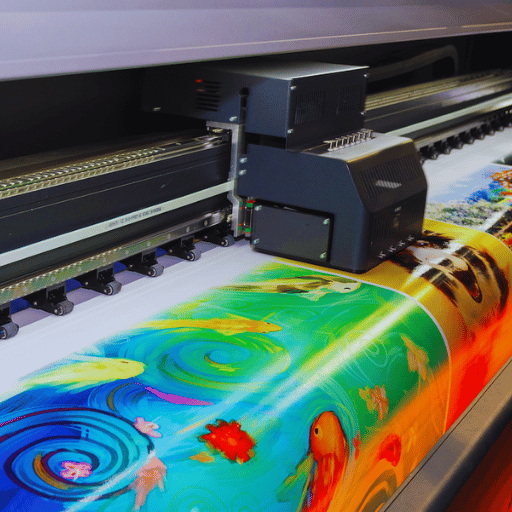
Printing ink is primarily made up of a vehicle, pigment, and additives such as driers, waxes, and bodying agents. The vehicle carries the pigment to the substrate, while additives control drying speed, viscosity, tack, and durability.
Quick-set inks use a resin–oil vehicle and combine absorption with polymerization and oxidation. First, the solvent portion is absorbed into the paper, then the remaining resin–oil layer cures to form a durable ink film.
Waxes such as paraffin and polyethylene are added to reduce blocking and ink set-off and to improve scuff resistance. This helps printed sheets resist rubbing and sticking during stacking, shipping, and finishing.
Moisture-set inks use a glycol-based vehicle that is water soluble and carries water-insoluble resins. When water is introduced, the glycol dissolves, but the resin–pigment phase precipitates onto the paper surface, creating a fast-setting ink film.
Ink tack can be reduced by using formulations that incorporate tack-reducing additives or shortening materials such as Teflon-based agents. Lower tack helps prevent surface picking and damage on sensitive or coated papers.


