If you have any questions, please feel free to contact us.| Email Us: info@dcheatpress.com


Views: 222 Author: Amanda Publish Time: 2026-01-21 Origin: Site


Content Menu
● What Are Glimmering Sublimation Tumblers?
● Essential Equipment and Materials
● Designing Your Glitter Tumbler Artwork
>> Recommended Artwork Dimensions
>> Using Design Software and Templates
● Print Settings for Glitter Tumblers
● Preparing and Wrapping the Transfer
● Setting Up the Tumbler Heat Press
● Time and Temperature for Glitter Tumblers
● Pressing Process: Step-by-Step
● Cooling, Finishing, and Quality Checks
● Troubleshooting Common Glitter Tumbler Issues
● Design Ideas to Maximize the Glitter Effect
● Safety and Maintenance Best Practices
● Example Reference Table for Pressing Settings
● Why Professional Heat Press Equipment Matters
● Frequently Asked Questions (FAQ)
>> 1. Do glitter sublimation tumblers need epoxy after pressing?
>> 2. Can the same settings be used for all brands of 20 oz glitter tumblers?
>> 3. Why does my tumbler have a faint white line at the seam?
>> 4. Can I use a convection oven instead of a tumbler press?
>> 5. How do I avoid ghosting on the top and bottom edges?
Creating high-quality glitter sublimation tumblers is one of the fastest ways to add premium, personalized drinkware to your product line or craft business. This in-depth guide walks through everything from design setup to pressing and troubleshooting so beginners and small studios can get consistent, professional results.
Glitter sublimation tumblers are double-walled stainless steel drinkware blanks with a special polyester coating that bonds permanently with sublimation ink under high heat. SubliCraft 20 oz glitter skinny tumblers are available in white and silver finishes and are designed specifically for full-color sublimation.
Unlike traditional epoxy glitter cups, these coated glitter tumblers achieve a smooth, glossy surface without additional resin steps, saving time and reducing mess in production. The outer glitter finish remains visible through the printed design, giving a shimmering effect while keeping the surface flat and durable.
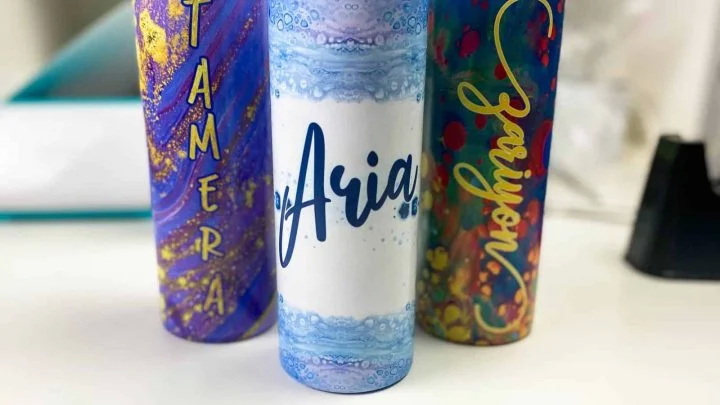
To make custom glimmering sublimation tumblers, you will need a compatible sublimation system and a properly adjusted heat press or oven. A setup similar to glitter skinny tumblers combined with a dedicated mug or tumbler press is ideal for small studios and craft businesses.
Core equipment:
- Sublimation printer using true sublimation inks.
- Heat press: dedicated mug and tumbler press or multi-function press with tumbler capability.
- Tumbler attachment or full-size heating element sized for 20 oz skinny tumblers.
Key consumables and tools:
- 20 oz glitter skinny tumblers (white or silver).
- High-quality sublimation paper matched to your printer profile.
- Heat-resistant tape and optionally shrink sleeves for oven pressing.
- Heat-resistant gloves and a silicone pad or cooling rack.
- Craft knife, rotary cutter, or trimmer for precise wrap edges.
A clean, dust-free workspace and consistent power supply help maintain repeatable color and temperature performance in production.
Many tumbler manufacturers provide PDF or PNG templates sized for 20 oz skinny tumblers, including bleed and safety areas. These templates typically include guidelines for full-wrap designs and center alignment markers for both sides of the tumbler.
For a standard 20 oz skinny tumbler, common design dimensions are approximately:
- Width: 8.75–9.3 in (22.2–23.6 cm), allowing for a small overlap at the seam.
- Height: 8–8.3 in (20.3–21.1 cm), adjusted to cover from just below the rim to the base without overhanging too much.
Always measure your exact blank from top to bottom and around the circumference, then add about 0.25 in to the width for overlap. Keeping vital text and logos inside the template's safety area protects them from distortion at the top and bottom curves.
Software like Adobe Illustrator, Photoshop, CorelDRAW, Affinity Designer, or Canva can be used to build full-wrap tumbler designs. Manufacturer templates often include a smart object layer where you can place your art inside the imprint area and preview how it wraps.
Best practices when designing:
- Keep critical elements (names, logos, faces) within the safety box.
- Extend background colors, patterns, or textures fully to the bleed edges to avoid white gaps.
- Use high-resolution images (at least 300 dpi at final print size) for crisp details on glitter surfaces.
Patterns like ombré, brush strokes, or faux glitter overlays tend to complement the real glitter finish and hide minor seam imperfections more effectively.
Sublimation on glitter tumblers requires rich color output and accurate profiles to avoid washed-out prints. When using a Sawgrass printer with Sawgrass Print Manager, stainless steel or tumbler-specific presets are a reliable starting point.
Example Sawgrass Print Manager settings:
- Substrate: Stainless Steel Tumbler (or equivalent metal drinkware preset).
- Paper: Select your exact sublimation paper profile.
- Mirror: Enabled, to reverse the design for correct orientation on the tumbler.
- Color mode: Photographic for detailed images and photos, or Vivid for bold patterns and graphics.
For other printer brands, use the manufacturer's recommended color profile and a high-quality or photo print mode on sublimation paper. Allow prints to dry completely before handling to prevent ink smudging when wrapping the tumbler.
Proper wrapping is one of the most critical steps in achieving seamless, ghost-free results on glitter tumblers. Even small air pockets or misaligned seams can lead to faded edges or double images after pressing.
Step-by-step wrap preparation:
1. Trim the long edge that will form the seam slightly inside the artwork line, removing about 1 mm so the overlap is tight but not bulky.
2. Place the trimmed edge against the tumbler first, holding it firmly while rolling the rest of the wrap around.
3. Ensure the top and bottom edges are parallel to the tumbler rim and base to avoid diagonal banding.
4. Apply several strips of heat-resistant tape along the seam, working from center outward to keep the wrap tight.
5. Slightly fold and tape the top and bottom edges over the rim and base to minimize gas escape and prevent white halos.
The goal is to create an extremely tight, wrinkle-free wrap where the paper behaves like a second skin on the tumbler surface. Any looseness increases the risk of ghosting during pressing.
Modern mug and tumbler presses support interchangeable heating elements, including dedicated tumbler attachments sized for 20 oz skinny tumblers. Correct installation and pressure setup are essential before turning the machine on.
Installing the tumbler attachment:
- Remove the existing mug element by loosening the thumbscrews and disconnecting the element cable.
- Slide in the tumbler attachment, align the mounting holes, reinstall the thumbscrews, and tighten them evenly.
- Plug the attachment cable into the press and secure any locking mechanism if present.
Before heating, insert a room-temperature tumbler with no transfer and close the press to adjust to medium pressure. The press should close firmly but not excessively; too much pressure can dent the tumbler or cause uneven contact.
Different brands of glitter tumblers may require slightly different time and temperature settings, but 20 oz glitter tumblers typically press reliably at a moderate temperature range. For many systems, 365 °F with two pressing cycles provides strong, consistent results.
Typical press settings for 20 oz glitter tumblers:
- Temperature: 365 °F / 185 °C.
- Time: 60–90 seconds per side (2 presses total).
- Pressure: Medium, full contact across the tumbler body.
Many makers press the tumbler once, rotate it 180 degrees, then press again so both sides receive equal, even heat exposure. Advanced users sometimes break the tumbler into four heating zones (top and bottom, front and back) for highly controlled results on challenging wraps.
Once your wrap is secure and the press is at temperature, the pressing process is straightforward but must be done with safety and timing discipline.
Pressing steps with a tumbler press:
1. Preheat the press to 365 °F and confirm the tumbler attachment is evenly hot across its surface.
2. Place the wrapped tumbler inside the press, ensuring the top lip is fully within the heating area.
3. Close the press and start the timer for 60–90 seconds, depending on your blank manufacturer's recommendation.
4. Wearing heat-resistant gloves, open the press, rotate the tumbler to expose the opposite side, and close the press for another 60–90 seconds.
5. When time is finished, remove the tumbler and place it on a heat-safe surface to cool briefly.
6. While still warm but safe to handle, carefully remove tape and peel away the paper to reveal the finished glitter design.
Avoid letting the tumbler cool completely before peeling, as fully cooled paper can sometimes stick more strongly and tear, making removal difficult.
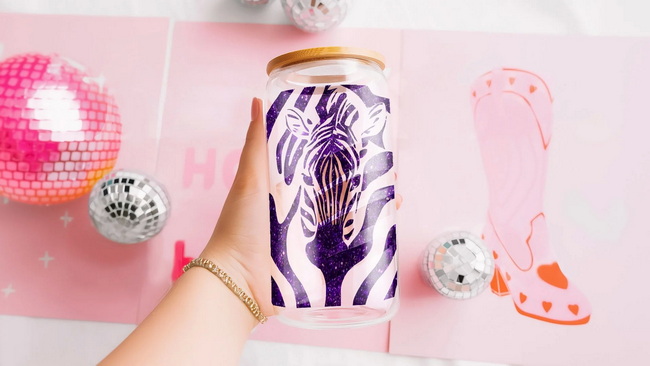
After peeling the transfer, inspect the tumbler under good lighting to ensure even color, consistent coverage, and crisp edges. Sublimation ink bonds within the coating during pressing, so there is no need for additional sealing or varnish on properly coated glitter tumblers.
Quality control checklist for each tumbler:
- Seam alignment: The overlap should be straight, with minimal color shift and no white gap.
- Color density: Areas with solid colors should be vivid and uniform, without mottling or dull patches.
- Edge coverage: The top and bottom borders should be fully covered, without unintended white rings.
- Surface condition: No dents, scorched areas, or melted coating spots should be visible.
Let tumblers cool completely before adding lids, packaging, or stacking to prevent trapped moisture and deformation of silicone gaskets.
Even experienced makers occasionally encounter quality issues, especially when changing to new blanks or papers. Systematic troubleshooting helps isolate whether the problem lies with design, wrap, pressure, or heat.
Frequent problems and solutions:
Ghosting or shadowing near edges
- Likely causes: Loose wrap, insufficient taping at top and bottom, or movement during pressing.
- Fix: Use more heat tape, fold paper over edges, and ensure extremely tight wrapping.
Faded or dull colors
- Likely causes: Too low temperature or time, incorrect color profile, or incompatible paper.
- Fix: Increase pressing time in 10–15 second increments and confirm printer settings and ink type.
White line at the seam
- Likely causes: Gap between edges or misaligned overlap.
- Fix: Slightly increase design width, trim one edge more precisely, and align carefully during wrapping.
Scorching or yellowing
- Likely causes: Excessive time or temperature, or uneven pressure.
- Fix: Reduce dwell time or temperature and verify pressure is medium, not overly tight.
Maintaining a simple press log (date, blank type, time, temperature, notes) helps you dial in repeatable settings for each tumbler supplier.
Glitter tumblers respond particularly well to high-contrast, layered designs that let the shimmer show through. Choosing the right art style can set your products apart in a crowded custom drinkware market.
Popular design approaches:
- Gradient and ombré backgrounds that transition from dark to light, amplifying glitter in mid-tone regions.
- Brush strokes, watercolor textures, or ink-splash overlays that break up solid color fields.
- Faux glitter or foil elements built into the design that blend with the real glitter beneath.
- Minimalist logos or monograms centered over subtle patterns, ideal for corporate or bridal gifts.
Testing how your most commonly used color palettes look on white versus silver glitter blanks can influence which model you stock for certain designs.
Sublimation involves high heat and potentially noticeable fumes, so basic safety and maintenance habits improve both operator safety and equipment lifespan.
Safety practices:
- Always use heat-resistant gloves when handling newly pressed tumblers or adjusting hot elements.
- Ensure your workspace is well ventilated, especially when pressing frequently or using an oven.
- Keep children and pets away from active presses and hot blanks.
Maintenance tips for your tumbler press:
- Regularly inspect heating elements for cold spots, cuts in the silicone, or uneven pressure.
- Tighten mounting screws periodically, especially if switching attachments often.
- Wipe the press surface (when cool and unplugged) with a soft, lint-free cloth to remove tape residue and paper fibers.
Consistent maintenance reduces unexpected downtime and helps keep temperature distribution even across the full body of the tumbler.
Tumbler type | Finish | Suggested temp | Time per side | Notes |
20 oz glitter (white) | Shimmer white | 365 °F | 60–90 s | Rich color, good for photos. |
20 oz glitter (silver) | Shimmer silver | 365 °F | 60–90 s | Slightly cooler tone, boosts metallic designs. |
Non-glitter steel | Satin or white | 380–400 °F | 45–60 s | Always confirm manufacturer specifications. |
This type of table improves scannability and supports quick training of new operators in a small workshop.
For workshops that want to scale beyond hobby level, stable, industrial-grade heat press equipment dramatically improves consistency and efficiency. Reliable heat transfer machines, welding machines, and embossing presses support long-term, high-volume sublimation operations.
By pairing high-quality glitter tumblers with a robust tumbler or multi-function press, users can:
- Reduce rework due to inconsistent temperature or pressure.
- Shorten production cycles for small batch or customized orders.
- Maintain consistent branding quality across multiple product lines such as tumblers, mugs, and textiles.
Professional support and after-sales service also help teams quickly resolve technical issues and maintain uptime in busy seasons.
If you are ready to upgrade your sublimation workflow and produce more consistent glitter tumblers for customers worldwide, now is the time to invest in high-performance heat transfer solutions. Visit COLORFUL at dcsbheatpress.com to explore specialized heat press, welding, and embossing equipment, and contact the technical team for tailored recommendations that match your tumbler sizes, production volume, and long-term business goals.
Contact us to get more information!
No, properly coated glitter sublimation tumblers are ready to use after pressing and cooling, so no epoxy or additional sealant is required. The polyester coating on the tumbler permanently locks in the sublimation ink.
Not always. While 365 °F for 60–90 seconds per side works well for many glitter blanks, users should always confirm the recommended settings from each blank supplier. Small adjustments in time or temperature can significantly improve results.
A white line usually indicates a small gap or misalignment at the wrap overlap, which prevents ink from fully transferring at that point. Slightly increasing design width, trimming one edge more precisely, and tightening the wrap often resolve this issue.
Yes, many creators use dedicated convection ovens with shrink sleeves to sublimate tumblers. However, ovens must be used only for sublimation and never for food, and time settings will differ from press settings, so test and log your ideal parameters.
Ghosting at the edges usually comes from gas escaping where the paper is loose. Folding and taping the paper over the rim and base, combined with very tight wraps, significantly reduces this risk and keeps edges sharply defined.
1. https://www.heatpressnation.com/blogs/blog/how-to-make-custom-glimmering-sublimation-tumblers
2. https://www.youtube.com/watch?v=AucPFbtSLig
3. https://www.silhouetteschoolblog.com/2021/08/how-to-add-glitter-to-sublimation.html
4. https://makerflo.com/pages/how-to-sublimate-a-20-oz-skinny-tumbler
5. https://www.silhouetteschoolblog.com/2021/07/how-to-do-all-over-20-oz-skinny-tumbler.html


