If you have any questions, please feel free to contact us.| Email Us: info@dcheatpress.com


Views: 222 Author: Amanda Publish Time: 2025-12-21 Origin: Site


Content Menu
● Why You Shouldn't Use a Flat Press on Hats
● What You Can Heat Apply to Hats
● Recommended Time, Temperature, and Pressure for Hats
>> General Settings by Fabric and Application
● Step-by-Step: How to Heat Press a Hat
>> Step 1: Design and Size Your Artwork
>> Step 3: Load and Secure the Hat on the Platen
>> Step 4: Position and Secure the Transfer
>> Step 5: Set Temperature, Time, and Pressure
>> Step 6: Press with a Protective Sheet
>> Step 7: Cool and Peel the Carrier
>> Step 8: Inspect and Finish the Hat
● Expert Tips for Professional and Consistent Results
● Scaling Up: From Hobby Pressing to a Hat Printing Business
● Take the Next Step in Your Hat Printing Journey
● FAQs About Hat Heat Pressing
>> 1. What temperature should I use to heat press a hat?
>> 2. Can I heat press polyester or performance hats?
>> 3. Why is my hat design peeling after washing?
>> 4. Do I need special settings for leather patches on hats?
>> 5. Can I decorate the back, sides, and brim of hats?
A hat heat press is a specialized machine with a curved platen that lets you apply designs to the front, back, sides, and brim of caps with even heat and pressure. When used with correct temperature, time, and pressure settings for each fabric and transfer type, a hat heat press produces durable, professional custom hats suitable for both hobby and commercial production.[1]
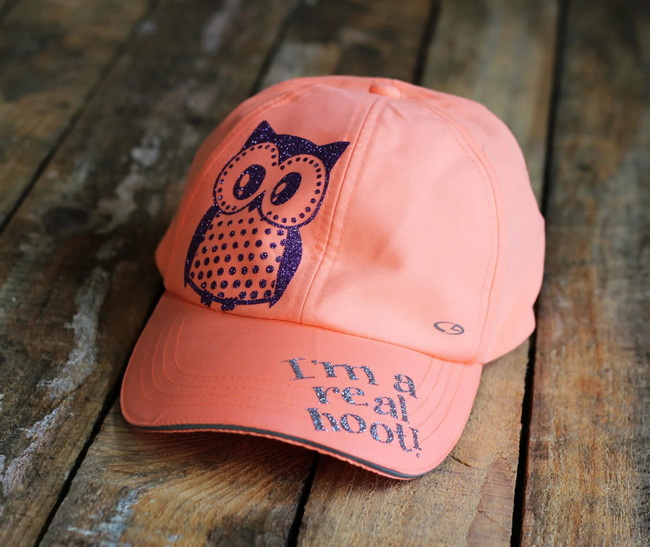
A hat heat press is designed to match the curved shape of caps and hats, usually featuring interchangeable lower platens to fit different crown heights and styles. Compared with flat presses, the curved platen and hat hold-down device keep the front panel taut, ensuring consistent contact between the transfer and fabric for reliable results.[1]
- Main components: heated upper platen, curved lower platen, pressure adjustment knob, and a hold-down strap or clamp for the hat.[1]
- Typical applications: HTV, DTF, sublimation prints, leather patches, and specialty transfers on various structured and unstructured hats.[1]
Flat presses are engineered for flat garments and cannot uniformly contact the curved crown and seam areas of most caps. This uneven contact leads to cold spots, partial adhesion, and potential damage or deformation of the hat.[1]
- Improvised supports or pads rarely maintain stable tension across the curved front, increasing reject rates.
- A dedicated hat press delivers far more consistent quality, especially when you decorate hats frequently or in batches.[1]
Hats can be decorated with several transfer methods, each offering different feel, durability, and production characteristics. Choosing the right media for fabric type and intended use helps maintain color, flexibility, and adhesion after repeated wear and washing.[1]
- Dye-sublimation transfer paper: Provides rich color and detail but only works on light, polyester-based hats.
- DTF film transfers: Offer photo-realistic color and can be applied to cotton, blends, and synthetics without major fabric limitations.
- Heat transfer vinyl (HTV): Best for simple logos, text, and designs with fewer colors, giving strong opacity and clean edges.
- Leather or faux-leather patches: Use heat-activated adhesive to bond to the hat, adding a premium, branded look.
The optimal combination of temperature, time, and pressure depends on both the cap fabric and the type of transfer used. Always confirm with your transfer supplier's instructions, then fine-tune using test hats to match your specific machine and materials.[1]
Hat Material / Transfer | Typical Temperature | Time | Pressure | Notes |
Cotton caps with HTV | 320-350°F (160-180°C) | 10-15 s | Medium to heavy | Common for basic logo caps; avoid over-pressing. |
Cotton caps with DTF | 320-350°F (160-180°C) | 10-15 s | Medium to heavy | Follow DTF supplier's instructions for best wash durability. |
50/50 blend caps | 320-350°F (160-180°C) | 10-15 s | Medium to heavy | Balanced settings for mixed fibers. |
Polyester / synthetic caps | 280-300°F (140-150°C) | 10-15 s | Medium to heavy | Lower heat protects heat-sensitive fibers. |
Caps with patches | 280-340°F (140-170°C) | 25-45 s | Firm | Longer time and firm pressure help activate patch adhesive. |
For sublimation on polyester hats, higher temperatures and longer times are often required, but they should only be used on sublimation-ready blanks that can tolerate those settings. Heat-sensitive performance hats benefit from low-temperature films and starting at the lower end of each recommended range.[1]
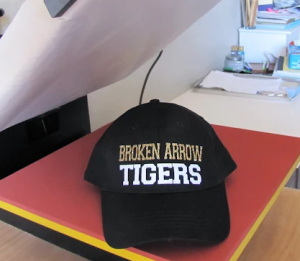
A clear, repeatable process allows you to move from one-off personal projects to efficient small-batch and commercial production. The following steps integrate practical best practices to help you minimize waste and rework.[1]
Correct artwork sizing keeps designs looking balanced and reduces distortion on the curved crown. Oversized graphics can wrinkle near seams and edges, while undersized logos may look lost on high-profile caps.[1]
- High profile hat - Front: about 2.25″ H × 5″ W.
- Mid profile hat - Front: about 2″ H × 5″ W.
- Low profile and low crown hats - Front: around 1.75″ H × 4″ W.
- Side, back, and brim areas: shorter heights and narrower widths for better conformity.
When planning designs, consider using 3D elements or special-effect transfers such as holographic or glitter films to add depth and visual impact.[1]
Proper preparation improves adhesion and reduces visible issues such as bubbles, lint marks, or wrinkles. A few seconds of preparation often prevents failures later in production.[1]
1. Confirm that the hat is clean and free from dust, lint, or debris; use a lint roller or soft cloth if needed.
2. Remove any cardboard inserts or packing materials from the crown before pressing.
3. Pre-press the hat for several seconds to remove moisture and smooth light wrinkles, particularly for cotton or thicker fabrics.
Correct loading ensures the front panel is evenly tensioned and fully aligned with the curved platen. A loose or twisted hat can easily produce crooked or uneven designs.[1]
- Slide the bill smoothly onto the lower platen and pull the front crown over the curved surface until it is taut.
- Use the hat hold-down device or strap to secure the hat so it remains tight and stable under pressure.
- Check that seams and center lines are straight relative to the platen to maintain visual alignment.
Accurate transfer placement is essential for consistent branding and professional presentation. Small errors in centering or tilt become very noticeable on hats because of the limited visible area.[1]
- Use seams, eyelets, or tags as visual reference points to center the design.
- Ensure the entire transfer lies within the effective pressing area of the platen and avoid very thick seam intersections.
- Fix the transfer in place with heat-resistant tape to prevent shifting during pressing.
Before beginning a full run, perform one or more test presses to confirm your settings for that specific hat and transfer combination. This safeguards against under- or over-pressing when you move into larger production quantities.[1]
- Use the material and fabric guidelines above as a starting point, then adjust as needed.
- Set pressure using the adjustment knob so that closing the press requires firm but controlled effort, often described as medium to heavy.
- Record effective settings so you can repeat them quickly for future orders using the same blanks and transfers.
Using a protective cover sheet is considered best practice for hat decoration. It helps protect both the hat and the transfer while promoting more even heat distribution.[1]
- Place a Teflon or similar protective sheet over the transfer and hat before closing the platen.
- Press for the programmed time without rocking or moving the hat to maintain uniform contact and pressure.
Peeling the carrier correctly helps preserve edges, small details, and surface finish. Rushing this step can lead to lifted corners or distorted fine elements.[1]
- Allow the hat to cool according to the transfer's requirement (hot, warm, or cool peel), and avoid touching the design during this period.
- Peel the carrier at a sharp angle instead of pulling straight upward.
- For intricate or very small designs, use a hook or tweezers to carefully lift the edge of the carrier before peeling.
A quick quality check ensures that only fully adhered hats reach your customers. Many minor issues are still correctable immediately after pressing.[1]
- Examine edges, corners, and detailed areas to confirm complete bonding to the fabric.
- If needed, apply a second short press with the protective sheet to reinforce weak areas.
- Allow hats to cool completely before stacking or packaging to avoid pressure marks or unintended sticking.
Incorporating a few expert habits into your workflow can dramatically improve consistency and reduce waste. These practices are especially valuable when processing different hat types and material combinations.[1]
- Pay attention to tension: a smoothly tensioned front panel presses more evenly than a slack or wrinkled one.
- Avoid pressing large, rigid transfers directly across thick seams unless they are specifically designed to bridge seams.
- Use different lower platens or pads for high-profile, mid-profile, and low-profile hats to preserve shape and structure.
- Keep test caps for each major fabric category to trial new transfer types or settings without sacrificing saleable hats.
When hat production becomes a recurring revenue stream, it is important to focus on repeatability and workflow efficiency. A small number of process improvements can significantly boost output and profit per piece.[1]
- Standardize artwork templates for each hat profile so designs are correctly sized and positioned from the beginning.
- Build a simple internal guide that documents your proven time, temperature, and pressure settings for each hat and transfer type.
- Implement basic in-run quality checks, such as inspecting the first few hats and periodic samples from the middle and end of each batch.
If you are ready to turn high-quality hat heat pressing into a reliable part of your business, now is the time to refine your setup, standardize your process, and invest in equipment that supports consistent, scalable production. Review your current workflow, identify where better settings, fixtures, or training can improve results, and then take action by planning your next upgrade, scheduling a production test run, or building a dedicated hat-only line so you can deliver more premium custom caps in less time.[1]
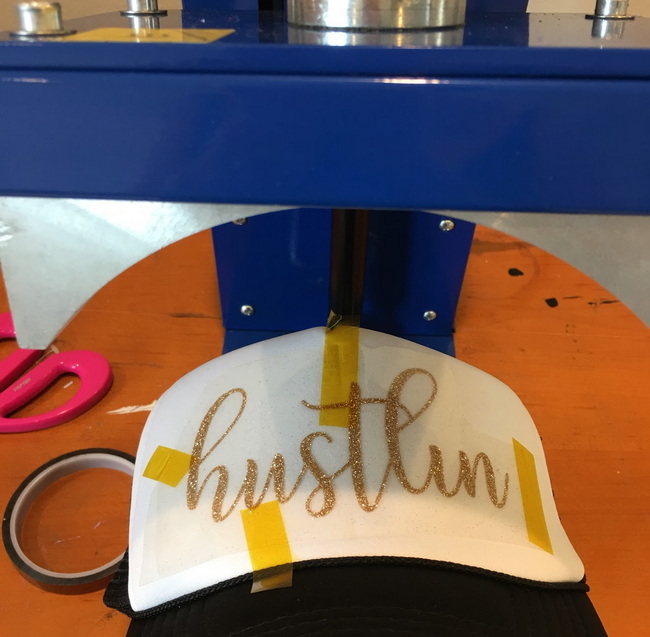
Most cotton and blend hats press well between 320-350°F (160-180°C) for 10-15 seconds with medium to heavy pressure when using typical heat transfer vinyl or DTF film. Always check the transfer manufacturer's instructions first and use these ranges as a starting point.[1]
Yes, polyester and performance hats can be pressed successfully when you reduce the temperature to around 280-300°F (140-150°C) and press for a short time with medium pressure. This lower temperature helps prevent scorching or shine marks while still activating the adhesive.[1]
Peeling designs are often caused by too little pressure, insufficient temperature, or pressing for too short a time. Washing the hat too soon after pressing or using incompatible detergents can also weaken the bond, so it is best to follow post-press care guidelines provided with the transfer material.[1]
Leather and faux-leather patches usually require firm pressure and slightly longer press times to fully activate their adhesive. Using a protective sheet and pre-testing on a sample hat helps you refine the exact temperature and duration needed for a strong, clean bond.[1]
Yes, with suitable platen sizes and careful positioning, you can apply transfers to the back strap area, side panels, and even the brim. These additional locations allow you to offer more creative layouts and higher perceived value on each custom hat.[1]


