If you have any questions, please feel free to contact us.| Email Us: info@dcheatpress.com


Views: 222 Author: Amanda Publish Time: 2025-12-20 Origin: Site


Content Menu
● What Is a Teflon Sheet for Heat Press?
● Why Teflon Sheet Matters for Print Quality
● Do You Really Need a Teflon Sheet for Heat Press?
● When Teflon Sheets Make the Biggest Difference
>> Enhancing Gloss or Smoothness
>> Protecting Exposed Inks and Thick Prints
>> Multi-Layer HTV and Multiple Presses
>> Double-Sided Garment Printing
● Can You Use a Heat Press Without a Teflon Sheet?
● How to Use Teflon Sheet for Heat Press
>> Basic Single-Layer Transfer
● Best Practices for Choosing and Maintaining Teflon Sheets
>> Size, Thickness, and Configuration
● How to Clean a Teflon Sheet Safely
● Can You Use a Teflon Sheet for Sublimation?
● Teflon Sheet vs Alternative Cover Sheets
● Advanced Tips from Industry Practice
● Upgrade Your Heat Press Workflow with Teflon Sheets
● FAQ About Teflon Sheet for Heat Press
>> 1. What temperature can a Teflon sheet for heat press withstand?
>> 2. How long does a Teflon sheet last in regular use?
>> 3. Can I cut a Teflon sheet to fit my heat press?
>> 4. What can I use instead of a Teflon sheet?
>> 5. Why do some transfer suppliers advise against using Teflon sheets?
Using a Teflon sheet for heat press is an effective way to protect garments, stabilize temperature, and achieve clean, professional prints across sublimation, DTF, HTV, plastisol, and laser transfer workflows. When paired with a reliable heat press, a properly sized and well-maintained Teflon sheet reduces misprints, scorching, and platen contamination in both small studios and industrial environments.[1][2]
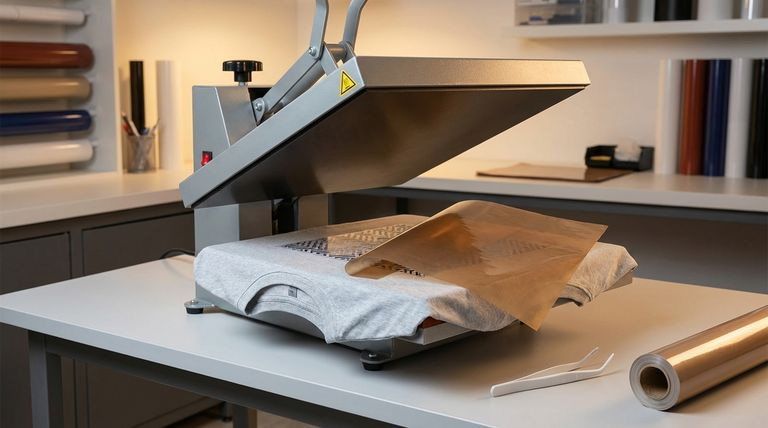
A Teflon sheet for heat press (often called a PTFE sheet or non-stick cover sheet) is a heat-resistant, non-stick barrier placed between the upper platen and the substrate during heat transfer printing. Typically made from PTFE-coated fiberglass fabric, it is thin, flexible, and capable of withstanding the high temperatures required by modern transfer technologies.[2][3]
Key characteristics include:
- High heat resistance, commonly up to around 260–300°C (500–572°F), depending on the grade.[3]
- Non-stick surface that resists ink, adhesive, and dye buildup during repeated presses.[2]
- Tear-resistant and reusable construction that supports daily use in production settings.[3]
For busy workshops and print-on-demand businesses, a Teflon sheet quickly becomes part of the standard toolkit alongside heat-resistant tape, pressing pillows, and interchangeable platens.[1]
A carefully chosen Teflon sheet for heat press does more than protect equipment; it directly influences final print quality and consistency.[1]
Main functions:
- Protection of fabric and platen
The sheet creates a barrier between the hot platen and the textile or hard substrate, reducing scorching, shine marks, and platen imprints on sensitive fabrics such as polyester and performance wear. It also protects the platen from melted adhesive or ink that could otherwise transfer to later jobs and ruin prints.[2][1]
- More even heat distribution
The PTFE surface helps buffer minor hot spots, promoting more uniform heat across the transfer area and improving adhesion for DTF, HTV, and plastisol transfers. On large presses where edge-to-center temperatures vary, this can prevent under-pressed corners and over-cooked centers.[4][1]
- Prevention of staining and sticking
Because PTFE is inherently non-stick, ink, toner, and adhesive residues are less likely to bond permanently, reducing staining and ghost images on subsequent presses. When contamination occurs, the sheet can usually be wiped clean instead of replacing costly platens or pads.[3][2]
Many garments can technically be pressed without a Teflon sheet for heat press, but for commercial environments and demanding graphics it is widely treated as essential. The relatively low cost of Teflon sheets compared with the cost of ruined garments, damaged platens, and production delays makes them a practical investment.[1][2]
Situations where Teflon sheets are especially valuable:
- High-value or heat-sensitive garments, including polyester jerseys, performance fabrics, and soft-shell jackets.[2]
- Graphics with heavy ink deposits or special effects, where adhesion to the platen and surface damage are more likely.[1]
- Multi-pass workflows, such as multi-layer HTV or front-and-back designs that require several presses on the same garment.[1]
Some ultra-fast transfer systems are calibrated for direct platen contact and may require adjustment of time, temperature, or pressure if a Teflon sheet is used. Test presses help determine whether small parameter changes are needed.[5]
When a smooth, slightly glossy finish is desired on vinyl or plastisol transfers, placing a Teflon sheet over the design for a brief finishing press can help. A short second press compresses the surface, giving it a polished look preferred for certain branding or fashion applications.[6]
Screen-printed graphics, especially those with thick plastisol or special-effect inks, can be vulnerable during curing and re-pressing. Covering such prints with a Teflon sheet during finishing presses reduces sticking and helps level the ink surface.[7][2]
In multi-color HTV work, previously pressed layers are exposed during subsequent presses and can shrink, distort, or over-cure if directly contacting the platen. A Teflon sheet for heat press placed over the existing layers shields them while new parts of the design are pressed.[1]
When decorating both sides of a garment, heat can pass through the fabric and unintentionally affect the side facing down. Inserting a Teflon sheet inside the garment between front and back helps prevent unwanted re-melting or ghosting of the first print.[2][1]
A heat press can be used without a Teflon sheet for heat press, particularly on robust fabrics that do not easily scorch or show marks. For certain fast-curing transfers, direct contact without Teflon may even be recommended to ensure complete heat penetration in the specified short dwell time.[5][2]
Trade-offs to consider:
- Without Teflon, platen contamination from adhesive or ink is more likely and more difficult to remove.[2]
- Fabric shine, press marks, and subtle damage become more common on delicate or dark garments.[2]
- Edge-to-center temperature differences on the platen are less buffered, which can lead to inconsistent adhesion.[1]
For professional decorators and serious hobbyists, the combination of protection, consistency, and extended platen life usually justifies keeping Teflon sheets in regular use.[1]
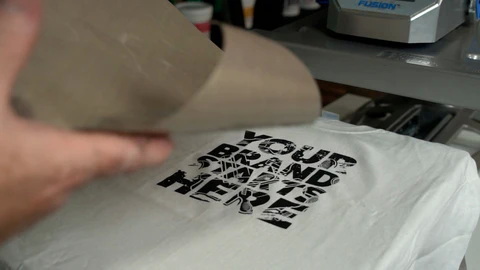
Using a Teflon sheet for heat press is straightforward, but a consistent method improves results and reduces rework.[7]
1. Prepare equipment and materials
- Turn on the press and set temperature, time, and pressure according to the transfer instructions.
- Load the garment smoothly, removing seams and folds from the press area.[7]
2. Position the transfer
- Align the transfer film, sublimation paper, or DTF sheet in the desired position.
- Fix it with heat-resistant tape if necessary to prevent shifting.[7]
3. Place the Teflon sheet
- Lay the Teflon sheet for heat press flat over the entire design, covering slightly beyond the edges.[1]
- Ensure there are no creases or folds that could create pressure lines.[1]
4. Press
- Close the press and apply the required pressure for the recommended time, adjusting only if testing shows that Teflon slows heat transfer slightly.[1]
5. Peel and cool
- Open the press and carefully remove the Teflon sheet from one corner.
- Peel the transfer according to hot, warm, or cold peel instructions, then lay the garment flat to cool.[7]
- Press the first HTV layer for a shorter tack time.
- Cover existing layers with a Teflon sheet whenever pressing additional colors or elements.[1]
- Finish with a full press over the entire design with the Teflon sheet in place to lock all layers and smooth the surface.[1]
- Print and cool the first side fully.
- Turn the garment, insert a Teflon sheet between the printed sides, and position the second design.[2]
- Press the second side while the internal Teflon sheet prevents re-melting of the first print.[2]
Choosing the right Teflon sheet for heat press ensures sufficient coverage and ease of use.[1]
- Select a sheet at least as large as the platen; slightly larger sizes offer better edge protection.[1]
- Standard thicknesses balance flexibility and durability, conforming to minor garment irregularities.[3]
- Some operators mount a Teflon sheet permanently to the upper platen using clips or magnets to streamline production.[8]
Teflon sheets are designed to be reusable, but they do wear over time.[3]
- Rotate sheets regularly so one area is not constantly over the hottest zone.[1]
- Replace sheets that show heavy discoloration, cracks, warping, or fused adhesive that cannot be removed.[9]
Regular cleaning extends the life of your Teflon sheet for heat press and maintains consistent print quality.[2]
Recommended approach:
1. Cool before cleaning
Allow the sheet to cool to a safe handling temperature, but address spills before they harden completely.[2]
2. Wipe off debris
Use a soft, damp cloth or sponge to remove ink, adhesive, or lint from the surface, avoiding abrasive pads that can scratch the PTFE coating.[2]
3. Use mild soap if needed
For resistant residues, apply a small amount of mild dish soap in warm water, wipe gently in circular motions, and rinse with clean water.[9]
4. Dry thoroughly
Air dry or use a lint-free cloth to dry the sheet before pressing again to prevent steam marks on garments.[2]
5. Avoid harsh chemicals
Strong solvents or aggressive cleaners can damage PTFE and reduce non-stick performance, so they should not be used.[9]
With this routine, Teflon sheets usually perform reliably through many production cycles.[3]
A Teflon sheet for heat press can be used in many sublimation workflows, particularly when platen protection is a priority. It helps prevent stray sublimation ink from staining the press, especially when working with mugs, metal panels, or polyester garments.[2]
Points to consider:
- Disposable butcher paper or parchment can sometimes be better for sublimation because they absorb moisture and stray dye gas.[10]
- Teflon does not absorb ink, so any dye that reaches the surface may leave light residue, making cleaning important.[2]
- Because Teflon slightly influences heat transfer, press time may need minor adjustment for consistent color and density.[1]
Keeping both Teflon sheets and absorbent papers available provides flexibility for different transfer types.[10]
Different protective sheets offer different combinations of cost, durability, and performance.[9]
Cover option | Heat resistance & durability | Reusability | Typical use cases |
Teflon sheet for heat press | Very high heat resistance, robust PTFE coating. | Highly reusable | Daily production, platen protection, multi-layer HTV, gloss finishing. |
Parchment / baking paper | Good heat resistance, can brown or curl over time. | Semi-disposable | Low-cost protection, small runs, occasional hobby projects. |
Butcher paper | Absorbs moisture and dye gas well. | Single- or few-use | Sublimation where ink blow-out absorption is important. |
Silicone sheet | High heat resistance, flexible and durable. | Reusable | Specialty applications requiring specific surface behavior. |
For most garment decorators, Teflon sheets are favored when long-term durability, easy cleaning, and consistent non-stick performance are required.[9]
Experienced decorators and print shops often develop additional practices around Teflon sheet for heat press to optimize output.[1]
Practical tips include:
1. Run structured test presses
Whenever a new transfer type or garment is introduced, perform test presses with and without Teflon to fine-tune time, temperature, and pressure.[7]
2. Keep multiple sheets on hand
Maintain several Teflon sheets so a contaminated one can be set aside for later cleaning without slowing production.[3]
3. Combine with pressing pillows or pads
For garments with seams, zippers, or buttons, pressing pillows used together with Teflon sheets help maintain even pressure.[11]
4. Secure a sheet to the upper platen
Using clips or magnets to keep one sheet on the upper platen can speed loading and protect the platen continuously.[8]
Adopting these habits helps stabilize quality and extends the lifespan of both Teflon sheets and equipment.[1]
If you rely on heat transfer printing for T-shirts, sportswear, promotional items, or hard substrates, now is the time to standardize the use of Teflon sheets in your workflow. Audit your current process for common issues—such as platen contamination, inconsistent adhesion, shine marks, or damaged high-value garments—and introduce or upgrade Teflon sheet for heat press coverage on your key presses to stabilize quality and extend equipment life.[2][1] Contact us to get more tips!
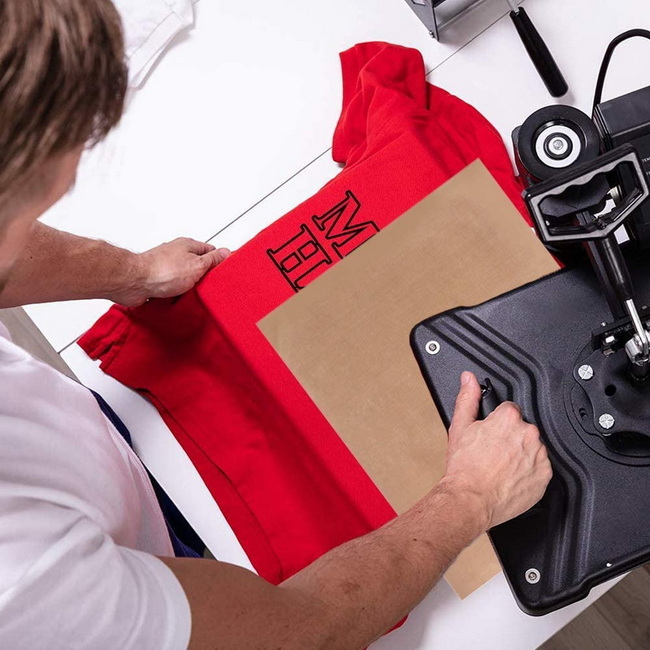
Most Teflon sheets for heat press are designed for continuous use up to around 260–300°C (approximately 500–572°F), depending on construction and backing materials. Always confirm the exact rating in the product documentation before pressing near the upper limit.[3]
With regular cleaning and careful handling, a Teflon sheet in a small or medium-size shop can last several months or more before needing replacement. Visible damage, hard contamination, or warping are clear signs that it is time to change the sheet.[9][3]
Most Teflon sheets can be trimmed with scissors or a utility knife to match platen dimensions or to create smaller pieces for partial coverage. Smooth, straight edges reduce the risk of snagging fabric and ensure even contact across the pressing area.[3]
Alternatives include parchment paper, butcher paper, and silicone cover sheets, each with different durability and heat behavior. Teflon sheets are usually preferred when high reusability, easy cleaning, and consistent non-stick performance are important.[9]
Because Teflon acts as a slight insulator, it can reduce heat transfer and may require longer press times or higher temperatures. Some fast-curing transfers are calibrated for direct platen contact, so suppliers may recommend pressing without Teflon or adjusting parameters after testing.[5][9]
[1](https://kiloheatpress.com/teflon-sheet-for-heat-press/)
[2](https://blog.ricoma.com/2024/07/18/teflon-sheet/)
[3](https://www.youtube.com/watch?v=JgLykieY9WQ)
[4](https://www.youtube.com/watch?v=LjshhVj5p2s)
[5](https://www.youtube.com/watch?v=ReLmRz3qNJg)
[6](https://uscutter.com/Non-Stick-Sheets-for-Heat-Presses/)
[7](https://imprintnext.com/blog/how-to-use-teflon-sheet-in-screen-printing)
[8](https://www.youtube.com/watch?v=6NgzOhFB6Z4)
[9](https://dtfil.com/blogs/blogs/teflon-sheet-for-heat-press)
[10](https://www.youtube.com/watch?v=1fRkDZW6Xmk)
[11](https://galaxy-press.com/a-quick-guide-to-heat-press-cover-why-and-how-to-choose/)


