If you have any questions, please feel free to contact us.| Email Us: info@dcheatpress.com


Views: 222 Author: Amanda Publish Time: 2026-01-08 Origin: Site


Content Menu
● What Is DTF Printing And Why DTF Station
● DTF Print Cost: How Much Does One Transfer Really Cost
>> Typical DTF Cost Ranges Per Design
● How Software Helps You Control DTF Costs
● DTF Printer Maintenance: What A Realistic Routine Looks Like
>> Why DTF Maintenance Matters
>> Example Daily, Weekly And As-Needed Maintenance Checklist
● How Durable Are DTF Transfers
>> Best Practices To Maximize Durability
● DTF Print Time: How Fast Orders Can Be Produced
● Why Upgrade To A Powder Shaker And Curing Oven
>> Advantages Of Automated Powder Shakers
>> Benefits Of A Dedicated DTF Curing Oven
● Heat Press Settings For Reliable DTF Transfers
● DTF Transfers Versus Traditional Plastisol Transfers
● Expert Tips To Scale A DTF Workflow
● When A DTF Station-Style Setup Makes Sense
● Frequently Asked Questions About DTF Station And DTF Printing
>> 1. How much does it cost to produce one DTF transfer
>> 2. How often should I maintain a DTF printer
>> 3. How long do DTF transfers typically last
>> 4. Do I need a curing oven if I already have a heat press
>> 5. What fabrics can be decorated with DTF transfers
Direct-to-Film (DTF) printing has become one of the most popular ways to produce vibrant, durable garment transfers, and many printers look to DTF Station systems such as the Prestige A4, Miro 13 shaker, and Phoenix Air oven to build or scale their business. This in-depth DTF Station FAQ walks through real-world costs, daily maintenance, print durability, print times, and workflow upgrades so you can confidently choose and run a DTF setup that fits your shop.
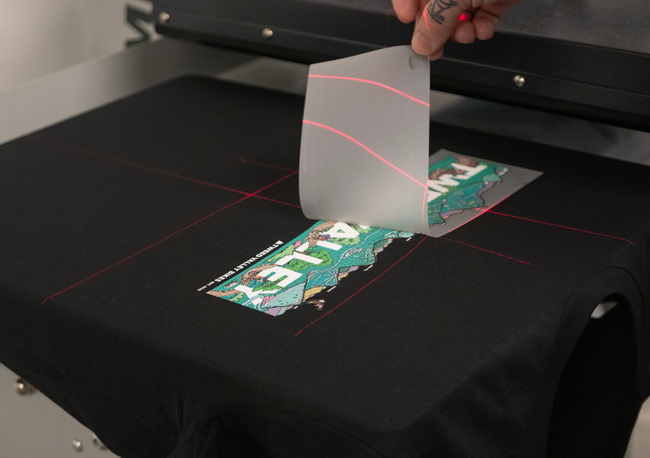
DTF printing is a digital process where you print your design with special DTF inks onto a coated PET film, apply hot-melt powder, cure it, and then heat press the transfer onto a garment or fabric item. The result is a flexible, full-color transfer that adheres to many fabric types with excellent wash resistance when properly cured.
DTF Station focuses specifically on this workflow with integrated printers, shakers, and curing ovens designed to keep production consistent and beginner-friendly. For many shops, this combination of purpose-built hardware, software, and technical support significantly shortens the learning curve.
One of the biggest questions about DTF Station systems is the actual cost per print. The answer depends mainly on design coverage, ink usage, and material consumption.
A 10 x 10 inch design with some negative space typically falls around USD 0.40 in combined ink, film, and powder cost. A fuller, heavier-coverage 10 x 10 inch design may increase that number to around USD 0.60 because more ink and powder are laid down.
The cost calculator in compatible RIP software allows you to enter current prices for ink, film, and powder so you can see accurate cost estimates before production. For pricing decisions, the per-print cost should be treated as the baseline before adding labor, overhead, and profit.
A simple but effective optimization is to gang multiple designs together on the same sheet of film. This reduces film waste and spreads the film cost across several transfers, lowering the effective cost per piece.
Cost control in DTF production is much easier when the RIP software can estimate consumption precisely. For DTF workflows using DTF Station equipment, the RIP can calculate ink coverage and associate that with your ink, film, and powder prices.
Key advantages include:
- Built-in cost estimation for each print area.
- The ability to update material prices whenever your suppliers change their rates.
- Layout tools that make ganging designs on A4 or A3 film efficient and repeatable.
With accurate cost-per-print data, you can set wholesale and retail prices that reflect real expenses while preserving profit margins.
Maintenance is one of the main concerns for new DTF users. A consistent routine keeps printheads healthy, minimizes downtime, and maintains print quality.
Well-structured maintenance helps prevent white ink clogs that can halt production at the worst possible time. It also protects printheads and other critical components, extending the overall life of the printer.
Beyond reliability, regular care stabilizes color and density from job to job, enabling repeat orders with consistent results. A predictable maintenance routine becomes part of the shop's daily rhythm rather than an interruption.
Many DTF Station printers are shipped with maintenance charts that break tasks into daily, weekly, and as-needed categories. Some models include automated self-cleaning features that run on timers as long as the printer remains powered on, greatly reducing manual intervention.
Below is a practical maintenance structure that reflects proven DTF best practices.
Daily tasks:
- Run a quick nozzle check to confirm that all color channels are firing correctly.
- Gently agitate or shake white ink to keep pigments in suspension.
- Inspect and lightly clean the wiper blade and capping station area if excessive ink build-up is visible.
Weekly tasks:
- Perform a more thorough printhead cleaning using the procedures recommended by the manufacturer.
- Check ink lines and fittings for leaks or air bubbles.
- Inspect the powder shaker or curing oven for powder build-up and clean contact surfaces where needed.
As-needed tasks:
- Update firmware or RIP software to maintain compatibility and performance.
- Replace consumable components such as wiper blades or capping stations when they show wear.
- Contact technical support if repeated clogs, banding, or mechanical errors occur despite regular maintenance.
For printers with self-cleaning modes, leaving the device powered on allows timed cleanings to run automatically, which can be particularly helpful in environments where printing is not continuous every day.
The flexibility of DTF printing is a major reason it has been adopted so widely. The technology allows decoration of a broad range of textile products with bright colors and good opacity.
Typical applications include:
- T-shirts, hoodies, sweatshirts, and joggers in cotton, polyester, and blends.
- Hats, beanies, fabric shoes, tote bags, and wallets.
- Workwear, sportswear, and fashion pieces that demand a balance of flexibility and durability.
DTF transfers are designed for soft fabrics rather than hard surfaces. For rigid substrates like mugs, coated metals, or ceramics, other technologies such as sublimation or UV printing remain more suitable.
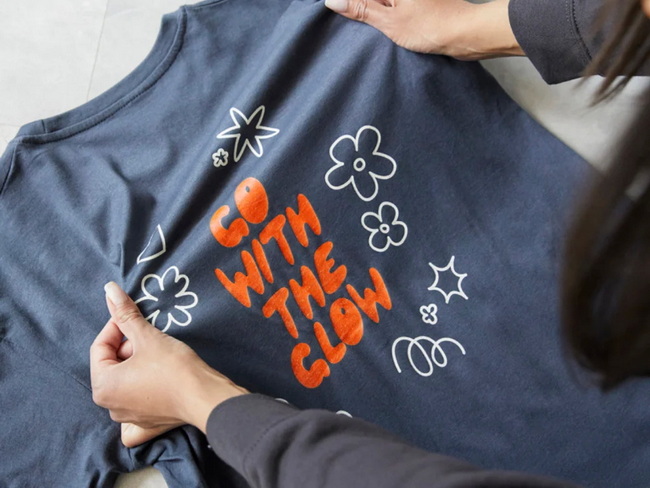
Durability directly affects customer satisfaction and repeat business, so wash performance is crucial. Properly cured DTF transfers have been shown to withstand 50 or more washes under normal use and care when processed according to guidelines.
Industry experience also indicates that optimized DTF workflows can reach a wash life on the order of 50 to 100 cycles, particularly when users follow recommended washing instructions. Over time, gradual soft fading can occur, but cracking is far less common than with some traditional plastisol transfers when both are processed correctly.
- Use a reliable heat press that maintains even temperature and consistent pressure across the platen.
- Follow recommended temperature, time, and pressure settings for both curing the adhesive powder and pressing the transfer onto fabric.
- Advise end users to wash garments inside-out in cold or warm water and avoid aggressive tumble-drying where possible.
By combining controlled curing conditions and appropriate garment care, shops can deliver transfers that maintain their appearance over long periods.
Production speed is important for both small custom shops and larger fulfillment operations. DTF Station desktop systems and modular add-ons aim to balance quality with throughput.
For an entry-level desktop system such as a compact A4 DTF printer, an 8 x 8 inch design can often be printed within approximately 5 to 6 minutes. Exact times depend on chosen resolution, ink coverage, and any additional passes configured in the RIP.
When a printer is paired with an automated powder shaker and dryer, such as a 13 inch shaker and oven unit, powdering and curing are no longer manual steps. In typical workflows, that combination can bring the total time from print to fully cured transfer to under 10 minutes, even though exact performance will depend on artwork and settings.
Ganging multiple designs onto a single film sheet dramatically improves throughput. Instead of producing one transfer in each cycle, you can print and cure several logos or graphics on the same sheet and then cut them apart for pressing.
It is possible to begin with a basic setup that uses a printer and a heat press to cure adhesive powder, but many shops quickly outgrow this approach as volumes increase.
Modern powder shaker and dryer units designed for 13 inch media can often integrate three functions in one chassis: automatic powder application, tunnel-style curing, and integrated air handling. Features such as bottom platen heating and curved transport paths help ensure even heating and smooth film movement.
A built-in air purification system can capture airborne powder and vapors, making the production environment cleaner and more comfortable for staff. This is particularly valuable in smaller studios where ventilation is limited.
Dedicated curing ovens designed for DTF operations typically shorten the curing cycle dramatically. Many systems can cure coated film in roughly 45 to 60 seconds, depending on film type, adhesive, and thickness.
These ovens often support common film sizes such as 13 x 19, 14 x 16, and 16 x 20 inches, giving shops flexibility in layout and ganging strategies. Some models include air filtration features to handle fumes and odors.
By relocating curing from the heat press platen to an oven, the heat press can remain focused on pressing transfers onto garments. This not only increases productivity but also simplifies operator training and reduces bottlenecks.
Correct heat press settings are crucial for adhesion and wash resistance. While exact parameters vary by film and powder brand, several typical ranges are widely used.
Standard guidelines often include:
- Temperature in the range of about 150 to 165 degrees Celsius, which corresponds to approximately 302 to 329 degrees Fahrenheit.
- Medium to firm pressure, ensuring full contact between transfer and fabric without crushing the garment.
- Press times of around 10 to 20 seconds, sometimes combined with a two-step method that includes a post-press to lock in the adhesive.
Always follow the instructions supplied with the DTF film and powder you are using, and run test presses on new fabrics before scaling to production. This approach minimizes wasted garments and prevents inconsistent results.
For readers comparing technologies, a concise, text-based table clarifies the strengths of each method.
Feature | DTF Transfers Using DTF Station Workflow | Traditional Plastisol Transfers |
Print method | Inkjet printing with DTF inks and hot-melt adhesive on PET film | Screen-printed plastisol ink on release paper |
Fabric compatibility | Works on cotton, polyester, blends, and dark fabrics | Best on cotton and some blends, may require extra steps on darks |
Durability | Approximately 50+ washes with proper curing and care | Good durability but more prone to cracking if not processed ideally |
Setup cost for short runs | Low setup cost, ideal for small batches and personalization | Higher setup cost due to screens, better for large repeat runs |
Detail and gradients | Excellent fine detail and photo-quality gradients | Strong spot color reproduction, more complex for smooth gradients |
This comparison shows why many shops adopt DTF for flexible, full-color work while still using screen or plastisol methods for very large, repetitive orders.
Once a DTF setup is running reliably, the next step is scaling output without sacrificing quality or profit.
Practical tips include:
- Standardizing presets in the RIP for commonly used garments so operators can select repeatable settings quickly.
- Assigning one heat press exclusively for final transfer application while using a dedicated curing oven or shaker-oven for powder curing.
- Reviewing cost-per-print calculations on a regular schedule, updating ink, film, and powder prices to keep pricing in line with reality.
- Creating internal standard operating procedures for pressing different garment types, including temperature, pressure, press time, peel method, and post-press steps.
These measures help maintain consistency as you add new staff or shift from small batches to larger production runs.
A DTF Station-style workflow is particularly attractive in situations where in-house control and flexibility are crucial. Shops that rely on frequent, short-run personalization benefit from digital processes that do not require screens or extensive setup.
This approach is especially well suited to businesses that want to bring transfer production in-house, expand their product range across diverse textiles, and maintain quality control from artwork to finished garment. Meanwhile, simple one-color designs on basic cotton garments may still be served effectively by vinyl or traditional screen printing for some applications, though DTF provides more room for future expansion.
If you are serious about building a dependable, profitable apparel decoration workflow, now is the time to review your current process and upgrade to a modern DTF pipeline that combines stable printers, precise curing, and trustworthy heat presses. Take the next step by planning a complete DTF production line that matches your volume and product mix, and then invest in equipment and procedures that give you consistent color, repeatable quality, and predictable costs from the very first order to the thousandth.
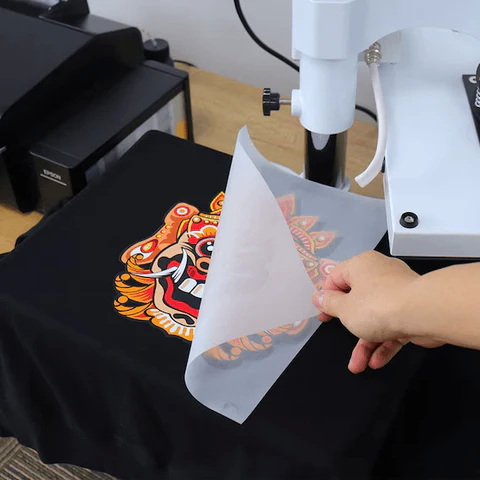
Most 10 x 10 inch DTF prints fall in a range of roughly USD 0.40 to 0.60 for combined ink, film, and powder, with lighter coverage at the lower end and heavier coverage at the higher end. Larger or more complex designs will require more material and therefore cost more per piece.
Plan on daily checks and minor cleaning along with deeper weekly maintenance. Daily actions include nozzle checks and white ink agitation, while weekly routines focus on more thorough cleaning of printheads, capping stations, and any powder or curing equipment.
With correct curing, pressing, and garment care, DTF transfers can generally withstand 50 or more wash cycles. In optimized workflows, many users see lifespans approaching 50 to 100 washes, especially when garments are washed inside-out and dried gently.
It is possible to start by hovering a heat press to cure adhesive powder, but a dedicated curing oven offers faster, more even curing and keeps the press free for garment application. As production volume increases, the productivity and consistency benefits of a curing oven become more and more significant.
DTF transfers are suitable for cotton, polyester, and common blends, as well as many other soft fabric types. This makes them appropriate for t-shirts, hoodies, hats, fabric shoes, tote bags, and various kinds of workwear and sportswear where flexibility and color vibrancy are important.


