If you have any questions, please feel free to contact us.| Email Us: info@dcheatpress.com


Views: 222 Author: Amanda Publish Time: 2025-12-30 Origin: Site


Content Menu
● What Is a Clamshell Heat Press
● What Is a Swing Away Heat Press
● Key Differences Between Clamshell and Swing Away Heat Presses
● Advantages of Clamshell Heat Presses
● Limitations of Clamshell Heat Presses
● Advantages of Swing Away Heat Presses
● Limitations of Swing Away Heat Presses
● Best Heat Press Style for Different Substrates
● Workspace, Safety, and Ergonomics
● Step-by-Step Process for Choosing a Heat Press Style
● Integration with Sublimation, DTF, and Vinyl Workflows
● When to Consider Multifunction or 3D Sublimation Equipment
● Define Your Heat Press Requirements and Plan Your Upgrade
● FAQs About Clamshell vs Swing Away Heat Presses
>> FAQ 1: Which is better for beginners, clamshell or swing away
>> FAQ 2: Can a clamshell press handle thick plaques or tiles
>> FAQ 3: Do swing away heat presses require much more space
>> FAQ 4: Are both clamshell and swing away presses suitable for sublimation
>> FAQ 5: How should platen size be chosen for a first heat press
Choosing between a clamshell heat press and a swing away heat press directly affects print quality, production speed, operator safety, and future scalability for your heat transfer business.
Both designs can deliver professional results, but each style suits different substrates, workflows, and workspace layouts, so understanding these differences is essential before investing in new equipment.
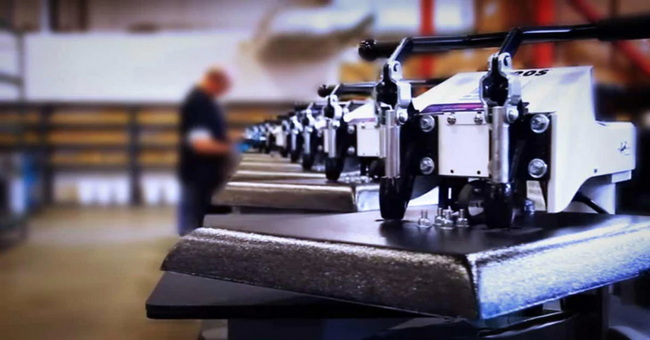
A clamshell heat press has an upper heating platen that opens at an angle, typically around 70 degrees, above the lower platen.
The operator lifts the top platen, places the garment or substrate on the lower platen, positions the transfer, and then closes the press like a clamshell to apply heat and pressure.
Best for: : T-shirts, hoodies, sweaters, and most thin, flat substrates.
Typical users: : Start-ups, home crafters, small studios, on-site event printers.
Key benefit: : Compact footprint that fits easily in tight or mobile workspaces.
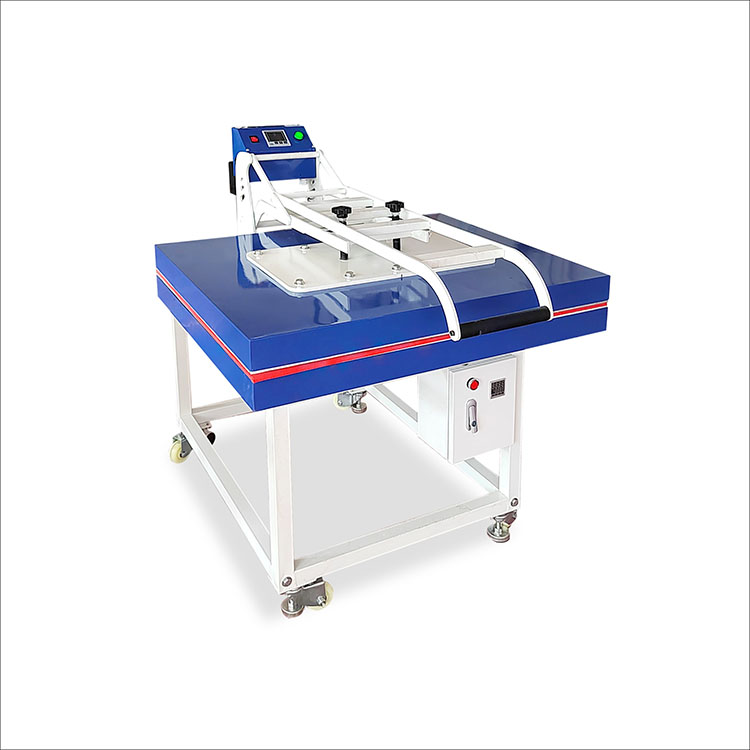
A swing away heat press has an upper platen that lifts straight up vertically and then swings completely away from the lower platen.
This motion provides clear overhead access to the lower platen, which makes it easier to load thicker or rigid items and to fine-tune transfer placement.
Best for: : Thicker substrates such as awards plaques, photo tiles, and dense boards.
Typical users: : Established shops, specialty sublimation studios, personalization labs.
Key benefit: : More even pressure on thick or uneven materials due to vertical, floating pressure.
Factor | Clamshell Heat Press | Swing Away Heat Press |
Opening motion | Opens at an angle, about 70° above lower platen. | Lifts vertically, then swings completely away. |
Workspace footprint | More compact; ideal for limited space and mobile setups. | Needs side clearance for swing arm; better for fixed benches. |
Substrate thickness | Best for thin, flat items such as garments and flat panels. | Handles thicker and slightly uneven items more easily. |
Access to platen | Front access with hot platen above working area. | Lower platen fully exposed when upper platen swings away. |
Pressure distribution | Very good on thin, even substrates. | More forgiving and even on thick or uneven substrates. |
Production speed | Fast open/close motion, suited to high-volume apparel runs. | Slightly slower cycles due to swinging motion. |
Operator safety | Hot platen remains above work area, requiring careful hand placement. | Hot platen swings away from operator's hands during loading. |
Application focus | Everyday apparel and light substrates. | Premium, thick, or rigid items and specialty work. |
Clamshell presses are designed for speed and simplicity, especially in high-volume garment workflows.
Because the upper platen opens at an angle and stays close to the lower platen, operators can load garments and close the press with minimal motion, which supports fast turnaround.
Compact footprint: that fits small studios, home businesses, kiosks, and pop-up events.
Fast operation: with short open-and-close cycles suitable for repetitive production.
Ideal for thin substrates: such as T-shirts, sweaters, and flat panels like keychains or photo boards.
Lower learning curve: due to straightforward, intuitive mechanics.
Clamshell heat presses are versatile but not optimal for every type of job.
The angled hinge design can make it harder to achieve perfectly parallel contact on very thick or irregular substrates.
Reduced flexibility: on thick substrates because the platen closes from the rear hinge rather than purely vertically.
Risk of uneven pressure: on layered items or surfaces with seams, zippers, or buttons if not padded correctly.
Limited overhead access: since the hot upper platen hovers above the lower platen during setup.
For shops that regularly handle heavy plaques, tiles, or dense rigid materials, these constraints can increase reprints and adjustments.
Swing away heat presses focus on precision, comfort, and thick substrate capability.
The upper platen lifts straight up and swings out to the side, leaving the lower platen completely clear for alignment and loading.
Full platen access: that simplifies transfer positioning and alignment on complex layouts.
More even pressure: on thick or uneven substrates thanks to the vertical, floating heating element.
Improved safety and ergonomics: as the hot platen sits away from the operator during loading.
Better for specialty items: such as award plaques, photo tiles, and thicker blanks needing consistent pressure.

Swing away presses trade compactness for flexibility and ergonomic benefits.
Because the upper platen swings to one side, they demand more side clearance and slightly more movement in each press cycle.
Larger footprint: due to the swing arm, which can be challenging in cramped studios.
Slightly slower cycle time: since the operator swings the platen out and back for every press.
Heavier construction: , making them less suitable for frequent relocation or mobile events.
In environments where consistent output on thick or premium items is more important than maximum speed, these trade-offs are usually acceptable.
The type and thickness of substrates you plan to print is one of the most important selection factors.
Matching the press style to your product mix reduces misprints, rework, and operator fatigue.
Thin garments: such as T-shirts, polos, and hoodies
- Clamshell: excellent for fast, repetitive jobs on standard apparel.
- Swing away: also effective, especially if ergonomics are a priority.
Flat, thin hard goods: such as keychains, flat photo panels, and mouse pads
- Clamshell: efficient when items are thin and uniform.
- Swing away: beneficial for dense materials requiring very consistent pressure.
Thicker or rigid substrates: such as plaques and tiles
- Swing away: generally superior because vertical pressure adapts better to thickness and slight unevenness.
Layered projects and seams:
- Swing away: usually easier to pad around seams or zippers and maintain parallel contact.
Workspace constraints and safety requirements also shape which heat press style fits your production environment.
High-temperature equipment needs careful placement to keep operators productive and safe over long shifts.
Space availability:
- Clamshell presses work well when bench depth is limited and side space is tight.
- Swing away presses require side clearance for the swing arm and are better on dedicated benches.
Operator safety and comfort:
- Swing away units move the hot platen away from the operator, reducing accidental contact risk.
- Clamshell units keep the hot platen above the working area, which demands more attention to hand placement.
Production model:
- Event printing and mobile setups often favor compact clamshell designs.
- Permanent workshops with full-time staff frequently benefit from swing away ergonomics.
Aligning press style with a real-world business model helps maximize long-term return on investment.
When a clamshell press is a strong fit:
- Garment printing is the core business, focused on shirts, hoodies, and teamwear.
- Production operates from a home studio, retail back room, or mobile event space.
- Fast cycles and simple operation are more important than handling very thick items.
When a swing away press is a strong fit:
- Thick or rigid items such as plaques and tiles are a regular part of the catalog.
- Premium personalization and consistent quality are top priorities.
- Safety and operator comfort are critical in multi-shift production.
A simple, structured selection process reduces guesswork when comparing models and configurations.
List primary products:
- Rank top products by revenue, including garments and hard goods.
- Note average thickness and whether surfaces are flat or contoured.
Match products to press style:
- Thin garments and flat panels generally point toward clamshell presses.
- Thicker or rigid items often justify a swing away design.
Measure available workspace:
- Check table depth and side clearance.
- Confirm there is enough room for a swing arm if considering swing away presses.
Review operator profile:
- Consider operator experience, daily hours at the press, and any ergonomic concerns.
Plan for expansion:
- Evaluate likely new product lines in the next 12–24 months.
- Select a press that covers both current and future substrate needs.
Heat presses now work alongside sublimation printers, DTF systems, and vinyl cutters in modern decoration workflows.
Compatibility with these processes depends on platen size, temperature stability, and pressure control rather than only on the press style.
Sublimation printing:
- Clamshell presses handle most sublimation apparel and flat blanks effectively when items are thin and even.
- Swing away presses are often preferred for thicker sublimation blanks like tiles and plaques.
DTF transfers:
- Both styles can apply DTF transfers as long as proper time, temperature, and pressure settings are maintained.
- For long garment runs, clamshell units support high throughput, while swing away units may reduce operator fatigue.
Vinyl and specialty transfers:
- Clamshell presses are suitable for most HTV applications on standard garments.
- Swing away presses offer extra control for thick garments and multi-layer designs.
Very thick or highly contoured items sometimes require specialized or 3D sublimation systems rather than a conventional flat heat press.
Some decorators prefer separate machines optimized for individual product categories, especially for advanced sublimation applications on complex shapes.
Highly contoured objects:may not sit flat on standard platens and benefit from 3D solutions.
Dedicated equipment:can reduce setup adjustments and errors when switching between product types.
Flat presses:still cover the majority of everyday garments and flat substrates in most shops.
The most suitable heat press style depends on substrates, available space, operator workload, and growth plans rather than a single specification.
Evaluating build quality, platen size, temperature accuracy, accessory options, and after-sales support is just as important as choosing between clamshell and swing away designs.
When most work involves thin garments in limited space, a clamshell press is usually the most efficient option.
When frequent jobs involve thick, rigid, or high-margin specialty products and operator safety is critical, a swing away press often becomes the stronger long-term choice.
Create a short checklist of your top substrates, bench dimensions, operator schedule, and planned product expansion, then align that list with a specific clamshell or swing away configuration that can support those needs for several years.
Once requirements are clear, consult a professional equipment supplier or manufacturer for model recommendations, technical guidance, and training resources so you can invest in a heat press that consistently delivers high-quality transfers, efficient throughput, and a safer working environment.
For beginners focused mainly on T-shirts and similar garments, a clamshell press is often easier to start with because of its compact design and straightforward motion.
Where workspace allows and long-term ergonomics are a concern, a swing away press can still be attractive due to clearer platen access and safer loading.
A clamshell press can sometimes work with moderately thick items, but achieving perfectly even pressure on rigid or uneven substrates can be challenging.
For demanding plaque and tile production, many shops prefer a swing away press with vertical, floating pressure for more consistent results.
Swing away presses require enough side clearance for the upper platen to move freely, even if the table depth is similar to clamshell models.
Checking available space on at least one side of the bench is essential before installing this style.
Both clamshell and swing away presses can be used for sublimation as long as time, temperature, and pressure follow the requirements of each substrate.
For thicker sublimation blanks such as tiles or award pieces, a swing away press often provides more uniform transfers.
A platen size that comfortably covers your largest regular print area, such as 15" × 15" or 16" × 20" for apparel, is usually a practical starting point.
If future work includes oversized garments or panels, a larger platen or compatible interchangeable platens may be worth considering.


