If you have any questions, please feel free to contact us.| Email Us: info@dcheatpress.com


Views: 222 Author: Amanda Publish Time: 2025-12-20 Origin: Site


Content Menu
● What Is a Clamshell Heat Press?
● Clamshell vs. Swing-Away Heat Press
>> Which One Is Better for You?
● Key Features to Look for in a Clamshell Heat Press
>> Slide-Out Drawer (Pull-Out Lower Platen)
>> Interchangeable Platens and Size Options
>> Digital Temperature, Time, and Pressure Readouts
● Popular Clamshell Heat Press Sizes: 15" × 15" vs 16" × 20"
● Safety Best Practices for Clamshell Heat Press Operation
● Step-by-Step: Using a Clamshell Heat Press
● Clamshell Heat Press Settings: Method Overview
● Who Is a Clamshell Heat Press Best For?
● Take the Next Step with a Professional Clamshell Heat Press
● FAQs About Clamshell Heat Presses
>> 1. How does a clamshell heat press work?
>> 2. When should a business choose a clamshell instead of a swing-away press?
>> 3. Are clamshell heat press platens and attachments universal?
>> 4. How long do clamshell-pressed designs last on garments?
>> 5. What maintenance does a clamshell heat press need?
A clamshell heat press is one of the most efficient and space-saving tools for starting or scaling a T-shirt, apparel, or custom gift business. When paired with the right size, safety features, and printing workflow, a clamshell press can deliver consistent quality, faster turnaround, and excellent return on investment for both beginners and growing shops.
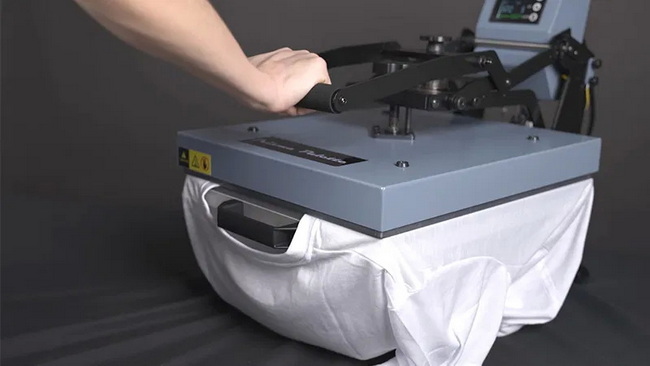
A clamshell heat press is a heat transfer machine with two plates (platens) connected by a hinge, opening and closing like a clamshell to apply heat and pressure to a substrate. The transfer sheet and blank, such as a T-shirt, plaque, or tile, are placed between the platens, and controlled time, temperature, and pressure create a durable bond between the design and the item.
Clamshell heat presses are widely used for a range of customized products. Common applications include garments, bags, and thin coated hard substrates for small studios and commercial shops.
Both clamshell and swing-away heat presses can produce professional results, but their structure affects footprint, safety, and handling of thicker items. Understanding these differences helps align machine choice with space, product mix, and production volume.
- Footprint and space: Clamshell presses open vertically and usually need less surrounding space, which suits small workshops or home-based setups.
- Clearance needs: Swing-away presses require extra side clearance because the upper platen swings completely away from the lower platen.
- Thick substrates: Swing-away models often offer very even pressure on thicker substrates, while clamshell designs focus on quick operation for common garment work.
A clamshell heat press is generally preferred where space is limited and production focuses on standard garments. Swing-away presses become attractive where thicker items and a completely heat-free layout area are a higher priority.
| Scenario / Priority | Clamshell Heat Press | Swing-Away Heat Press |
|---|---|---|
| Very limited workspace | Best choice: compact footprint, minimal side clearance. | Requires extra swing area beside the press. |
| High-volume T-shirt printing | Excellent for fast open-and-close cycles. | Good but may be slightly slower per cycle. |
| Frequent thick items | Capable with testing and careful pressure settings. | Stronger choice for thick substrates. |
| Heat-free layout area | Improved when combined with a slide-out drawer. | Upper platen swings away from the work area. |
| Beginners | Very beginner-friendly and intuitive. | Requires more attention to workspace and workflow. |
Beyond size and price, the most important aspects of a clamshell heat press are safety, control, and expandability. Paying attention to these features helps protect the investment and reduces production issues over the long term.
A slide-out drawer lets the lower platen move toward the operator, away from the hot upper platen, creating more space for garment and transfer positioning. This design improves comfort and reduces the risk of accidental contact with heated surfaces during layout.
- Safer hand positioning when aligning T-shirts and hoodies.
- Easier visual checks for design placement before pressing.
- Useful for new operators still developing handling habits.
A dressable lower platen allows garments to be dressed over the platen like a form so seams and bulky areas hang off the edges. This helps achieve more even pressure and reduces visible press marks, especially on garments with pockets, zippers, or side seams.
- Improves print quality on hoodies and heavy fabrics.
- Reduces the impact of seams in the print zone.
- Supports cleaner application for sports jerseys and multi-zone prints.
Many modern clamshell presses support interchangeable platens, enabling one frame to handle different product types. This flexibility is valuable for shops that print both small labels and large full-front designs within the same workflow.
- Small platens for labels, pockets, and sleeves.
- Standard platens for main T-shirt fronts.
- Larger platens for oversize graphics and uniforms.
Consistent results depend on accurate control of temperature, time, and pressure, especially when switching among different materials and transfer types. Digital panels make it easier to repeat successful settings and train new operators.
- Clear digital temperature display in °C or °F.
- Built-in timer with alarm or auto-release.
- Pressure indication via scale or descriptive levels.
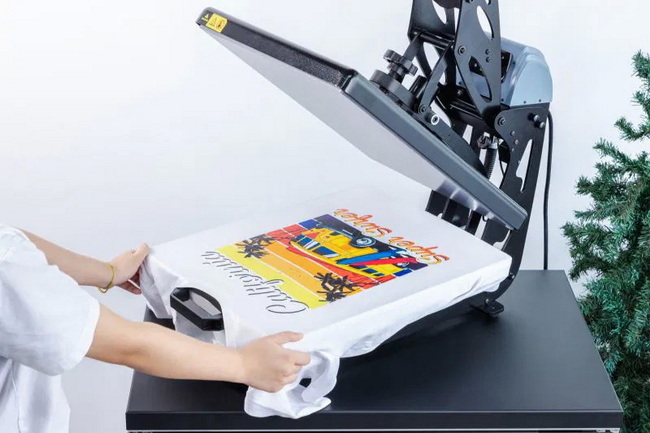
The most common clamshell platen sizes for apparel decoration are 15" × 15" and 16" × 20". These sizes cover most everyday orders for T-shirts, hoodies, and team uniforms in small to mid-size shops.
| Size | Typical Use | Pros | Considerations |
|---|---|---|---|
| 15" × 15" | Standard T-shirts, youth and women's garments, small logos. | Compact, more affordable, easy to fit in small spaces. | Less room for oversize or full-back designs. |
| 16" × 20" | Full-front adult prints, sports numbers, larger hoodies. | More versatile for wider and longer transfers. | Requires more space and typically a higher budget. |
Because clamshell presses operate at high temperature and pressure, adopting a safety-first routine is essential for every operator. Good safety habits protect both people and equipment while supporting reliable production.
- Wear heat-resistant gloves and closed shoes to reduce burn risk.
- Place the press on a stable, non-flammable surface with a properly grounded outlet.
- Avoid loose clothing and accessories that could come close to the hot platen.
- Keep hands out from under the platen during closing and opening.
- Do not leave the press unattended while heating or in use.
Adding simple visual reminders, such as safety labels or a printed checklist near the press, further reinforces consistent safe operation. Clear procedures are especially valuable when multiple operators share the same machine.
Although temperatures and dwell times vary by transfer type and substrate, the practical workflow of a clamshell heat press follows a clear sequence. Establishing a consistent routine improves quality and reduces wasted blanks.
- Prepare artwork and transfer: Output the design using the correct printer, ink, and transfer media for the chosen technique.
- Set temperature, time, and pressure: Use the control panel to enter recommended settings for the specific transfer and fabric.
- Pre-press the substrate: Quickly pre-press the garment to remove moisture and wrinkles and to flatten seams.
- Position garment and transfer: Dress the garment on the lower platen, align the transfer, and secure it if necessary.
- Press and release: Close the press completely, allow it to run for the set time, and then open smoothly when the timer ends.
- Peel and cool: Peel the carrier according to the transfer instructions and allow the item to cool fully before packing.
Recording settings and results for different fabrics builds a simple in-house reference library, making repeat orders easier to process with consistent outcomes. This approach also reduces training time for new staff.
Each transfer technology has its specific temperature, time, and pressure range, and the most reliable values come from the transfer manufacturer's technical data. Nevertheless, it is useful to recognize how methods differ in general behavior.
- Sublimation: Often uses higher temperatures and moderate times to drive gaseous ink into polyester fibers or coated surfaces.
- Heat transfer vinyl (HTV): Typically runs at lower temperatures and shorter times, with attention to fabric texture and carrier peeling instructions.
- DTF and other transfers: May require longer dwell or specific pressure ranges to fully activate adhesive layers.
Running test presses on the same fabric type and color before full production is an effective way to fine-tune settings and confirm durability. This practice helps avoid issues like under-curing, scorching, or poor wash resistance.
A clamshell heat press is a strong match for users who prioritize space efficiency, simple operation, and fast throughput on standard garments. It continues to be a recommended choice in many buying guides for start-ups and growing apparel brands.
- Home-based or studio-scale T-shirt businesses.
- Print-on-demand sellers needing repeatable garment workflows.
- Schools, clubs, and local organizations producing uniforms and fanwear in-house.
For shops that later add thick plaques, tiles, or high-relief items, a swing-away press can complement an existing clamshell to cover more specialized work. Many decorators operate both designs as their product range grows.
When consistent print quality, operator safety, and efficient workflows become critical to your apparel or custom printing business, upgrading to a professional clamshell heat press is a strategic decision. By choosing the right platen size, safety enhancements, and control features, you build a reliable foundation for scalable production rather than relying on improvised tools.
Evaluate your current and future product mix, available workspace, and expected order volume, then select a clamshell press that aligns with those needs and includes practical options such as a slide-out drawer, dressable lower platen, and interchangeable platens. Putting this kind of machine at the center of your workflow enables you to deliver stable quality, shorten turnaround times, and position your business to accept more complex and higher-value orders with confidence. Contact us to get more information!
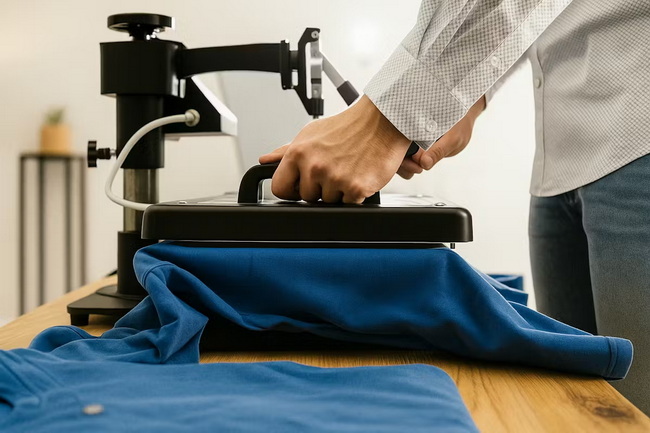
A clamshell heat press works by bringing a heated upper platen down onto a lower platen that supports the garment or substrate. With the transfer positioned between them, controlled temperature, pressure, and time activate adhesives or inks so the design bonds permanently to the item.
A clamshell is usually the better choice when workspace is limited and production focuses on T-shirts, hoodies, and similar garments. A swing-away press is more appealing if thick substrates are common and a fully heat-free layout area is a priority.
Platens and attachments for clamshell heat presses are generally not universal and are designed to match specific models or series. Checking compatibility information in the documentation or with the manufacturer is essential before purchasing extra accessories.
When high-quality transfers are applied with correct settings, clamshell-pressed designs can withstand many wash cycles without major fading or cracking. Washing inside-out, using mild detergents, and avoiding high-heat drying help extend the life of the prints.
Routine maintenance includes inspecting cables and connections, keeping platen surfaces clean, and periodically checking temperature accuracy across the pressing area. Removing adhesive buildup and monitoring moving parts for wear support long-term consistency and reduce unexpected downtime.


