If you have any questions, please feel free to contact us.| Email Us: info@dcheatpress.com


Views: 222 Author: Amanda Publish Time: 2025-12-30 Origin: Site


Content Menu
>> Sawgrass VersiFlex Printing
>> DTF (Direct-to-Film) Printing
● Comparison Table for Key Factors
>> Print Method Comparison for Heat Press Businesses
● Investment and ROI Perspective for 2026
>> Typical Startup Budget Ranges
● Decision Framework for Different Business Models
>> New Custom Apparel Side-Hustle
>> Established Print Shop Adding Digital
>> Online Brand Scaling Production
● Workflow and Quality Optimization
>> Preventing Common Print Issues
● Matching Print Method to Business Goals
>> Core Questions to Guide Selection
● Clear, Targeted Call to Action
>> Q1. Which print method is best for dark cotton T-shirts?
>> Q2. I already own a sublimation printer. Which upgrade path makes the most sense?
>> Q3. Which method offers the softest feel on apparel?
>> Q4. How important is heat press quality compared with printer choice?
>> Q5. Can more than one print method run in the same shop effectively?
For apparel and hard-goods decorators in 2026, sublimation, Sawgrass VersiFlex, white toner, and DTF (Direct-to-Film) remain four core digital print technologies that shape product range, pricing, and customer satisfaction. Each method handles color, fabric type, and production volume differently, so the best choice depends on your materials, budget, and long-term business model.[1][2][3]
This guide provides a practical comparison of these four methods, with added sections on investment planning, business scenarios, and workflow optimization to help you build a sustainable, scalable printing operation.[2][1]
Sublimation uses dye-based ink that turns into gas under heat and pressure, bonding with polyester fibers or polymer-coated surfaces to create a permanent, soft-feel print. Because the ink infuses into the substrate, there is no raised layer, and the resulting image is extremely wash-resistant on compatible materials.[3][4][1]
Typical sublimation workflow:
1. Print the design with sublimation ink on sublimation transfer paper.
2. Position the transfer on a polyester garment or coated blank.
3. Press with the correct time, temperature, and pressure.
4. Remove the paper to reveal the fully infused print.[1][3]
Best use cases:
- Performance sportswear and activewear made from polyester.
- Light-colored T-shirts and apparel.
- Coated mugs, panels, photo gifts, and promotional hard goods.[3][1]
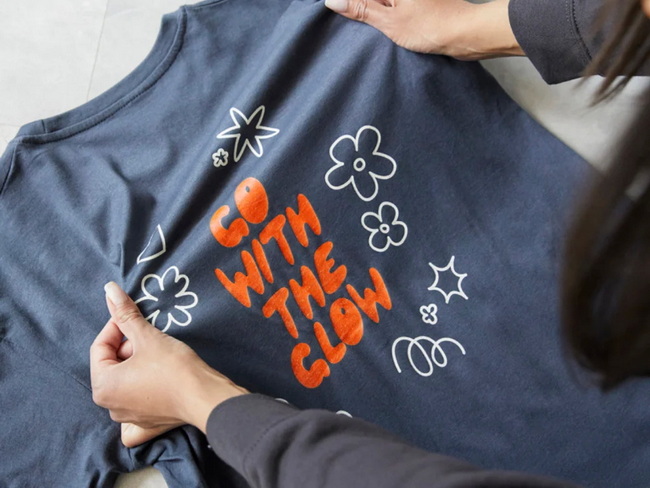
VersiFlex is a hybrid sublimation transfer film system that allows sublimation-style color quality on cotton and certain uncoated hard surfaces by using a specialized transfer film. Instead of infusing directly into polyester, the ink bonds to the film, which then adheres to the target substrate under heat and pressure.[1]
Typical VersiFlex workflow:
1. Print the design with sublimation ink on VersiFlex transfer film.
2. (Optional) Trim the transfer for tighter contours.
3. Press the film onto cotton apparel or a compatible hard good.
4. Peel the film to leave the design bonded to the surface.[1]
Best use cases:
- Cotton T-shirts and hoodies where a softer feel is desired than many opaque films.
- Wood, leather, and select uncoated hard goods.
- Shops that already own sublimation equipment and want to expand to cotton without fully changing systems.[1]
White toner printing uses a CMYW laser printer and a two-step transfer system to create opaque, full-color transfers suitable for both light and dark substrates. A dedicated white toner channel provides an underbase, allowing accurate color reproduction even on dark garments and non-polyester materials.[4][2][3][1]
Typical white toner workflow:
1. Print the design onto a transfer sheet (Sheet A) with a white toner printer.
2. Press Sheet A together with an adhesive sheet (Sheet B) to “marry” them.
3. Separate the sheets, leaving adhesive on the printed areas.
4. Press the transfer onto the target substrate.
5. Peel the carrier to reveal the finished design.[2][1]
Best use cases:
- Dark and light cotton garments without pretreatment.
- Wood, leather, metal, and various uncoated hard goods.
- Small-batch, on-demand designs where no cutting or weeding is preferred.[2][3][1]
DTF printing lays down CMYK and white ink on PET film, applies adhesive powder, cures the transfer, and then bonds it to the fabric using a heat press. The white layer under the colors enables vivid designs on both light and dark fabrics, including cotton, polyester, and blends.[5][6][3][1]
Typical DTF workflow:
1. Print the design in CMYK plus white ink onto DTF film.
2. Apply adhesive powder to the wet ink and cure it.
3. Store or immediately use the ready-to-press transfer.
4. Press the film onto the garment.
5. Peel the film to leave the transfer attached to the fabric.[6][5][1]
Best use cases:
- Cotton, polyester, blends, canvas, denim, and other difficult fabrics.
- Fashion, workwear, streetwear, and team uniforms requiring strong durability.
- Production workflows that benefit from pre-printed transfers for fast fulfillment.[6][3][1]
Factor | Sublimation | VersiFlex | White Toner | DTF (Direct-to-Film) |
Core technology | Dye sublimation ink | Sublimation ink + transfer film | CMYW laser toner + transfer media | Inkjet CMYK + white ink on PET film |
Best substrates | Light polyester, coated blanks | Cotton, wood, leather, some uncoated goods | Cotton, blends, wood, metal, hard goods | Cotton, polyester, blends, most fabrics |
Works on dark garments | No | Limited via film choice | Yes, with white underbase | Yes, with white underbase |
Print feel | Very soft, “no hand” | Soft to medium, thin film | Medium, more noticeable on large solids | Medium, flexible film layer |
Durability | Excellent on compatible substrates | Good for everyday wear | Good with correct application | Excellent on apparel when properly cured |
Upfront equipment cost | Generally lowest | Low–medium (extends sublimation) | Medium–high | Medium–high |
Maintenance level | Moderate; avoid long idle time | Similar to sublimation | Low; toner is stable | Higher; regular ink maintenance needed |
Ideal user | New decorators, niche poly shops | Sublimation users adding cotton | Mixed-material shops, promo and gift items | Apparel-focused brands scaling volumes |
- Sublimation setup: Desktop printer, entry-level or mid-range heat press, and coated blanks generally form the lowest-cost route into digital decoration.[3][1]
- VersiFlex upgrade: Often uses existing sublimation infrastructure, adding VersiFlex film and suitable press settings, which keeps investment moderate while expanding to cotton and new surfaces.[1]
- White toner system: Requires a white toner printer, compatible transfer media, and a reliable press, representing a higher initial expense but covering a broad mix of garments and rigid items without pretreatment.[2][1]
- DTF system: Combines a DTF printer, curing solution, films, powders, and presses, designed for consistent apparel production and strong scalability.[6][1]
In many cases, smaller operations validate demand with sublimation and then scale into VersiFlex, white toner, or DTF as order size, material diversity, and dark garment requests grow.[2][6][1]
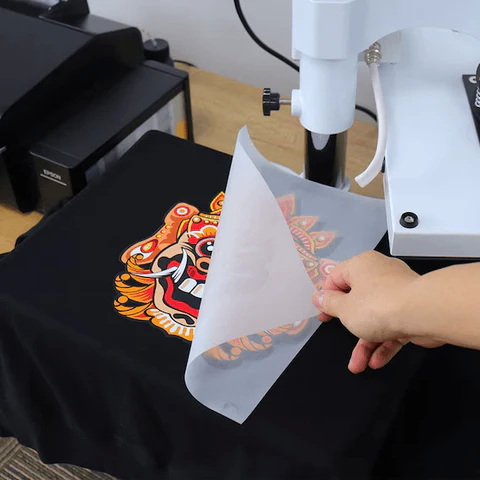
Shops starting with light shirts, mugs, and simple photo gifts often achieve a more efficient launch by focusing on sublimation, because it offers a relatively low cost of entry and straightforward processes. Once customers request cotton garments or natural-look products, adding VersiFlex lets these operations expand their range without replacing existing equipment.[2][1]
Print businesses with screen printing, vinyl, or embroidery capabilities typically prioritize dark garments and material variety. In this context, white toner is well suited for mixed substrates and promotional goods, while DTF is stronger when the main revenue comes from apparel requiring long-term durability on cotton and blends.[3][6][1][2]
Online brands handling repeat orders and seasonal or campaign-based drops benefit from the ability to store transfers. DTF transfers can be produced in advance and applied later, enabling flexible fulfillment and quicker response to demand, while white toner is useful for hard-goods and specialized items that complement apparel lines.[6][1][2]
A simple decision-flow visual placed alongside this section can help readers move from business type to recommended technology path in a few seconds, improving engagement and clarity.[1][2]
Across all four methods, consistent time, temperature, and pressure are crucial to transfer quality and product durability. A stable, accurate heat press with even heating and suitable platens greatly increases first-time success rates and reduces rework.[4][3][1]
Key best practices include:
- Calibrating press temperature and pressure regularly.
- Following the detailed settings provided for each film, paper, or substrate.
- Recording “golden settings” for common garment and substrate combinations.[4][3][1]
- Sublimation ghosting: Secure transfers with appropriate tape and avoid shifting during pressing to prevent blurred edges and shadows.[4][3]
- White toner pinholes or incomplete areas: Ensure correct marry time, temperature, and pressure for the chosen transfer media, and follow specified peel conditions.[2][1]
- DTF cracking or poor wash performance: Confirm full curing of adhesive powder and observe recommended press parameters so the transfer bonds correctly.[7][6]
Simple illustrations or small process diagrams near this section can visually outline each workflow and common failure points, helping users troubleshoot more quickly and improving overall experience.[6][1][2]
1. Planned product range:
- Polyester sportswear and coated promotional items align more naturally with sublimation.[3][1][2]
- Cotton garments and uncoated hard goods are generally better served by VersiFlex or white toner, depending on the desired feel and volume.[1][2]
- High-durability apparel across many fabric types often fits DTF requirements.[3][6][1]
2. Equipment budget and upgrade timeline:
- Limited initial budget typically pushes new decorators toward sublimation first.[3][1]
- Existing sublimation setups can extend into cotton with VersiFlex more easily than switching entire systems.[1]
- Larger budgets that require broad coverage and higher throughput open the door to white toner or DTF systems.[6][2][1]
3. Priority among feel, versatility, and durability:
- Sublimation and VersiFlex perform better when soft hand is the main criterion.[3][1]
- White toner excels at all-surface versatility for garments and many hard goods.[2][1]
- DTF offers strong durability and is well suited for heavy-use apparel such as uniforms.[6][1]
A combined content block with icon-based highlights for softness, versatility, and durability under each technology can further streamline user choices and increase on-page interaction.[2][1]
To turn these comparisons into real business growth, reliable, accurate heat press and finishing equipment is just as important as the print method itself. By choosing advanced, high-quality heat transfer presses, welding and bonding machines, and embossing systems designed for modern digital workflows, you can maintain stable temperature, pressure, and repeatability across sublimation, VersiFlex, white toner, and DTF production.[4][3][1]
If your next step is to stabilize quality, shorten learning curves, and prepare for higher volumes, now is an ideal time to review your current presses and upgrade to a professional solution that supports your growth roadmap. Reach out to a specialized manufacturer offering integrated R&D, production, sales, and after-sales service for heat transfer, welding, and embossing equipment, and ask for a tailored configuration that matches your current print method and your future expansion plans.[3][1]
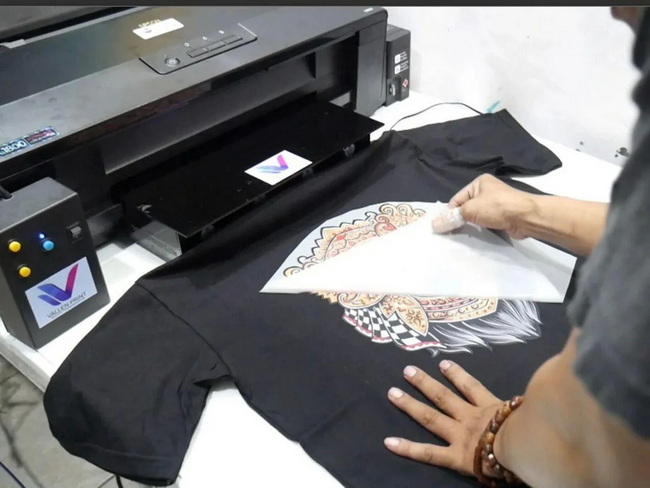
1) For dark cotton garments, DTF and white toner are commonly preferred because both use an opaque white underbase that allows bright color on dark backgrounds. Sublimation is not suitable for dark cotton due to its reliance on polyester content and lack of white ink.[3][6][1][2]
2) When an operation already runs sublimation, VersiFlex is often the most direct way to expand into cotton and some uncoated hard goods without replacing existing equipment. If broader coverage or frequent dark garments are required, white toner or DTF can be added depending on whether mixed materials or high-volume apparel is the main focus.[6][1][2]
3) Sublimation generally provides the softest feel because the ink becomes part of the fiber structure instead of forming a surface layer. VersiFlex can also feel relatively soft compared with thicker transfer films, while white toner and DTF usually have a more noticeable hand on large, solid designs.[4][1][3][6]
4) Equipment such as printers, inks, and media defines what can be produced, but heat press performance largely determines whether transfers cure correctly and survive real use. Inconsistent temperature or pressure can significantly reduce durability for sublimation, VersiFlex, white toner, and DTF applications.[4][1][3]
5) Many successful decorators operate a hybrid model, using sublimation or VersiFlex for light polyester and photo gifts and relying on DTF or white toner for dark garments and complex substrates. This approach allows each order to be routed to the technology that yields the best balance of feel, durability, and profit margin.[1][2][6]
[1](https://www.heatpressnation.com/blogs/blog/choosing-the-right-print-method-for-your-business-sublimation-vs-versiflex-vs-white-toner-vs-dtf)
[2](https://www.heatpressnation.com/blogs/academy/choosing-the-right-print-method-for-your-business-sublimation-white-toner-and-direct-to-film-printing)
[3](https://www.heatpressnation.com/blogs/blog/how-is-white-toner-dtf-different-from-sublimation-a-comprehensive-comparison)
[4](https://www.youtube.com/watch?v=8_v7UL0jBX0)
[5](https://www.thecountrychiccottage.net/sublimation-vs-dtf-vs-white-toner-printers/)
[6](https://jotoimagingsupplies.com/blogs/blogs/dtf-vs-sublimation-which-printing-method-is-best-for-each-fabric-type)
[7](https://www.xtool.com/blogs/xtool-academy/white-toner-printer-vs-dtf-printer-which-is-better)


