If you have any questions, please feel free to contact us.| Email Us: info@dcheatpress.com


Views: 222 Author: Amanda Publish Time: 2025-12-23 Origin: Site


Content Menu
● What Is a Sales Channel for Heat Printing?
● Why the Right Channel Mix Matters
● Major Online Sales Channels for Heat Printing
>> Standalone E-Commerce Platforms
>> Website Builders with E-Commerce
>> Social Media and Direct Messages
● Marketplaces: Fast Launch, Limited Control
● Standalone Stores: Brand Building and Scaling
>> Benefits of Standalone E-Commerce
>> Challenges of Standalone E-Commerce
● Website Builders: Design-Led, User-Friendly Options
>> When Website Builders Make Sense
>> Limitations of Website Builders
● Social Media: Lead Engine, Not Primary Checkout
>> Best Use of Social Channels
● How Your Equipment Should Guide Channel Choices
>> Matching Capacity to Channel Volume
>> Aligning Product Types with Channels
● Step-by-Step Framework to Choose Your Channels
>> 1. Clarify Your Primary Customer
>> 2. Assess Your Production Capacity
>> 3. Choose a Core Channel and a Support Channel
>> 4. Standardize Your Processes
>> 5. Review and Optimize Regularly
● Practical Scenarios for Heat Printing Businesses
>> Scenario 1: Home-Based Personalized Gift Shop
>> Scenario 2: Growing Apparel Brand
>> Scenario 3: B2B and Corporate Merch Specialist
● When and How to Expand to Multiple Channels
>> Signs You're Ready to Add Channels
● Design Your Ideal Sales Channel Strategy Today
● FAQs
>> 1. Which sales channel is best for a brand-new heat printing business?
>> 2. Should I use more than one sales channel from the beginning?
>> 3. How does my production capacity affect my choice of channels?
>> 4. Is it sustainable to sell only through social media DMs?
>> 5. How do I know when it's time to invest in a standalone e-commerce site?
Choosing the best sales channels for your heat printing business is a strategic decision that affects your visibility, profitability, and long-term brand growth. Each channel—marketplaces, standalone stores, website builders, and social platforms—plays a different role, and the strongest approach is usually a well-planned combination rather than a single “magic” option.
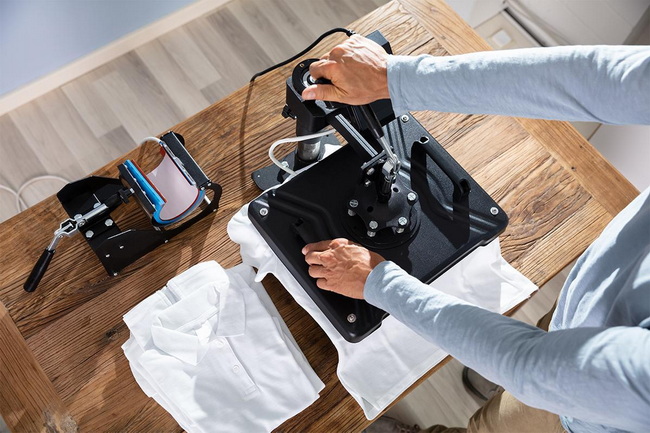
A sales channel is the path through which customers discover, evaluate, and buy your heat-printed products, from custom apparel and promotional items to home décor. Sales channels can be digital (online marketplaces, e-commerce sites, social media) or offline (events, wholesale, retail partners), but for most modern heat printing businesses, online channels are the core engine of growth.
Effective channels should:
- Match your target buyers' shopping habits and expectations.
- Align with your production capacity and equipment level.
- Allow you to build a recognizable brand and repeat customer base over time.
Selecting the wrong primary channel can lead to lower margins, operational overload, or underutilized equipment, even if sales look decent on the surface. The right mix, on the other hand, supports stable growth and makes it easier to scale when you upgrade your equipment or expand your team.
Key reasons this decision matters:
- Different channels have very different fee structures and profit profiles.
- Some platforms emphasize speed and convenience, while others favor storytelling and brand building.
- Your long-term value often comes from repeat customers and referrals, not just one-time marketplace buyers.
To build a solid digital foundation, most heat printing businesses start by evaluating four core categories of online channels.
Online marketplaces are third-party platforms where many sellers list their products and share a common audience. These are attractive because they offer built-in traffic and simplified store setup, which is ideal for new or small teams that want to start selling quickly.
Typical marketplace characteristics:
- Simple onboarding and product listing tools.
- Platform-controlled search systems and recommendation algorithms.
- Transaction, listing, and processing fees that must be factored into pricing.
Standalone e-commerce platforms give you your own branded store under your own domain, with full control over design, product categorization, and customer data. They require more marketing effort but are essential for building a long-term, defensible brand.
Common traits include:
- Customizable storefronts with flexible themes and layouts.
- Integrated inventory, order management, and analytics tools.
- Support for email marketing, loyalty programs, and multi-channel selling.
Website builders offer drag-and-drop editors and attractive templates that help non-technical founders launch professional websites quickly. When combined with e-commerce functionality, they become a good middle ground between simple marketplaces and advanced standalone platforms.
They typically provide:
- Easy visual customization without coding.
- Essential shopping cart and payment features.
- Blogging and content tools that support SEO and brand storytelling.
Social platforms are powerful for awareness, community building, and content-driven discovery. Many new heat printing businesses start by taking orders through DMs, but this method tends to break down as order volume increases.
Typical characteristics:
- High potential reach with strong visual content.
- Direct, personal conversations with customers.
- Manual and error-prone order tracking if you rely solely on DMs.
Online marketplaces are especially useful when:
- You want to validate product ideas quickly without building a full website.
- You prefer a platform where payment processing, basic analytics, and buyer trust are already in place.
- You are comfortable competing directly with many similar sellers in your niche.
Main strengths:
- Speed to market: You can go from idea to live listings in a short time.
- Built-in search traffic with high purchase intent.
- Lower technical barriers than building and maintaining your own site.
Marketplaces come with meaningful trade-offs, especially for brand-driven businesses and high-volume operations.
Key limitations:
- Fees reduce your net margin and make price increases more sensitive.
- Your brand is secondary to the platform's brand in the customer's mind.
- Marketplace rules can change, affecting visibility, fees, or even account status.
A dedicated online store under your own domain is the backbone of a long-term heat printing business. It allows you to shape your brand story, highlight your production quality, and control how products are presented.
Advantages include:
- Full design control to showcase your best work, niche focus, and unique value.
- Ownership of customer data, enabling email lists, remarketing, and loyalty programs.
- Easier integration of upsells, bundles, and volume pricing to match your production capacity.
Running your own store also means you own the responsibility for generating traffic and optimizing conversions.
Typical challenges:
- Time and budget required for SEO, content, and paid campaigns.
- Ongoing site maintenance, from theme updates to plugin or app management.
- Higher initial learning curve compared to listing on a marketplace.
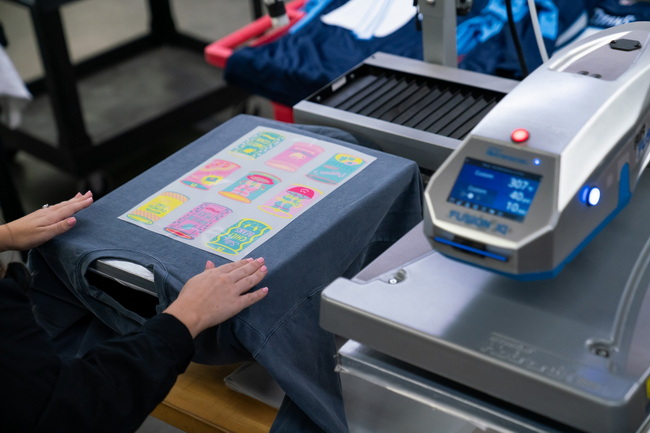
Website builders with e-commerce are ideal when:
- You want a strong visual identity but don't need extremely complex store features.
- You prefer an all-in-one subscription that includes hosting, templates, and basic commerce tools.
- You want to combine a blog, portfolio, and product catalog under one cohesive design.
They can work especially well for:
- Heat printing brands that differentiate through design and photography.
- Studios that offer both products and services (e.g., design services plus custom printing).
- Businesses that rely heavily on content marketing and visual storytelling.
Compared with specialized e-commerce platforms, website builders can feel restrictive as your operation grows.
Common drawbacks:
- Less flexibility in advanced inventory, warehousing, or third-party integrations.
- Fewer specialized apps for complex promotions, subscriptions, or wholesale logic.
- Potential performance or SEO limitations if not configured correctly.
Social platforms work best as top-of-funnel tools that attract attention and drive visitors to your marketplace listings or online store, rather than serving as your only checkout channel.
Effective uses:
- Showcasing new product drops, limited editions, and behind-the-scenes production.
- Sharing customer photos and testimonials to build social proof.
- Running polls, Q&A, and live sessions to understand what your audience wants.
Selling exclusively via DMs becomes chaotic once inquiries and orders increase.
Typical problems:
- Difficulty tracking who has paid and who is still pending.
- Higher risk of miscommunication around sizes, colors, and deadlines.
- Time-consuming manual data entry for every order.
A more sustainable approach is to keep using DMs to answer questions and build relationships while directing buyers to a structured checkout on your store or marketplace listing.
Your equipment capacity is a practical constraint that should strongly influence your channel strategy.
If your current setup is small:
- Aim for higher-margin, controlled-volume channels where you can price for the value of personalization.
- Focus on product types and channels that let you batch orders efficiently.
If your setup is built for higher volumes:
- Consider adding channels likely to generate larger or more frequent orders.
- Look for opportunities to serve organizations, teams, and events that need consistent quality at scale.
Different channels favor different product behaviors:
- Marketplaces often reward highly visual, gift-able, and personalized items.
- Standalone stores can be optimized for repeat purchases and long-term collections.
- Social media campaigns can be shaped around seasonal capsules, collaborations, or limited runs.
Design your product catalog and featured items per channel so each one plays to its strengths rather than trying to sell everything everywhere.
Start by defining who you most want to serve:
- Individuals buying gifts, event shirts, or one-off custom pieces.
- Small brands needing on-demand or small-batch runs.
- Organizations and corporate clients needing consistent, repeat orders.
This choice influences not just channels, but also pricing, product mix, and service standards.
Estimate how many units you can reliably:
- Design, print, press, and ship each week.
- Produce during peak seasons without compromising quality.
- Handle if one major channel suddenly sends more orders than usual.
Be conservative with early estimates so you protect your reputation with on-time delivery.
Instead of trying everything at once, select:
- One core channel that matches your current stage and capacity.
- One support channel that feeds leads or reinforces your brand.
Examples:
- A new home-based shop might use a marketplace as the core and social media as support.
- A growing brand might use a standalone store as the core and a marketplace as support for discovery.
Before adding more channels, make sure your internal processes are clear and repeatable:
- Standardized product descriptions, pricing rules, and shipping policies.
- Clear production checklists from artwork approval to packaging.
- Templates for customer communication, including order confirmations and after-sales care.
Schedule a periodic review (monthly or quarterly) to:
- Track which channels deliver the best mix of margin, volume, and repeat customers.
- Identify operational bottlenecks that show up when order counts spike.
- Decide whether to double down on a channel, adjust your positioning, or test a new option.
- Focus: Custom gifts, small batches, seasonal products.
- Likely channels: One marketplace plus one or two social platforms.
- Goal: Validate product ideas, refine a visual style, and start collecting reviews.
- Focus: Branded clothing lines with recurring collections.
- Likely channels: Standalone store as the hub, social as the main driver of traffic, and a marketplace for discovery.
- Goal: Build email list, nurture repeat buyers, and expand into collaborations or wholesale.
- Focus: Uniforms, event apparel, and promotional products for organizations.
- Likely channels: Standalone site, professional networks, and direct outreach, possibly supported by targeted social content.
- Goal: Secure long-term contracts, deliver consistent quality, and position as a reliable production partner.
You may be ready to add another channel when:
- Your current channel consistently delivers orders you can fulfill on time.
- You have a repeatable production process and clear communication templates.
- Your reviews or customer feedback confirm strong product-market fit.
To expand without losing control:
- Start by moving only your proven bestsellers to the new channel.
- Keep product information as consistent as possible across platforms.
- Use one “home base” site as the master source of your brand story, detailed information, and full catalog.
Choosing the right sales channels is not a one-time decision but a continuous process of aligning your market, capacity, and brand goals. Instead of waiting for the “perfect” platform, start by defining your primary customer, estimating your production limits, and selecting one core channel plus one support channel that fit your current stage. Then, review your results regularly, refine your product mix, and upgrade your channel strategy as your equipment and capabilities evolve.
If you want your heat printing business to grow with less guesswork and more control, take the next step now: outline your ideal customer, calculate your weekly capacity, and select the first two channels you will commit to for the next 90 days. Use this article as your blueprint, adapt it to your unique strengths, and turn a deliberate channel strategy into real, profitable orders.

For many beginners, a marketplace or a simple website builder is often the most practical starting point because it reduces technical complexity and speeds up launch. Once you understand your customers and workflow, you can invest in a more customizable standalone store.
Starting with two complementary channels—a core channel and one support channel—is usually more manageable than trying to be everywhere. This approach lets you test where demand comes from without overwhelming your production and customer service capacity.
Production capacity determines how many orders you can handle without compromising quality or delivery times. If your capacity is limited, focus on higher-margin, lower-volume channels; if you can produce more, you can consider channels that deliver higher volume and require faster turnaround.
Relying exclusively on DMs can work at the very beginning but becomes difficult to manage as inquiries and orders grow. A more sustainable model is to keep using social media for engagement while directing buyers to a marketplace listing or online store for checkout and tracking.
It is usually time to invest in a dedicated store when you see consistent demand, want deeper control over branding and user experience, and are ready to build a long-term customer base. Strong repeat purchase rates and positive feedback are strong indicators that you're ready for this step.


