If you have any questions, please feel free to contact us.| Email Us: info@dcheatpress.com


Views: 222 Author: Amanda Publish Time: 2025-12-26 Origin: Site


Content Menu
● What Is the Best T-Shirt Printing Machine for Small Businesses
● How T-Shirt Printing Methods Compare
>> Key T-Shirt Printing Methods for Small Businesses
● Direct-to-Film (DTF): Flexible Printing for Mixed Fabrics
>> Why DTF Works for Growing Brands
>> Limitations and Safety Notes
>> Best Use Cases for DTF in 2025
>> Equipment Essentials for DTF Success
● Direct-to-Garment (DTG): Premium Prints Without Transfers
>> DTG Advantages for Small Shops
>> Supporting Equipment for DTG
● Sublimation Printing: Affordable and Beginner-Friendly
>> Why Sublimation Is a Great First Step
>> Key Constraints to Consider
>> Best Use Cases for Sublimation
>> Essential Equipment Checklist
● Heat Transfer Vinyl (HTV): Ideal for Crafters and Personalized Orders
>> Why HTV Still Matters in 2025
● Screen Printing: The Go-To for Bulk Commercial Orders
>> Why Screen Printing Dominates Bulk Orders
>> When Screen Printing Is Not Ideal
>> Best Use Cases for Screen Printing
>> Equipment and Process Support
● Step-by-Step: How to Choose the Right T-Shirt Printing Machine
>> 1. Define Your Core Products
>> 2. Estimate Your Average Order Size
>> 4. Assess Your Workspace and Safety Needs
>> 5. Plan for Maintenance and Training
● Essential Supporting Equipment: Heat Press, Welding and Embossing Machines
>> Why a Professional Heat Press Is Essential
>> Role of Welding and Embossing Machines
● Practical Maintenance Tips to Keep Production Smooth
>> Heat Press and Finishing Equipment Care
● Advanced Tips: Scaling From Home Crafting to Full Production
>> From Solo Operator to Small Team
● Build a Printing Setup That Matches Your Ambition
● FAQs
>> 1. How much should I budget for a small business t-shirt printing setup
>> 2. Which printing method is best for dark fabrics
>> 3. Can I start with a regular office printer for t-shirts
>> 4. Do I always need a heat press
>> 5. How long does it take to produce one custom t-shirt
Launching or scaling a t-shirt brand in 2025 starts with choosing the right t-shirt printing machine and a reliable heat transfer press, not just a printer. This enhanced guide walks you through every major printing method, shows what equipment you actually need, and helps you match the right setup to your budget and business model.
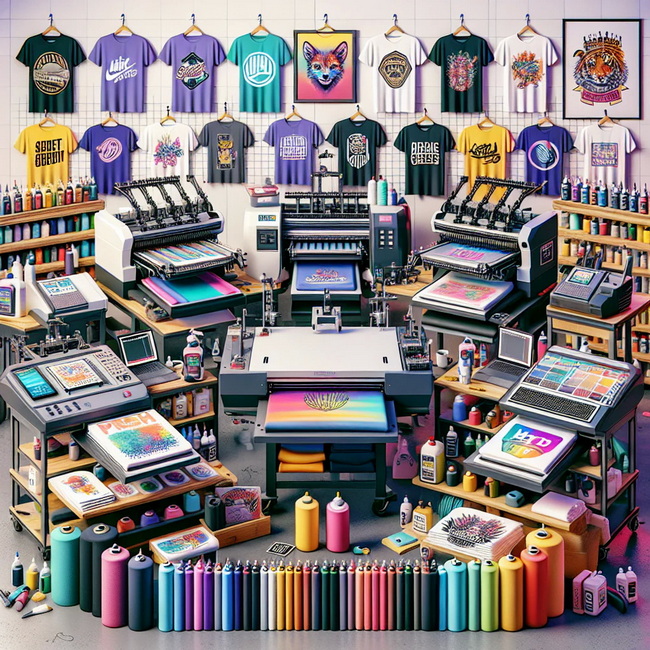
The best t-shirt printing machine for small business depends on your order volume, fabric types, and budget. DTF and DTG deliver premium full-color prints, sublimation is ideal for light polyester, HTV is great for crafters, and screen printing wins for bulk orders. Pairing these printers with a high-quality heat press machine and, when needed, specialized welding and embossing equipment ensures consistent, commercial-grade results on garments and other products.
Use this overview to quickly see which method fits your business stage and goals.
Method | Best For | Start-up Cost Range* | Fabric / Product Compatibility | Speed & Scalability | Main Drawback |
Direct-to-Film (DTF) | Mixed fabrics, dark and light colors, product variety | Medium (printer + heat press) | Cotton, polyester, blends, plus suitable hard goods | Good for small to medium runs; gang sheets boost efficiency | Requires powder adhesive handling and regular maintenance |
Direct-to-Garment (DTG) | Premium full-color prints on cotton shirts | Higher (full setup often several thousand USD) | Mostly cotton and high-cotton blends; works on dark shirts with white ink underbase | 1-5 minutes per shirt; best for on-demand and small batches | Slower for bulk; heads can clog without regular use |
Sublimation | Affordable entry level, light polyester apparel, merch | Lower (can start under 1,000 USD) | Light-colored polyester garments and coated blanks | 5-10 minutes per item including pressing | Does not show on dark garments; needs high polyester content |
Heat Transfer Vinyl (HTV) | Crafters, personalized slogans, simple graphics | Low (cutter + heat press + vinyl) | Many fabrics depending on vinyl; great for bold shapes and text | Good for low volume and personalization; manual process limits scale | Not ideal for photos or very intricate designs; time-consuming weeding |
Screen Printing | Bulk orders, commercial runs, repeat designs | Medium-High (screens, inks, presses, drying) | Most fabrics; extremely durable prints | Excellent for large identical runs once setup is done | Labor-intensive setup; not suitable for one-off prints |
Ranges are indicative and vary by region, brand, and accessory configuration.
DTF involves printing your design on a special film, applying a powder adhesive, curing it with heat, then pressing the transfer onto the shirt with a heat press machine.
- DTF transfers adhere to cotton, polyester, blends, and appropriate hard substrates such as tumblers, glass, and wood.
- You can print and store transfers in advance, or even sell transfers as a standalone product line.
- Gang sheets allow you to place multiple designs on one sheet, improving material efficiency and profits.
- Powder adhesives can irritate skin and lungs, so proper ventilation, masks, and gloves are essential.
- DTF printers require a moderate initial investment and benefit from regular use and maintenance to avoid ink or adhesive issues.
- Small brands offering both dark and light garments without switching technology.
- Shops that also sell custom tumblers, decor, and pre-printed transfers alongside apparel.
- Entrepreneurs who want to separate design creation from final pressing, for example by shipping transfers to partners who own heat presses.
- Dedicated DTF printer capable of white ink.
- Reliable heat press with precise temperature and pressure control.
- Optional fusing or welding equipment for integrating transfers with thicker textiles or multi-layer products.
DTG directly prints your digital image onto a pretreated t-shirt, then cures the ink with heat.
- No transfer films are required, so you avoid alignment issues and extra transfer steps.
- Pretreating machines and dryers can automate large parts of the process, making DTG ideal for small on-demand print shops.
- You print one shirt at a time, which can limit throughput for very large orders.
- DTG setups involve higher investment and need consistent use and maintenance to prevent ink clogs, especially for white ink.
- Print-on-demand brands with many unique designs and frequent one-off orders.
- Shops that want a soft hand feel where the print feels integrated into the fibers.
- Businesses focusing on dark garments with vibrant colors using white underbase printing.
- Quality heat press or conveyor dryer for consistent curing.
- Optional embossing or specialty finishing equipment for fashion lines that combine flat prints with raised logos or textures.
Sublimation uses special inks printed on sublimation paper and transferred onto polyester garments or coated blanks with a heat press.
- A full sublimation setup can start under 1,000 USD, making it one of the most affordable professional options.
- The workflow is simple: no pretreatment, adhesives, or separate curing stage, just print and press.
- Because the ink becomes part of the fabric, the finished shirt has no noticeable texture on the print area.
- Sublimation dyes are nearly invisible on dark or black fabrics, so you are limited to white or light colors.
- Sublimation works best on polyester or high-poly blends; with low polyester content, colors look dull.
- Start-ups offering light polyester sportswear, team jerseys, and athleisure.
- Small businesses selling a mix of mugs, coasters, mousepads, and other sublimation blanks.
- Designers who prefer watercolor, gradient, or airbrush-style artwork that benefits from smooth color blending.
- Dedicated sublimation printer.
- Flat heat press for garments plus optional mug, tumbler, or cap attachments.
- Optional welding or fusing tools for assembling sublimated panels into multi-layer garments or accessories.
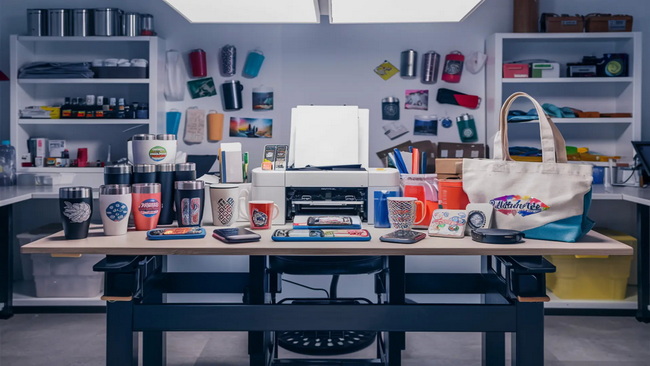
HTV is a cutting and pressing process where you cut shapes from colored vinyl, weed the excess, and press the design onto the garment.
- HTV does not require a printer, only a cutter and a heat press.
- It is ideal for bold, eye-catching slogans and simple logos.
- Vinyl sheets and rolls are relatively affordable, making HTV attractive for micro-brands and hobby businesses.
- Each design must be cut and weeded manually, which is time-consuming for intricate artwork.
- HTV is not suitable for photorealistic images or very small details.
- Personalized name and number jerseys for local teams.
- One-off gifts, event shirts, and small custom orders.
- Brands that already own a cutting plotter and want a low-risk way to begin selling apparel.
- Cutting machine, either desktop or commercial.
- High-quality heat transfer vinyl in brand colors.
- Heat press machine with even pressure to ensure durable bonding.
Screen printing pushes ink through stencils onto the shirt, layering one color at a time.
- Screen printed designs are extremely durable and withstand repeated washing and heavy wear.
- Specialty effects such as neon, metallic, glitter, puff, and textured finishes are easier to achieve with screen printing than with many digital methods.
- Once setup is completed, printing hundreds of the same design becomes very efficient.
- The need to create stencils for each color makes it too slow for one-off or very small runs.
- Full-color photographic prints usually require complex separations and are less straightforward than digital printing.
- Established brands ordering large batches of the same design for promotions or uniforms.
- Shops wanting to offer specialty inks and tactile finishes that stand out in retail environments.
- Multi-station screen printing press, screens, exposure unit, and drying equipment.
- Industrial heat presses or tunnel dryers to cure inks and maximize durability.
- Optional embossing presses to add raised textures that complement printed graphics.
Use this framework to avoid costly mistakes and select the method that fits your goals.
- Decide whether your focus is cotton streetwear, polyester sportswear, or mixed merchandise such as apparel and mugs.
- Cotton and dark garments usually favor DTG or DTF, while light polyester and coated blanks favor sublimation.
- One-off and small batches typically favor DTF, DTG, or HTV.
- Large campaigns and uniform orders usually work best with screen printing.
- Entry level budgets often start with HTV or sublimation.
- Mid range budgets can support a DTF setup with a robust heat press.
- Higher budgets can support DTG or screen printing with automation for pretreatment or multi-station presses.
- Ensure enough room for printers, heat presses, drying or curing stations, and safe storage of inks and chemicals.
- Plan for ventilation when working with powders, sprays, or solvent-based products.
- Schedule regular nozzle checks, head cleanings, and proper ink storage as recommended by equipment manufacturers.
- Train staff on safe operation of heat presses, welding machines, and embossing equipment to reduce downtime and accidents.
Even an excellent printer cannot deliver professional results without the right finishing tools.
- DTG and sublimation require a heat press for curing or transferring designs.
- DTF and HTV rely on accurate temperature, pressure, and time to achieve durable bonds.
- A consistent, well-calibrated heat press improves color, wash fastness, and overall quality.
- Welding or fusing machines help join layers, apply patches, or reinforce seams in high-stress zones, especially for performance wear and workwear.
- Embossing machines create raised logos and textures that add premium branding to garments, labels, and accessories.
- Combining printing, welding, and embossing lets you build differentiated, higher-margin product lines.
Well-maintained equipment protects your investment and ensures consistent print quality.
- Run regular nozzle checks and head cleanings to prevent clogs.
- Store inks in a stable, temperature-controlled environment, and respect expiration dates.
- For systems that require it, maintain appropriate humidity levels to reduce drying in ink lines.
- Inspect and clean the heat press platen to prevent debris or stains from transferring to garments.
- Test temperature accuracy with a probe or test strips if you see inconsistent results.
- Check welding and embossing machine pressure settings periodically to keep seams and textures consistent across orders.
As your order volume grows, your production strategy must evolve.
- Document every print recipe, including temperature, pressure, time, and pretreatment, so new staff can reproduce results.
- Use batching by grouping orders by garment type, color, and printing method to reduce setup and changeover time.
- Implement simple quality checklists at each stage to catch issues early.
- Offer transfer-only services using DTF to other small brands that have heat presses but no printers.
- Create limited-edition collections that combine printing with embossing or welded patches for a more premium feel.
- Expand into accessories such as hats, bags, and labels to increase average order value.
Choosing the right printing method is only the first step. To build a truly sustainable and profitable t-shirt business, you need a complete, reliable setup that includes the right printer, a stable heat press, and, when appropriate, specialized welding and embossing equipment. Now is the time to evaluate your core products, budget, and space, then map out an equipment roadmap that supports your next stage of growth. Commit to a professional-grade setup, optimise your processes, and turn your ideas into a scalable apparel brand with consistent, high-quality results on every order.
A: A basic sublimation or HTV setup can start under 1,000 USD, while more advanced DTF or DTG setups often range from several thousand up to around 20,000 USD when you include printers, heat presses, and curing equipment.
A: DTG and DTF are generally the best options for dark garments because they can use white ink underlays to make colors stand out, whereas sublimation and standard inkjet transfer setups usually do not perform well on dark fabrics.
A: Standard office inkjet printers are not designed for long-term, commercial-grade t-shirt production. While some can be converted for sublimation or paired with transfer papers, results are often inconsistent and less durable than those from purpose-built equipment.
A: Yes, for DTG, DTF, sublimation, and HTV, a reliable heat press is critical to cure inks or bond transfers properly. Consistent pressure and temperature are essential for wash-resistant, professional-looking results.
A: DTG printing usually takes about 1-5 minutes of print time per shirt plus curing. Sublimation, DTF, and HTV typically require additional setup and pressing time, leading to total production times of roughly 5-10 minutes per item depending on design complexity.


