If you have any questions, please feel free to contact us.| Email Us: info@dcheatpress.com


Views: 222 Author: Amanda Publish Time: 2025-12-20 Origin: Site


Content Menu
● What Is a Heat Press Machine?
● Who Should Consider Investing?
● Why a Heat Press Is Usually Worth It
● Cost of Heat Press Machines in 2025-2026
● Understanding Heat Press ROI
● Example: How Many Shirts to Pay Off a Press?
● Heat Press vs Screen Printing vs Other Methods
● Print Method Comparison for Small and Medium Businesses
● Intangible Benefits That Support Long‑Term Value
● Key Factors to Consider Before Buying
● Practical Steps to Plan Your Heat Press Investment
● How Heat Press Machines Support Business Growth
● FAQs
>> 1. Is a heat press worth it for a small clothing brand?
>> 2. How long does it take for a heat press to pay for itself?
>> 3. Should a new business start with a cheap heat press?
>> 4. Is a heat press or screen printing better for my situation?
>> 5. What other equipment and supplies do I need besides the heat press?
For most apparel decorators, print‑on‑demand sellers, and custom gift shops, a heat press machine is worth the investment because it delivers higher print quality, better efficiency, and faster payback than using an iron or many low‑end alternatives. When combined with the right business model, a good heat press can pay for itself in a relatively small number of orders and then continue generating profit for years.[1][2][3]
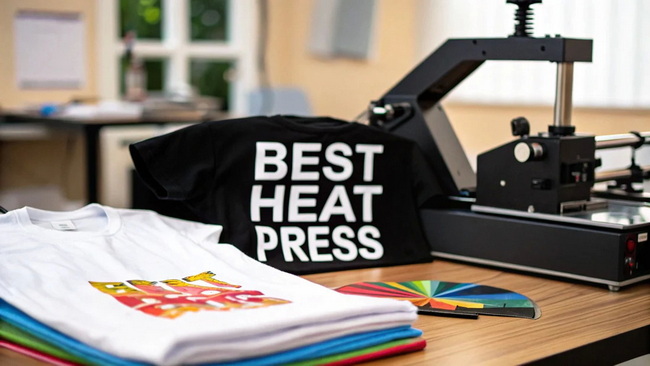
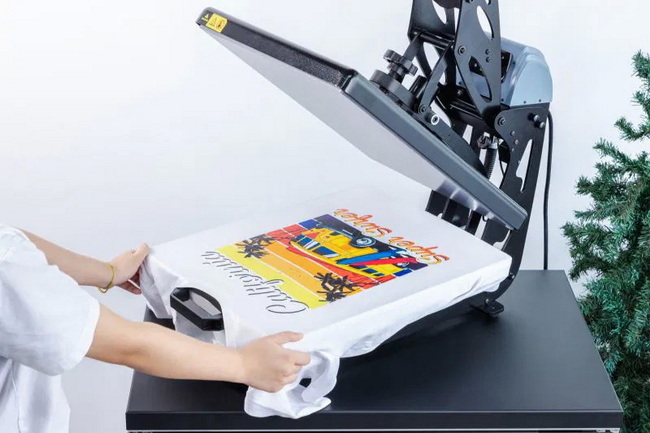
A heat press machine is a piece of thermal transfer equipment that uses controlled time, temperature, and pressure to transfer designs such as vinyl, sublimation, DTF, or transfer paper onto textiles and other substrates. Compared with a household iron, it provides stable, repeatable conditions that are essential for professional‑grade prints.[4][5][1]
- Typical applications include T‑shirts, hoodies, sportswear, caps, bags, and promotional hard goods such as slates or coated metals.[6][1]
- Modern presses integrate digital controls, advanced heating elements, and sometimes automatic opening, sliding, or pneumatic systems to support higher production volumes.[3][1]
This type of machine is designed for users who want consistent quality and control over their production workflow. It suits both new starters and established decorators who plan to generate regular revenue from customized products.[7][1]
- New entrepreneurs launching a T‑shirt or merch brand with on‑demand fulfillment.
- Local print shops, sportswear suppliers, and promotional product companies looking to bring production in‑house and protect margins.[1][7]
For a serious side hustle or full‑time printing business, a quality heat press brings three major benefits: consistent quality, productivity, and flexibility. These advantages directly influence customer satisfaction and long‑term profitability.[5][3][1]
- Professional quality and durability: Controlled temperature and pressure improve adhesion, wash resistance, and color consistency compared with irons or improvised tools.[4][5][1]
- Higher throughput: Once pre‑heated, a press can produce dozens or hundreds of garments per day with predictable cycle times, which is critical for meeting deadlines.[2][8]
- Versatility across substrates: With the right platens and accessories, presses can handle cotton, polyester, blends, caps, plates, slates, and more, enabling new product lines and revenue streams.[9][6][1]
Heat press pricing depends on size, build quality, features, and target use (craft vs commercial). Understanding the main ranges helps match investment level to your business stage.[9][1]
- Entry‑level or hobby presses for crafters often start around 150-800 USD and are suitable for low‑volume production.[5][1][9]
- Professional tabletop presses with 15"×15" or 16"×20" platens typically range from about 800-2,500 USD depending on features and brand.[8][3][1]
- Pneumatic or dual‑station models commonly fall between roughly 2,500-4,000 USD or more and are aimed at established businesses with steady order flow.[10][2]
To determine whether a heat press is worth the money, many decorators evaluate Return on Investment (ROI) using a simple ratio of net profit to total investment. This approach clarifies how quickly the machine can pay for itself.[11][2]
- Total investment includes the press price plus accessories, setup, and allocated workspace costs.[2][11]
- Net profit is your revenue from printed items minus blanks, transfers, labor, and overhead such as utilities and rent.[12][2]
Even modest weekly production of 20-30 pieces often allows a small business to recover the cost of a well‑chosen heat press in a few months.[7][2]
A basic T‑shirt pricing model illustrates how quickly a press can reach break‑even for many small and medium decorators. This type of calculation is helpful when choosing between machine classes.[13][2]
- Suppose the retail price per shirt is 20-26 USD, while total cost (blank, transfer, and overhead) is around 6-8 USD, leaving a profit of roughly 12-18 USD per shirt.[13][2]
- At that margin, the number of shirts needed to cover the machine cost depends on your press category and price point.[2]
| Press type | Approx. price (USD) | Profit per shirt (USD) | Shirts to break even |
|---|---|---|---|
| Entry‑level craft press | 300 | 15 | ~20 shirts |
| Mid‑range professional press | 1,200 | 15 | ~80 shirts |
| Pneumatic/double‑station press | 3,000 | 15 | ~200 shirts |
After reaching this threshold, additional production uses the same press but contributes mainly to net profit, apart from consumables and labor costs.[13][2]
Many users compare heat presses with other decoration technologies such as screen printing, heat transfers alone, and hybrid setups. Each method has its own cost and performance profile, which affects long‑term ROI.[14][15][6]
- Heat transfer and heat press configurations are generally more cost‑efficient for small and personalized orders with complex or multicolor designs.[6][14]
- Screen printing often provides lower cost per unit and very durable prints in large batches, but requires higher upfront investment and more space.[15][14]
The following table summarizes how common methods compare for typical small and medium printing operations.[14][15][6]
| Method | Best for | Startup cost | Cost per item | Strengths | Limitations |
|---|---|---|---|---|---|
| Heat press | Small-medium runs, personalization | Medium (≈800-2,500 USD) | Stable at low-mid volume | Flexible, easy to learn, works with many transfers | Less efficient than screen printing at very high volume |
| Screen printing | Large batches of simple designs | High (multi‑equipment setup) | Very low in bulk | Extremely low unit cost at scale, bold durable prints | High setup, slower design changeovers |
| Transfers only | Very small or occasional orders | Low (≈200-500 USD) | Can be relatively high | Simple to start with low budget | Consumables expensive, limited scalability |
This overview shows why many small brands and on‑demand shops favor heat press systems, while high‑volume contract printers still rely heavily on screen printing for large runs.[15][6][14]
A heat press contributes not only to short‑term profits but also to several intangible business benefits. These advantages are important when building a durable brand and customer base.[16][1]
- Consistent quality reduces reprints and returns, which protects reputation and workload.[16][1]
- In‑house production shortens lead time, improves flexibility, and lowers reliance on external vendors, which can enhance customer loyalty and margins.[7][16]
Selecting the right machine increases the chance that your investment will deliver the expected returns over time. Matching technical specifications to real demand is essential.[8][1]
- Business model and order volume: on‑demand and low‑volume operations usually favor tabletop presses, while higher‑volume shops may require pneumatic or dual‑station designs.[1][2]
- Materials and applications: textile‑only shops may use standard flat presses, whereas mixed product lines with caps, mugs, or hard substrates may need interchangeable platens or specialized presses.[6][8][1]
Taking a structured approach helps clarify whether now is the right time to invest and which class of press to choose. A simple planning checklist can guide the decision.[11][1][2]
1. Estimate current and near‑term demand by counting expected monthly pieces from existing customers and marketing channels.
2. Calculate average profit per item after all direct and indirect costs to understand real earning potential.[12][2]
3. Select a machine class that fits expected volume, substrates, and available space, then confirm its warranty and support conditions.[8][1]
4. Use your profit per item and machine cost to estimate payback period and decide whether the timeline aligns with business goals.[11][2]
As order volumes increase, a heat press can become the foundation of a scalable, diversified product lineup. The same machine can serve multiple customer segments if used strategically.[1][7]
- On‑demand production reduces inventory risk, allowing more sizes, colors, and designs without large pre‑printed stock.[7][1]
- Personalized names, numbers, and limited‑run designs create higher perceived value and allow premium pricing for teams, schools, and corporate clients.[16][7]
If the goal is to build a sustainable customization business rather than just experimenting, a well‑selected heat press is one of the most strategic investments you can make. Define your expected order volume, calculate realistic profit per item, and then choose a press with the size, features, and durability that match your growth plans so you can move from trial‑and‑error to stable, repeatable production. When you are ready, contact a reliable heat press supplier or manufacturer to discuss your specific substrates, budget, and capacity needs, and use this article's ROI framework to select a machine that can support your business for years.[7][1]
For small clothing brands that plan to sell regularly, a heat press is usually worth it because it delivers consistent print quality and better margins than outsourcing or using household tools. It also makes it easier to respond quickly to new trends and small custom orders without large up‑front stock.[16][1][7]
In many real‑world scenarios, businesses can pay off a quality press after only a few dozen to a few hundred shirts, depending on machine cost and profit per item. Shops that keep production steady often reach full payback within a few months and then operate mostly in profit afterwards.[13][2][7]
Very low‑cost presses may seem attractive, but inconsistent temperature, uneven pressure, and limited durability can lead to misprints and customer complaints. For serious business use, it is often safer to invest in a mid‑range or professional model that offers stable heating, reliable construction, and proper support.[3][8][1]
For low to medium quantities, frequent design changes, and personalized orders, heat press systems often provide better flexibility and lower risk. For very large, repeated orders of the same simple design, screen printing can deliver a lower cost per unit and excellent durability, provided you can handle higher startup costs and space requirements.[14][15][6]
To run a functional operation, you also need blanks such as garments or hard substrates, compatible transfers or vinyl, a design and printing workflow, and adequate workspace with proper electrical and safety conditions. Planning for these items in your budget helps ensure that the press can start generating revenue as soon as it is installed.[4][2][13][1]
[1](https://galaxy-press.com/are-heat-press-machines-worth-the-investment/)
[2](https://www.heatpressnation.com/blogs/blog/heat-press-roi-how-many-shirts-to-pay-it-off)
[3](https://colmanandcompany.com/blog/2024/10/the-importance-of-choosing-the-right-heat-press-equipment-for-your-business/)
[4](https://www.visionsub.com/heat-transfer-paper-vs-other-printing-methods/)
[5](https://blog.stahls.com/screen-printing-vs-heat-press/)
[6](https://www.caydo.com/blogs/trends/screen-printing-vs-heat-press)
[7](https://ninjatransfers.com/pages/benefits-of-investing-in-a-heat-press-for-your-small-business)
[8](https://colmanandcompany.com/blog/2021/06/heat-press-machines-what-you-need-to-know/)
[9](https://eazydtf.com/blogs/news/transfer-printing-vs-heat-press-choosing-the-right-method)
[10](https://stampinator.com/pages/return-on-investment)
[11](https://carriervibrating.com/resources/blog/return-on-investment-manufacturing-equipment/)
[12](https://coldesi.com/dtf-printing/how-to-price-garments-for-maximum-roi-using-a-dtf-pricing-strategy/)
[13](https://www.transferexpress.com/videos/how-long-does-it-take-to-pay-off-a-heat-press)
[14](https://www.shopify.com/blog/heat-press-vs-screen-printing)
[15](https://imprintconnect.com/blogs/news/screen-printing-vs-heatpress-transfers)
[16](https://www.wensco.com/blog/233/7-reasons-to-invest-in-a-heat-press)
[17](https://www.youtube.com/watch?v=TIJZmlI9cRM)
[18](https://www.youtube.com/watch?v=q9pnjbs8umA)
[19](https://galaxy-press.com/best-heat-press-for-shirts/)
[20](https://www.youtube.com/watch?v=QGYHsn15Wfo)
[21](https://www.youtube.com/watch?v=iH0kV8jpvH0)
[22](https://www.reddit.com/r/SCREENPRINTING/comments/1klqqbe/looking_to_invest_into_a_heat_pressneed_advice/)
[23](https://www.youtube.com/watch?v=5UfRR17QTXs)
[24](https://www.realthread.com/blog/heat-press-vs-screen-printing)
[25](https://raccoontransfers.com/blogs/guides/heat-transfers-vs-screen-printing)
[26](https://www.reddit.com/r/cricut/comments/16wmeco/is_it_worth_it_to_save_up_for_this_heat_press/)


